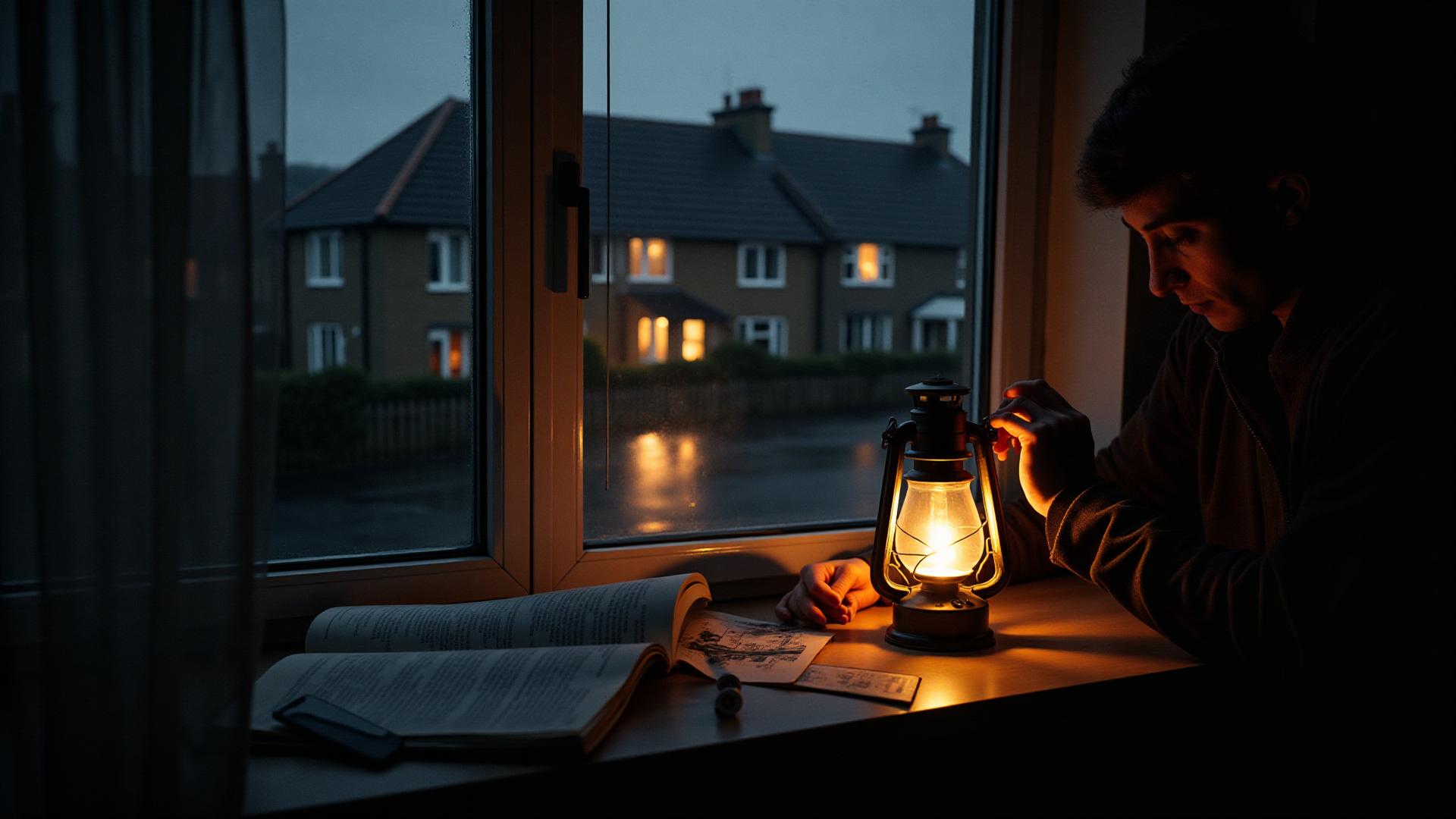
There's a strange moment that happens in every blackout.
A kind of hush.
The hum of the fridge dies. Streetlights blink out. Your mobile signal evaporates into thin air. And in the darkness, you become suddenly aware of how much you rely on invisible systems that usually never fail.
Except, increasingly… they do.
Across the UK and Europe, crises don't arrive with Hollywood theatrics. They slip in quietly — a winter outage that lasts longer than expected, a water contamination warning, a storm that knocks out mobile networks, a supply chain delay that empties shelves for days instead of hours.
And every time it happens, people discover the same truth:
It isn't the gear you panic about — it's the skills you don't have.
The overlooked, unfashionable, un-flashy survival skills. The ones that keep your home warm, your food safe, your family calm, and your community coordinated.
This guide uncovers the 10 essential skills most UK & European preppers never learn, why they matter, and how they silently determine who copes — and who cracks — when the lights go out.
1. Heating Failure Response: The Skill You Need Before Winter Reminds You
Most UK/EU preppers obsess over fuel… but overlook the skill of handling a sudden heating outage.
Why it's overlooked
Because we assume:
- The boiler will restart
- The smart thermostat will reconnect
- The outage won't last
Until it does.
What this skill includes
- How to set up a "warm room" in 5 minutes
- Draft control (curtains, towels, insulation points)
- Safe indoor heating options and regional legality
- Recognising early hypothermia in children and elderly
Why it matters
UK and European homes lose heat fast — far faster than most people estimate. This isn't wilderness survival. This is Tuesday night in February when the power fails and the radiators turn cold.
Learn more in our Cold Weather Survival UK guide and 72-Hour Blackout Checklist.
2. Safe Light Management: Making Light Without Making Fire
Most people think "I'll just light a candle." But in small UK flats, older buildings, and densely packed European housing, this is a fire hazard waiting to happen.
Essential components
- Battery hierarchy (lantern → torches → headlamps → candles)
- Three-point light placement for safe movement
- How to light-proof windows to maintain privacy
- Candle fire-safety positioning in tight spaces
If you can't see safely, every crisis gets worse. Check our Fire Safety During Blackouts guide for more detail.
3. Water System Basics: The One Skill That Saves Homes From Disaster
People store water. People filter water. But almost no one knows how their own water system works.
Skillset includes
- Locating the stopcock instantly
- Shutting off water during leaks or freezing
- Storing water legally in small UK/EU flats
- Identifying the difference between pressure loss vs contamination warning
Why this matters
During storms, water mains burst. During freezes, pipes crack. During contamination events, the water looks fine — until it isn't.
Understanding your own plumbing is one of the highest-value prepping skills in an urban European household. Read our comprehensive UK Water Filtration Guide and Water Survival Guide.
4. No-Power Navigation & Local Mapping: The Lost Offline Skill
Phones die. Networks fail. GPS goes dark. Most people stare blankly at a paper map like it's ancient code.
Core elements
- Reading local OS maps
- Identifying high-ground flood routes
- Navigating city centres without streetlights
- Teaching children landmark-based navigation
Why it matters
In the dark, with no phone and no signal, navigation becomes survival. This skill bridges the gap between urban survival training and wilderness skills.
5. Food Safety Without Refrigeration — The Silent Crisis Skill
Every blackout creates the same question: "What happens to everything in the fridge?"
Skillset includes
- Understanding EU/UK food safety timelines
- Salvaging vs discarding food
- Cooking safely with alternative fuels
- Preventing cross-contamination in warm kitchens
The truth
Most people waste food unnecessarily — or worse, eat food that's no longer safe. This skill prevents both.
Master food preservation with our guides on extending food shelf life, long shelf life foods, and food safety during power cuts.
6. Communication Cascades: How Families Stay United When Networks Fail
People focus on radios, but overlook the skill of coordination.
Vital behaviours
- Creating a simple "if phones fail" plan
- Establishing meeting points
- Using offline messaging (note drops, neighbour relays)
- Radio etiquette and clear messaging
Why it matters
Chaos comes not from danger — but from disconnection. Families who coordinate calmly survive crises calmly.
Build your communication plan with our guides on Family Communication Plans, PMR446 radios, and offline messaging apps.
7. Legal EU/UK Home Security Skills — Not What You Think They Are
Hollywood self-defence fantasies don't apply in UK/EU law. What works in the US is illegal in many European regions.
Actual essential skills
- Situational awareness
- Entry-point vulnerability checks
- Noise/light deterrence
- Safe neighbour coordination
- Legal escalation steps
This is critical information for UK preppers. Read our detailed guides on UK Legal EDC and what's legal in UK prepping.
8. Micro-Sheltering During Storms: Staying Safe Inside the Home
Storm survival isn't about going outside — it's about staying in the right part of your home.
Skills include
- Window risk assessment
- Stairwell vs interior room logic
- Protecting children from flying debris
- Knowing what part of a building is structurally safest
Essential reading: our guides on building shelter in UK conditions and apartment emergency preparedness.
9. Emergency DIY — The Skill Every UK/EU Homeowner Should Learn But Doesn't
Most emergencies are mundane. And most preppers are unprepared for the mundane.
Critical DIY emergency fix skills
- Resetting tripped breakers
- Fixing leaky pipes
- Draft-proofing on the fly
- Temporary window repairs
- Using basic tools correctly
This is what actually protects your home during a crisis — not the fantasy scenarios.
10. Emotional First Aid — The Most Overlooked Survival Skill On Earth
People often imagine survival as physical. But in real UK/EU emergencies, the emotional landscape determines outcomes.
Crucial emotional skills
- Keeping children calm
- Recognising panic spirals
- Using grounding techniques
- Providing reassurance
- Managing shock in adults
Why this ranks
It solves one of the biggest unspoken search intents: "How do I stay calm in an emergency?"
Humans panic. Prepared humans don't.
Read our guide on mental resilience and avoiding prepper burnout to build this essential skillset.
FAQ — What People Quietly Ask About These Skills
Do I really need all ten?
If you live in the UK or Europe and rely on electricity, gas, shops, or the NHS… yes. These are the crises you're most likely to face — not apocalyptic ones.
What's the first skill I should learn?
Heating failure response. It's the most time-sensitive, and the most dangerous.
Is prepping expensive?
Skills are free. You can learn most of them at home with what you already have.
Why don't people teach this in schools?
Because modern systems conditioned us to outsource everything — until those systems become fragile.
EODSurvival's Final Word
At EODSurvival, we believe survival isn't about extremism — it's about capability. These ten skills represent the quiet competence that transforms households from fragile to resilient. They cost nothing but attention and practice, yet they deliver peace of mind that no amount of gear can match.
Start with one skill this week. Master it. Then move to the next. In six months, you'll possess a foundation that most people never build — and when the lights go out, you'll be the calm presence others turn to.
Because the best survival tool isn't in your kit. It's in your head.
External Sources & References
This article draws on guidance and research from the following trusted sources: