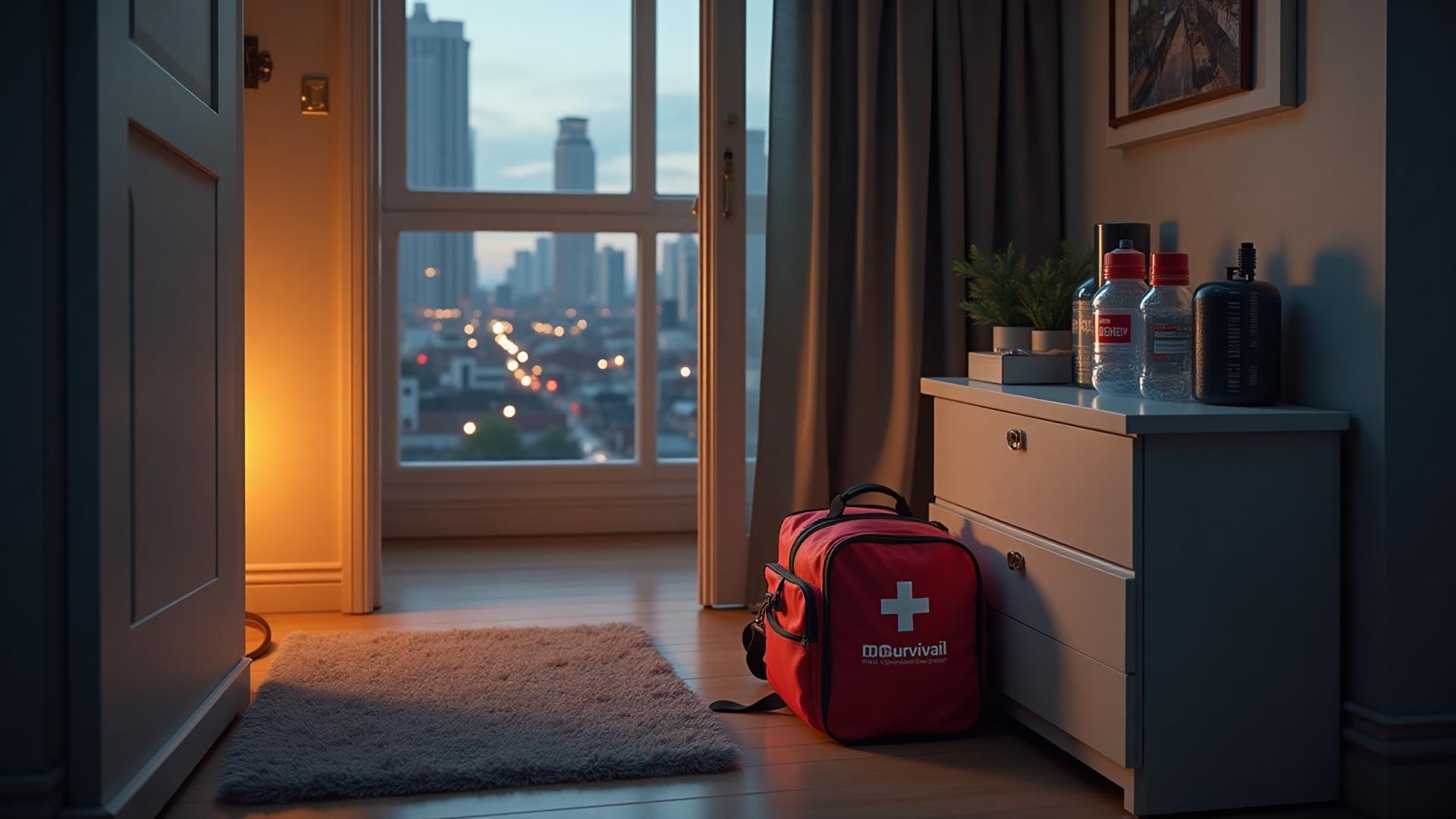
The lights go out. The lift stops. The city hum falls silent.
If you live in a UK apartment, that moment can arrive faster than you think — and when it does, help won't always climb twelve floors to find you.
Modern cities feel invincible until they aren't. The truth is, high-density living comes with its own set of quiet fragilities: shared utilities, sealed windows, limited storage, and neighbours who might not even know your name. Yet survival doesn't demand a bunker or acres of land — it starts with awareness, a plan, and the will to act before the lights flicker.
This is the Urban Apartment Emergency Preparedness Guide for 2025 — written for ordinary people who live high above the ground but want to stay grounded when it matters.
1. Why Flats Face Different Risks
A detached house can adapt. A flat relies on systems you can't control — shared electrics, central water, communal exits. When those systems fail, the consequences multiply.
In 2025, that vulnerability has sharpened. The Met Office warns of record heatwaves and heavier rain. National Grid reports growing strain on the power network. And in dense cities like London or Manchester, a single failure in a tower block can ripple through hundreds of lives.
That doesn't mean panic. It means preparation — shaped to where you live, not where you wish you did.
2. The Five Pillars of Apartment Readiness
Energy: Keeping the Lights On When the Grid Falters
When power goes, silence isn't peaceful — it's disorienting. Learn where your circuit breakers are. Keep a torch in easy reach and portable power banks charged. For longer outages, a solar panel charger or mini power station small enough for a balcony can keep phones, radios, and essential devices alive.
It's not about living off-grid; it's about having breathing space while the grid recovers. See our guide on Best Portable Power Stations UK for apartment-friendly options.
Water & Food: Security in Small Spaces
Most flats can't store 50 litres of water — but you don't need to. Aim for at least two and a half litres per person per day for three days. Stack bottles under the bed, or use slimline storage containers that slide behind furniture.
Food follows the same rule: light, long-lasting, easy to eat cold. Tinned soups, ready-to-eat pouches, nuts, energy bars. Rotate supplies every few months and keep a can opener next to them — obvious, but often forgotten.
If you share your space with pets, add a small reserve for them too. For comprehensive food storage strategies, read our Guide to Extending Food Shelf Life.
Communication: When the Signal Dies
Mobile networks can choke during emergencies. Download the UK Emergency Alerts app and learn the frequencies for local radio stations that broadcast during crises. A hand-crank or battery radio is worth its weight in reassurance.
Keep a paper list of contacts: family, landlord, neighbours, emergency lines. If your phone battery dies, those names on paper keep you connected.
And don't underestimate your block's micro-community. Knock on doors, set up a WhatsApp group. During the 2023 London power cuts, it wasn't the official channels that saved people time — it was the group chat. Learn more about Family Communication Planning.
Evacuation & Shelter: Knowing When to Move — or Stay
Every building has its own logic in a fire or flood. Some flats are designed for "stay put" until rescue; others require immediate evacuation. Learn your building's plan. Walk your escape routes in daylight, then again in darkness.
Prepare a grab-bag that lives by the door: ID, torch, medication, power bank, small first-aid kit, bottled water, snacks, pet leash if needed.
If leaving is impossible — smoke in the stairwell, water rising outside — identify your safest internal room: few windows, solid door, towels to block smoke gaps, your phone and radio inside. "Go in, stay in, tune in" still saves lives.
Mind & Community: The Invisible Half of Survival
Emergencies are less about endurance and more about decision fatigue. When adrenaline fades, routine saves you. Keep lists printed and visible. Create tiny rituals: checking gear monthly, texting neighbours when storms are forecast.
If you feel anxious, remember — control is the cure for fear. Each action you take replaces helplessness with habit. Read our article on Mental Resilience and Avoiding Prepper Burnout.
And connection matters more than gear. Build a resilience circle in your building: a few neighbours who check on one another when sirens wail or the lifts freeze. When you know someone's watching your back, survival becomes community, not solitude.
3. Your 30-Point Urban Preparedness Checklist
A short, human-sized plan beats a perfect one you never start. Begin here:
- Audit your flat — note exits, vulnerabilities, storage spots.
- List what you already own — torch, batteries, first-aid kit.
- Buy what you're missing gradually: power bank, bottled water, radio.
- Keep emergency numbers printed — landlord, neighbours, local council.
- Create a grab-bag and keep it accessible.
- Store food and water for three days minimum.
- Rotate supplies every six months.
- Learn how to turn off gas, electricity, water.
- Register for local flood and power-cut alerts.
- Map your escape route — practice once in daylight, once at night.
- Mark a meet-up point outside the building.
- Prepare a "stay-put" plan if evacuation isn't safe.
- Backup documents digitally and off-site.
- Add spare keys and ID copies to your bag.
- Store pet food and supplies.
- Check fire alarms and smoke detectors monthly.
- Install surge protectors for key electronics.
- Label medication and keep spares for emergencies.
- Keep cash — small notes — in your kit.
- Learn neighbours' names and flat numbers.
- Join or start a building safety group.
- Know nearby shelters or safe public spaces.
- Have blankets or emergency foil wraps for warmth.
- Save important apps offline: maps, first-aid guides.
- Plan for mobility limits — lifts may fail.
- Include comfort items — a book, tea bags, headphones.
- Secure tall furniture against earthquakes or heavy winds (rare, but growing risk).
- Test your gear — don't store it unopened.
- Update your plan after life changes.
- Share this checklist with friends — resilience multiplies when shared.
Each tick is a neural reward — your brain registers progress, lowering anxiety and cementing confidence.
4. The Network Beneath the Surface
Every great plan connects to a web of reliable information. Bookmark these now:
- GOV.UK Prepare — official UK home-preparedness advice
- London Fire Brigade — escape-plan guidance for purpose-built flats
- Met Office — real-time severe-weather alerts
- National Grid ESO — power-cut updates and restoration times
- Environment Agency — flood-risk maps and alerts
Use these not as background reading but as living resources. Algorithms may power information, but humans act on it — and timely action is the line between panic and control.
5. What's Really at Stake
Preparedness isn't about paranoia; it's about agency. Most people freeze not because they lack courage, but because they lack a script. This guide gives you that script — not to fuel fear, but to replace uncertainty with choreography.
Picture this: the streetlights blink out, phones lose signal, and for a moment, the building seems to hold its breath. You switch on your torch. Your kit is within reach. You know the plan, the exits, the faces next door.
That's not luck. That's readiness — quiet, calm, human.
Frequently Asked Questions
What should actually go in an apartment emergency kit?
Think small but complete: a torch and spare batteries, a charged power bank, bottled water (around 2.5 litres per person per day), non-perishable food, first-aid essentials, and copies of key documents in a sealed bag. Add a radio, cash, and any medications you rely on. Check our Best First Aid Kits UK guide for medical supplies.
How often should I refresh or rotate supplies?
Every six months is ideal. Use the change of seasons as your cue — update food, test devices, check batteries. If you move flats or gain new housemates (or pets), review your plan immediately.
If there's a fire in my block, should I stay or go?
Follow your building's design plan. Some UK flats use a "stay put" policy because walls are built to contain fire for a time. Others require evacuation. Know your building type now, not in the moment. When in doubt, call 999, follow instructions from fire services, and never use lifts. Learn more about Fire Safety During Blackouts.
How can I prepare without spending much money?
Start with what you already have — reuse containers, store tap water in clean bottles, repurpose backpacks as go-bags. Borrow a radio or share equipment among neighbours. Preparation is mindset first, gear second.
Products / Tools / Resources
These aren't endorsements, just reliable starting points tested by UK urban preppers and councils alike:
- Compact solar charger – foldable, USB-compatible for small flats
- EcoFlow River 2 Power Station – lightweight indoor power backup
- British Red Cross First Aid Kit – comprehensive, flat-friendly size
- LifeSaver Bottle or Sawyer Mini Filter – portable water filtration
- Eton Hand-Crank Radio with USB Output – keeps communication alive
- Stackable food containers – tight-seal, modular, fit under beds or cupboards
- Fire-resistant document wallet – for passports and essentials
- Neighbourhood WhatsApp Template – print and post in communal hallway to build your network
Each item adds a layer of calm to the unknown. In cities built on speed and light, real safety comes quietly — in the homes that thought ahead.
Related Articles
Urban Survival Training
Comprehensive guide to staying safe in cities during disasters
72-Hour Blackout Checklist
Essential supplies and strategies for extended power cuts
UK Power Cut Guide 2025
How to prepare for and respond to power outages
Water Survival Guide UK
Water storage, filtration, and emergency water strategies
Start Your Emergency Preparedness Today
Download our free Essential Prepping Checklist to get started
Download Free Checklist