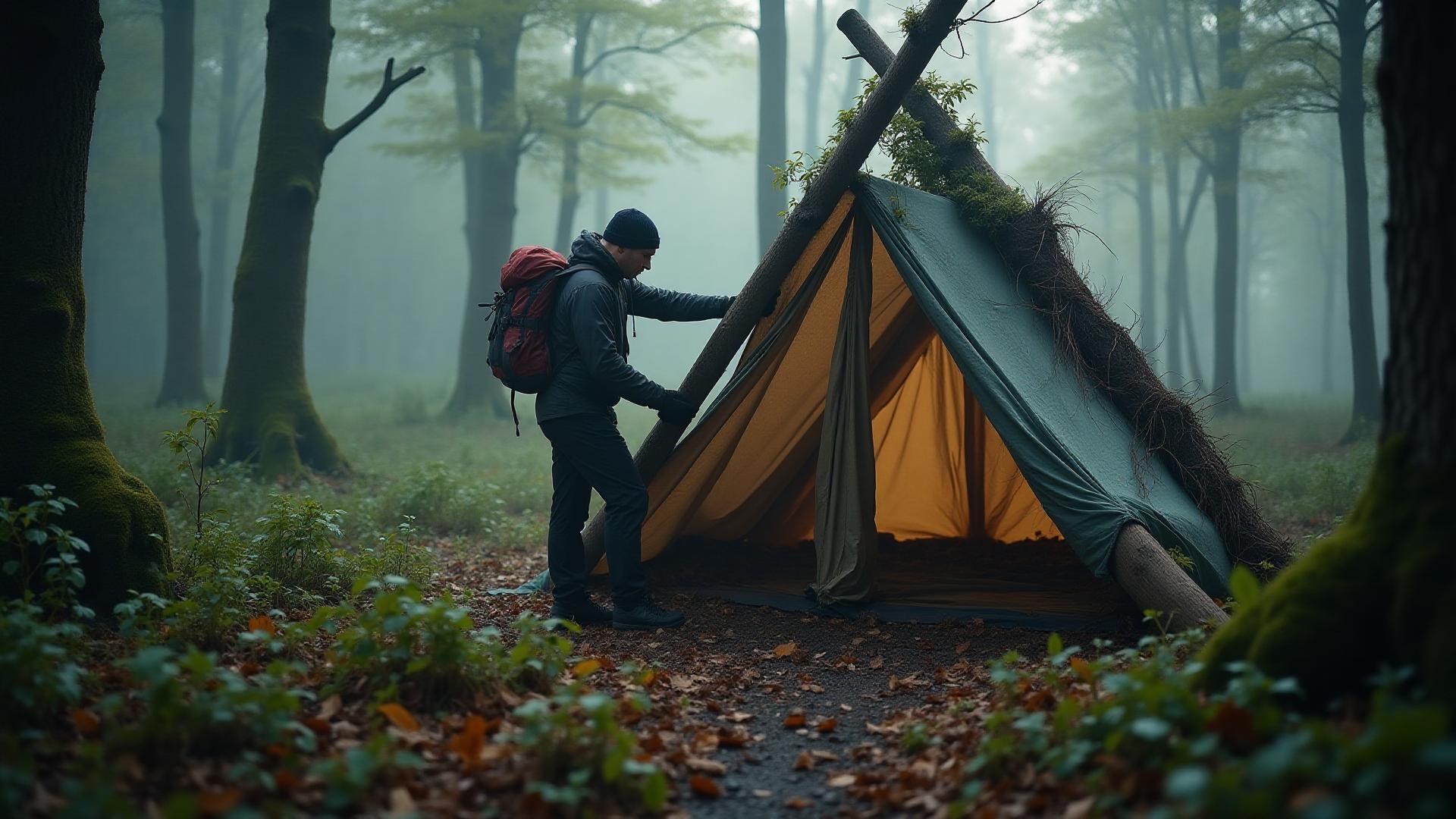
How to Build a Shelter in UK Conditions: Woodland, Moorland & Urban Edge
🪓 Introduction: When a Drizzle Turns Dangerous
In the UK, rain isn't an event — it's a lifestyle. Ask anyone who's ever gone camping in the Lake District. One minute you're roasting marshmallows; the next, you're building a thatched roof out of despair and bin bags.
But when things go wrong in the wild — when the tent blows away, the temperature drops, or you find yourself unexpectedly outdoors — a shelter is not just comfort; it's survival.
In this guide, we'll teach you how to build shelters suited to the UK's three main environments: woodland, moorland, and the urban fringe. You'll learn what works, what fails, and why even a soggy tarp can save your life.
🌳 1. Shelter Priorities: What's Trying to Kill You (and How to Stop It)
Shelter protects you from three main UK hazards:
- Cold & Wind: The real killers in UK survival are exposure and hypothermia, not wolves or badgers.
- Moisture: Rain saps heat 25x faster from wet skin.
- Psychological Collapse: A dry roof gives morale, which means clear thinking and better decisions.
Follow the Rule of Threes:
3 hours without shelter in harsh weather can end you.
Build shelter before you need it.
🌲 2. Woodland Shelters: Nature's Ready-Made Hardware Store
🌳 A-Frame Shelter
Perfect for dense woods with fallen branches and leaf litter.
You'll need:
- A sturdy ridgepole (main spine of the structure)
- Two forked branches
- A supply of sticks, leaves, and moss
Steps:
- Build a tripod using forked branches and a ridgepole.
- Lean sticks against both sides like a ribcage.
- Pack with leaves, bracken, and moss — thick enough to block wind and drizzle.
- Add a raised bed (logs + fern) to stay off the damp ground.
Pro Tip: The thicker your insulation, the warmer you'll be. Think badger burrow, not eco-pod.
🪵 Lean-To Shelter
A classic, quick shelter for emergencies.
You'll need:
- One ridgepole (against a fallen log or standing tree)
- Several branches for the back wall
- Foliage, tarp, or poncho for waterproofing
Steps:
- Set the ridgepole about chest height.
- Lean branches at a 45° angle against it.
- Cover with tarp, bark, or natural debris.
- Build a small fire just outside the opening (reflect heat inward with a log wall).
🔥 Survival Note: Don't build too large — small shelters conserve heat and energy.
🌧️ Debris Hut
The ultimate no-tools, no-tarp emergency shelter.
Method:
- Find a ridgepole and rest one end on a stump or log.
- Lean branches tightly along both sides.
- Pack with layers of leaves — at least arm's length thick.
- Crawl inside feet first; pull extra debris over the entrance.
Result: Dry (ish), windproof, and snug.
💡 Humour aside: You'll look like you're sleeping in a compost heap, but you'll wake up alive — which is the goal.
🌾 3. Moorland Shelters: Surviving the Open Exposure
If woodlands are forgiving, moorlands are brutal. No trees, no cover — just wind, rain, and sheep looking at you like you've made bad life choices.
Your priorities here are low profile and wind protection.
⛰️ Tarp and Trekking Pole Shelter
Ideal for open terrain.
You'll need:
- Tarp (3x3m minimum)
- Trekking poles or walking sticks
- Paracord or guy lines
- Tent pegs or weighted rocks
Setup (Basic A-Frame):
- String the tarp between two poles or natural supports.
- Peg down sides to form a low triangle.
- Add rocks or sod for insulation and wind sealing.
Alternative:
Pitch as a "plough point" — one corner to the ground, the opposite raised into the wind.
⚡ Pro Tip: Always set up with the narrow end facing the wind, unless you fancy flying lessons.
🪣 Bivvy Shelter (Emergency Grade)
If you're caught without tools, your bivvy bag is your best friend.
Method:
- Find a dip or behind a rock outcrop.
- Use your rucksack as a windbreak.
- Slide into your bivvy bag or emergency foil blanket cocoon.
- Hunker down — stay compact, breathe slowly.
Enhancement:
Drape a tarp over your bivvy for a double layer against driving rain.
🧠 Mental Game: Moorland nights test your mindset. Stay calm, sing something ridiculous, and remember: this is a character-building moment.
🏙️ 4. Urban Edge Shelters: When Home Isn't an Option
Urban survival isn't about camouflage — it's about concealment, safety, and legality. In an extended grid-down or disaster scenario, preppers may need temporary shelter near city infrastructure.
🧱 Abandoned or Derelict Structures
Use only when safe — many are unstable or illegal to enter.
Checklist:
- Roof intact? (If not, move on.)
- Dry corner? (Avoid basements; flood risk.)
- Exit route? (Never one-way-in shelters.)
Reinforce with cardboard insulation, plastic sheeting, and raised sleeping surfaces.
⚠️ Legal Note: You may not squat in residential properties in the UK — it's a criminal offence under the Legal Aid, Sentencing and Punishment of Offenders Act 2012.
🪜 Makeshift Urban Tarp Shelter
For hidden edges — alleyways, parks, behind structures.
You'll need:
- Tarp or builder's plastic sheet
- Paracord or bungee cords
- Pegs, tape, or improvised anchors
Setup:
String a line between fences or lampposts, hang the tarp low, and secure tightly. Add cardboard or reflective blankets for insulation.
🔦 Security Tip: Avoid bright lights or fires. Heat and noise draw attention fast in cities.
🌦️ 5. The Science of Staying Warm (and Dry)
You can build the Taj Mahal of leaf huts, but if you don't manage heat, airflow, and moisture, you'll still suffer.
UK Survival Rules of Warmth:
- Ventilation matters: Condensation can freeze inside closed shelters.
- Layer below, not above: 70% of body heat loss is via ground contact.
- Avoid "chimney effect": Block drafts but leave a fist-sized vent.
- Body heat = insulation test: If you can feel cold air moving, your shelter leaks.
🪶 6. Best Materials for UK Survival Shelters
| Material | Use | Availability |
|---|---|---|
| Bracken / Ferns | Roof & bedding insulation | Woodland & moors (avoid protected areas) |
| Moss | Insulation, sealing | Forest floors (take sparingly) |
| Bark | Waterproof panels | Fallen logs only |
| Grass & Reed | Thatching, cordage | Riversides, marshlands |
| Plastic Sheeting / Tarps | Rainproofing | Always carry one |
Tip: UK foragers should follow Leave No Trace ethics — take from deadfall, not living trees.
External resource: Forestry Commission
🧭 7. Common Mistakes (And How to Laugh About Them Later)
- Building Too Late: You can't construct a decent shelter in the dark during a downpour.
- Too Big: Large = cold.
- Too Flat: Always elevate bedding — the UK ground loves stealing your warmth.
- Forgetting Drainage: Water will find you. It's British law.
- Neglecting Morale: A candle lantern or bit of music can do wonders for mindset.
🌐 External Trusted Resources
🧠 8. Shelter Psychology: The Calm Within the Chaos
A shelter is more than walls — it's a boundary between you and panic. The moment you step inside, your brain relaxes. You've created order in chaos. That calm is power.
So, when the rain's relentless and the night draws in, remember this: You don't need luxury — you need structure, strategy, and a roof that doesn't leak (too much).
"Preparedness isn't about comfort. It's about confidence."
💬 Frequently Asked Questions
What's the best shelter for beginners in UK forests?
The lean-to shelter is easiest. It's fast to build, weather-resistant, and works well with a tarp or poncho.
How do I insulate a shelter without modern gear?
Use natural materials like bracken, moss, and dry leaves — aim for 12–18 inches thick on top and double beneath you.
Can I build shelters anywhere in the UK?
Only on public or permitted land. Always follow the Forestry England Code and Countryside Access Rules.
What's the biggest mistake people make?
Waiting until hypothermia starts to build. Shelter should always be priority number one — build before you shiver.
Want More Survival Training?
Explore our complete collection of survival guides and preparedness resources
View All Training Guides