If the power went out right now, how long would the water keep flowing from your taps?
Most people assume the answer is "indefinitely." After all, water is the one thing we can't live without. But here's the harsh truth: water supply systems rely heavily on electricity — for pumping, treatment, and distribution. When the grid goes down, so can your tap water.
In the UK and across Europe, blackouts, storms, floods, and even heatwaves can compromise clean water supplies. That's why every prepper's first priority (after air and shelter) is water.
This guide covers why water matters, how much you actually need, how to collect it, and how to store it safely — with a clear focus on what works in the UK and EU.
Why Water Is Survival Priority #3 (After Air and Shelter)
The Rule of Threes tells us you can survive:
- 3 minutes without air
- 3 hours without shelter in harsh conditions
- 3 days without water
- 3 weeks without food
Without water, dehydration sets in fast. By day one, you'll feel sluggish and foggy. By day three, confusion and organ damage are real threats. In short: ignore water, and you won't last long enough to worry about food.
How Much Water Do You Actually Need?
The UK government's advice during emergencies is 2–3 litres per person per day. That covers drinking, cooking, and minimal hygiene.
Rule of Thumb
- Individual: 2–3 litres/day
- Family of 4 for 3 days: ~30 litres
- Family of 4 for 1 week: ~70 litres
- Long-term (1 month): ~250–300 litres
Now picture what 300 litres looks like. That's fifteen 20-litre jerry cans. Suddenly, storage logistics matter just as much as collection.
Water Risks in the UK & EU
It's tempting to think water shortages are "other countries' problems." But in Europe, several real scenarios can disrupt safe water access:
- Power cuts — Treatment plants and pumps fail without electricity.
- Flooding — Heavy rain contaminates supplies with sewage and farm runoff.
- Heatwaves — High demand + drought = rationing. Southern Europe knows this already.
- Infrastructure strikes/failures — Recent strikes in France and water pipe bursts in the UK highlight vulnerability.
In short: don't assume your tap is invincible.
Collecting Water in Emergencies
When taps stop running, your first job is to identify safe water sources.
1. Tap Water Reserves
- Fill containers immediately at the first sign of a blackout.
- Don't forget hidden reserves: your hot water cylinder, toilet cistern (not the bowl).
2. Rainwater Harvesting
- Legal in the UK and most EU countries.
- A simple setup: roof gutters + water butt/barrel.
- Must be filtered/purified before drinking.
3. Natural Sources
- Streams, rivers, lakes: plentiful in Britain and Europe, but often polluted. Always purify.
- Springs: the gold standard if accessible.
- Snow/Ice: melt before drinking; never eat snow directly (causes hypothermia).
4. Unconventional Sources
- Condensation traps: plastic sheeting to collect dew.
- Tinned food liquids: brine or syrup counts as hydration in a pinch.
Purifying Water: Don't Skip This Step
Collecting water is only half the battle. In the UK/EU, many waterborne nasties lurk in "fresh" supplies — from E. coli to agricultural pesticides.
Purification Methods
- Boiling — Bring to a rolling boil for 1 minute (3 minutes at altitude).
- Filters — Portable filters (LifeStraw, Sawyer Mini, Katadyn). Remove most bacteria/parasites.
- Chemical tablets — Chlorine or iodine tabs. Lightweight, but taste can be grim.
- UV purification — Devices like SteriPEN. Great for clear water, less effective in cloudy sources.
Pro tip:
Use a two-stage process. For example: filter first, then boil.
Storing Water Safely
Container Options
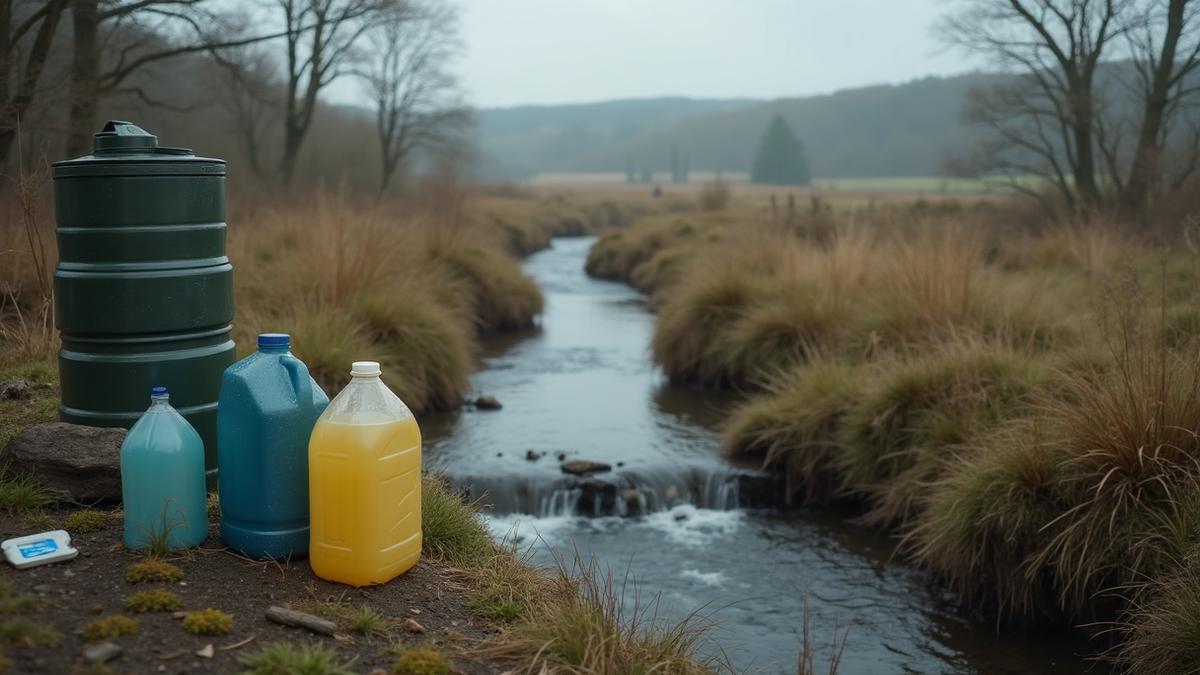
- Food-grade plastic jerry cans (20L) — durable, stackable.
- 5L supermarket bottles — cheap, but degrade over time. Rotate yearly.
- Barrels (100–200L) — ideal for long-term storage in garages or sheds.
Storage Rules
- Keep cool, dark — avoid algae growth.
- Rotate stock — replace every 6–12 months.
- Label containers — "Drinking Water" vs "Non-Potable."
Additives
UK tap water is already chlorinated. If storing for over 6 months, consider household bleach (unscented, plain, 2 drops per litre) to keep it safe.
Water for Different Scenarios
Short Blackout (24–48 hours)
- Use bottled water and filled containers.
- Stick to cooking and drinking; minimise washing.
Medium Blackout (3–7 days)
- Rotate between bottled and stored tap water.
- Begin using rainwater or natural sources with purification.
- Enforce rationing: 2 litres/person/day.
Long-Term Disaster (1 week–1 month)
- Rely on rainwater collection systems.
- Store bulk supplies (barrels, tanks).
- Consider investing in gravity-fed filters (e.g. Berkey, British Berkefeld).
Flooding/Contamination Events
- Assume ALL local sources are unsafe.
- Prioritise bottled or properly purified water.
- Boil AND chemically treat if in doubt.
Hygiene and Water Discipline
In survival, water isn't just for drinking. Poor hygiene = illness, which is disastrous in a crisis.
- Handwashing: use small amounts, or sanitiser.
- Greywater use: reuse washing water for flushing toilets.
- Don't waste: no long showers, no dishwashing marathons.
Entertaining Reality Check: The UK "Tea Crisis"
A survey in Britain found the average adult drinks 4–5 cups of tea a day. Without water, even the national morale booster goes offline. Imagine 3 days into a blackout and no cuppa — now it feels like the apocalypse.
Prepping Water the Smart Way: UK & EU Edition
- Start small: Buy a couple of 5L bottles on your next shop.
- Upgrade: Invest in stackable jerry cans.
- Harvest: Add a water butt to your garden.
- Purify: Store filters/tablets in your prep kit.
- Plan ahead: Aim for a minimum of 72 hours' supply, then scale up.
Conclusion: Water Is Life
In the UK and Europe, we're spoiled. Clean tap water is so normal that the idea of it stopping feels like science fiction. But storms, blackouts, and infrastructure failures are happening with increasing frequency.
By following the Rule of Threes, you'll always know where water sits in the survival hierarchy: after air and shelter, but before food.
Stock it, collect it, purify it, and store it — because when disaster hits, those who prepared will keep calm with a kettle boiling, while everyone else scrambles.
Remember: Prepared, not paranoid.
Get Your Free Water Storage Guide
Download our comprehensive Water Storage Guide 2025 with detailed checklists, container recommendations, and step-by-step setup instructions for UK & EU households.