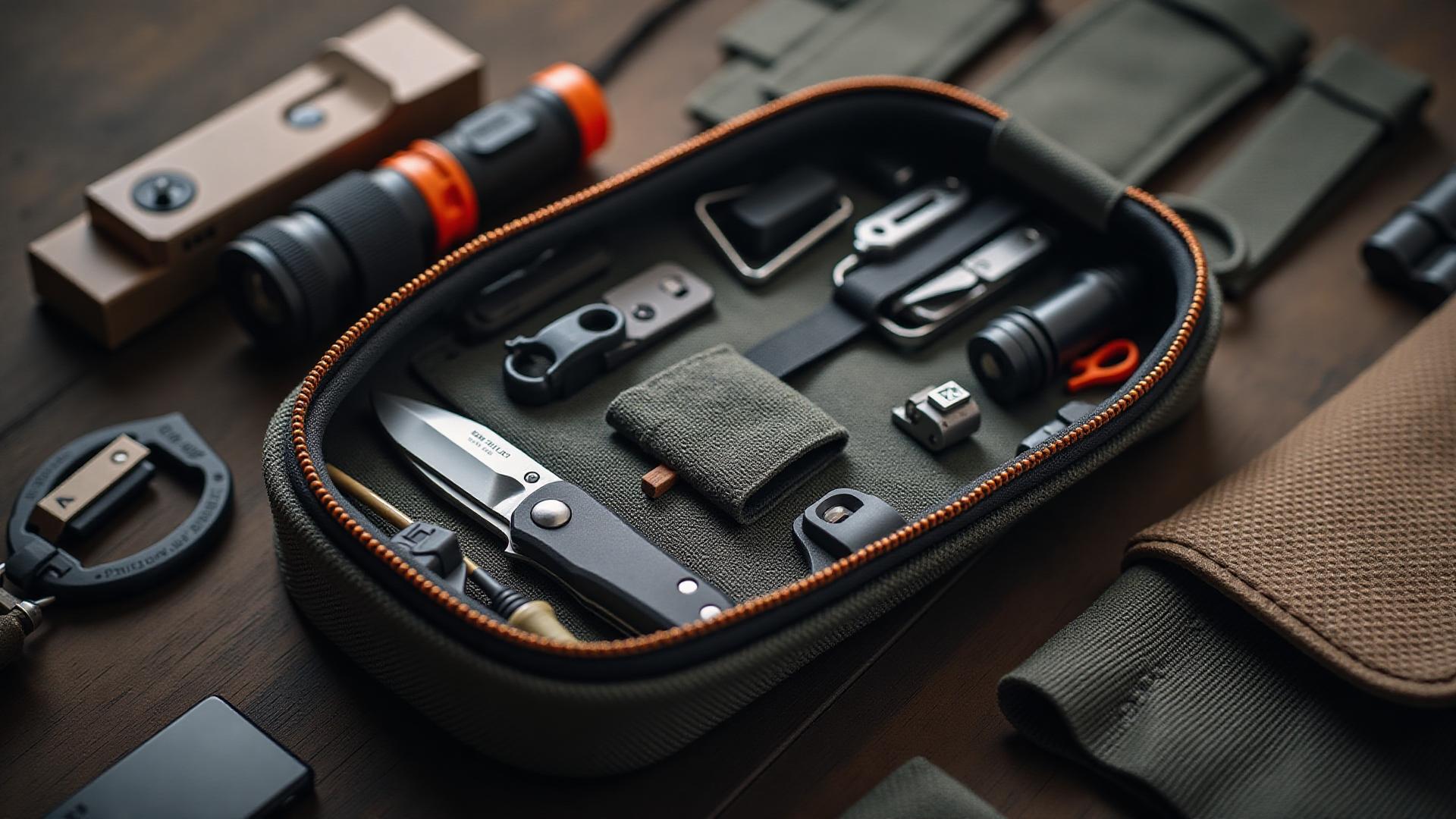
You're a survivalist. You carry a pouch, sling a pack, maybe walk with tools you'd use if society got cranky. But wait — in the UK, carrying stuff is not lawless. There are rules. Get them wrong, and your EDC (everyday carry) becomes a legal landmine.
Let's walk through what you can legally carry, what you shouldn't, and how to be a law-savvy survivalist when you "gear up" to head out.
1. Legal context: weapons, offensive items, and "good reason"
First, the sobering stuff:
- UK laws make carrying offensive weapons generally illegal. Anything made or adapted for causing injury or intended by you for that purpose is suspect.
- The Criminal Justice Act 1988 (Section 139) states: it's an offence to have a blade or sharply pointed article in a public place unless it's a folding pocketknife with a cutting edge under 3 inches (7.62 cm) and doesn't lock.
- Even a legal tool can be considered an illegal weapon if the court believes your reason for carrying it was to do harm. What matters is intent + context.
- Carrying items solely for self-defence is not a valid "good reason" under UK law. That's a key difference from some other countries.
Legal Warning
The penalty for carrying a prohibited weapon can include up to 4 years in prison, unlimited fine, or both. Your survival tools must look like tools (not weapons), serve legitimate use, and you must be able to justify carrying them.
Official Source
2. Core legal EDC items a survivalist can carry
Here's a practical, lawful toolkit you can carry on your person — in your pocket, pouch, or everyday bag — that stays on the right side of UK law (with caveats):
A. Non-locking folding knife (≤ 3 inches, non-locking)
This is your baseline blade tool. Many UK survival blogs and EDC guides mention this as the only blade you can safely carry without special reason.
Why it's allowed:
- • It's non-locking, so legally classified more like a simple pocket tool
- • Blade length ≤ 3 in (7.62 cm) fits within the statutory exemption
- • It must not be presented or used as a weapon
Use cases in survival context:
- • Cutting rope / paracord
- • Opening parcels
- • Basic field tasks
Warning: If the knife has a locking mechanism, or is fixed blade longer than 3 in, carrying it in public requires a good reason (e.g. work, outdoor tasks) and may still be challenged.
B. Multitools & Swiss Army-style tools
These are excellent EDC tools: pliers, screwdrivers, saws, small blades. They typically stay under scrutiny because their primary design is tool, not weapon. Most UK EDC & knife law guides accept these as lawful if blending into everyday utility.
C. Flashlight / Torch
A strong torch is arguably one of your best survival tools in an everyday carry. Legal, useful, often overlooked. Used properly, it helps navigation, signalling, inspection. If it has a strobe mode, use carefully — that might raise eyebrows in certain contexts.
D. Pen, Tactical Pen, Stylus Tools
Useful as writing tools, compact rod tools, or glass-breakers. Some EDC communities treat tactical pens as legal carry — but you must not present them as weapons. One must be cautious: if used to strike someone, they might be reclassified as a weapon in court.
E. Fire steel / Ferro rod
Pure survival gear. Used to make sparks. No controversy here. Good for tinder-starting. Safe to carry.
F. Compact First Aid / Medical Kit
Proper, legal, welcome: bandages, trauma dressings, antiseptic wipes, tourniquet (if legal in your area). Obviously legitimate use.
G. Communications gear (phone, power bank, radio)
You're allowed to carry these — they're tools. Radios (PMR446, etc.), GPS devices, satellite messengers — no issues.
H. Paracord, utility cord, carabiners
Strong, useful gear. No legal risk. Clip to bags, fold, store in pouches — completely normal.
I. Waterproof matches, lighter
Essential survival items. No legal issue, so long as they're standard. A torch + lighter combo is common.
3. What you should NOT carry (or carry carefully)
Here's where survivalists often misstep:
Prohibited Items
- • Fixed blades, longswords, machetes, knives with locking mechanisms — unless you can prove a valid reason
- • Pepper spray, CS gas, stun devices — typically illegal in the UK. Even if marketed as "self-defence," possession can lead to prosecution
- • Knuckledusters, batons, brass knuckles — offensive weapons by design
- • Any concealed weapon carried for defense — regardless of design, it can be classed as illegal if intention is suspect
- • Improvised weapons — e.g. sharpened screwdrivers carried solely for harm. Legal definitions often include "adapted" weapons
EODSurvival Tip
If you carry something potentially risky, always have a legitimate, documented purpose (e.g. for work, hiking, fishing) — not "just in case."
4. Legal defence & context: "Use, not intent"
In UK courts, whether your item becomes an illegal weapon can hinge on intent, situation, and how you use it.
- An object that is normally lawful (e.g. a torch, umbrella, pen) can become an "offensive weapon" if used or carried with intent to injure.
- If you can show a valid, non-defensive reason for carrying it, that strengthens your defence.
- In your home, using reasonable force to defend yourself is allowed under UK law: You can use reasonable force against intruders to protect yourself or others.
Important: Just because you can smash an attacker with a frying pan if needed in your home, doesn't mean it's legal to stroll the streets carrying a frying pan as your EDC.
Official Source
5. Realistic Survivalist EDC setup (within law)
Here's an example loadout that many UK survival / EDC folks adopt — legal, effective, versatile:
Complete Legal EDC Kit
That's a bag of tools — not a bag of weapons.
6. Final wrap: Gear smart, don't gear risky
You're a survivalist, not a vigilante. In the UK, laws keenly examine why you're carrying tools. Carry gear you can explain, use legitimately, and stand by in court.
Let your EDC be about survival — not street fights. If you follow these tool rules, you'll not only stay prepared, you'll stay legal.
Prepared, not prohibited.