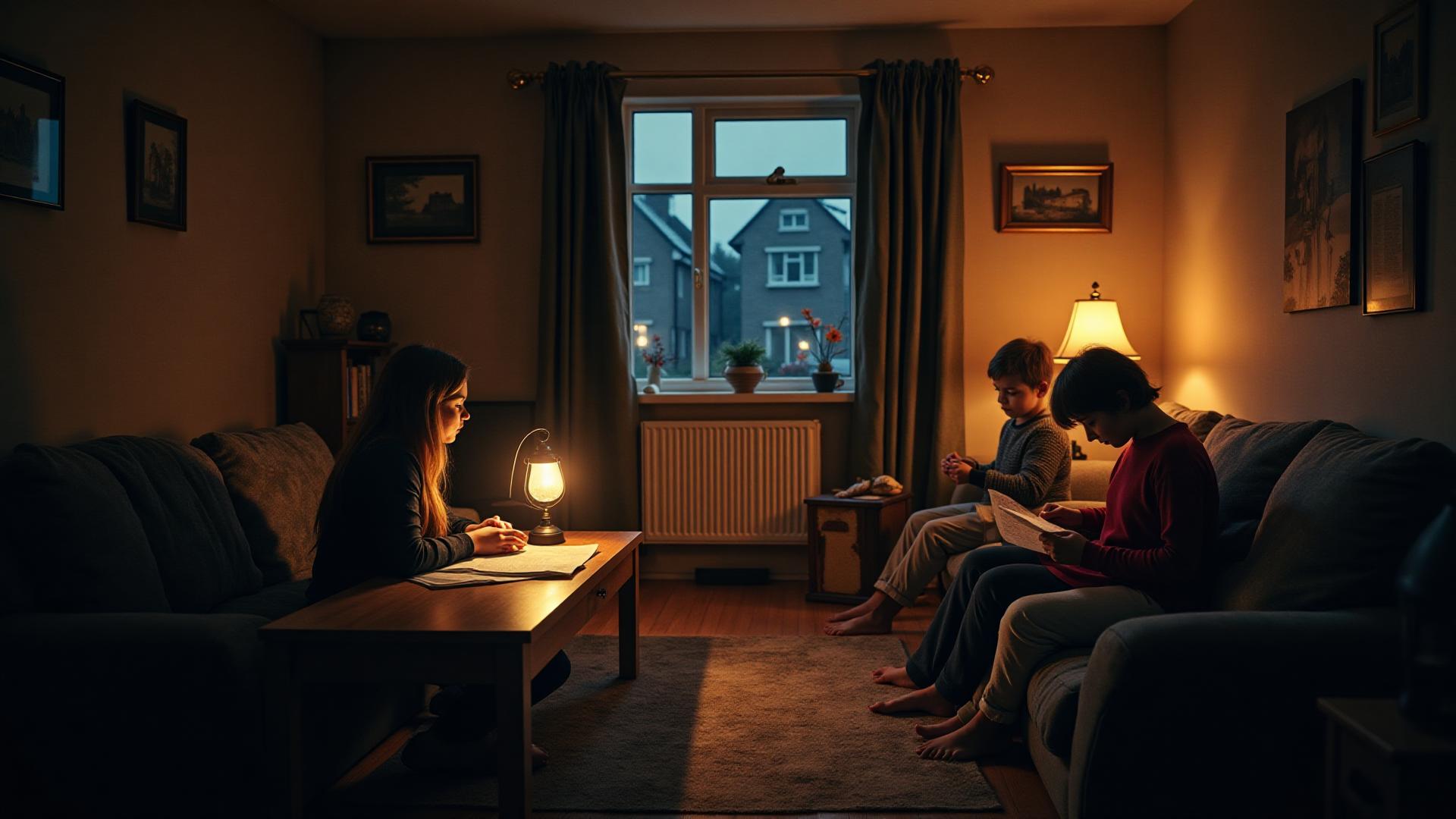
Most UK families don't wake up in the morning imagining power cuts, burst water mains, sudden winter freezes, or emergency trips to A&E. We expect the lights to come on. The boiler to hum to life. The taps to run. The NHS to answer the call when we need help.
Yet somewhere in the back of our minds, we also know the system is strained. We've watched neighbours lose power in a storm. We've stood in queues during supply shortages. We've heard reports of ambulance delays and grid instability.
Preparedness doesn't begin with panic; it begins with a quiet recognition of reality — and the calm decision to do something about it. This is the heart of the essential prepping skills UK families truly need: everyday abilities that make your home safer, your routine steadier, and your family calmer when life becomes uncertain.
Think of this as the UK's no-drama survival playbook. A guide built for ordinary households, not homesteaders. A place where confidence grows, fear shrinks, and practical steps actually feel… doable.
Why a No-Panic Approach Works Best for UK Families
People often imagine "prepping" as stockpiling dusty tins or building a bunker in the garden. But in the UK — where flats sit side-by-side, boilers rely on electricity, and storms rarely announce themselves politely — preparedness looks different.
It's subtler. More domestic. More human.
- It's knowing what to do when the lights go out and your child asks, "Mum, what now?"
- It's knowing how to keep everyone warm when the boiler clicks off during a cold snap.
- It's recognising that even a few missing skills can snowball into chaos — or calm.
And that's the difference this guide aims to make.
Skill 1: Blackout Confidence — How Families Stay Safe When the Lights Go Out
The moment the house goes dark, time seems to stretch. You hear the fridge stop. You notice how quiet everything becomes. Kids look to the adults for reassurance.
This is where blackout confidence matters — not in a generic "buy a torch" sense, but in a lived, practiced sense.
What your family should be able to do within 60 seconds of a blackout
- Find light sources without fumbling.
- Move around safely without tripping over the dog, Lego, or stair edges.
- Stop heat loss in winter by closing internal doors and gathering in a "warm room."
- Keep phones and essential devices powered, even if the outage stretches into hours.
Little drills that turn panic into muscle memory
Try these once a month:
- Turn off the lights and let every person find their torch.
- Ask kids to "guide" an adult to the warm room.
- Time how long it takes to gather the essentials.
- Practice moving through hallways in near-darkness to build familiarity.
➡ See also: How to Communicate During a Power Outage in the UK
Blackout readiness isn't about stockpiling; it's about knowing you can function without the grid for long enough to stay safe.
Skill 2: First Aid That Matches Real UK Emergencies
Most first aid moments don't look like action films. They happen in the kitchen, the playground, or the loo.
- A hand slips while cutting vegetables. A child touches something hot. A parent falls on icy steps.
- A teen has an asthma episode.
- Someone faints during a winter illness.
These are the events that shape a family's emergency story.
The UK household emergencies worth training for
- Minor to moderate burns
- Deep cuts and heavy bleeding
- Slips, sprains, and fractures
- Asthma and breathing trouble
- Severe allergies
- Fever episodes in children
- Hypothermia risks during heating failure
A realistic family-first aid progression
- Adults learn bleeding control and burn response.
- Teens learn airway basics and how to help an adult who collapses.
- Children learn how to call 999 calmly and clearly.
- Everyone knows exactly where the kit is — and how to use it.
➡ Explore: UK Emergency First Aid & Safety Guide
When the family moves as a team, fear gives way to competence.
Skill 3: Water Security — A Skill So Simple You'll Wonder Why You Never Practiced It
Clean running water feels eternal in the UK… until pipes freeze, mains burst, or contamination warnings ripple through a town.
Families don't need industrial setups. They need practical, lawful, safe methods to secure drinking water.
Skills that genuinely matter
- Knowing how to fill storage containers quickly and safely
- Using a gravity-based water filter
- Identifying when water is unsafe
- Understanding UK rainwater rules (hint: collecting is fine; using it indoors is not)
Beginner-friendly water readiness
- A few sturdy bottles or jugs
- One quality filter
- A simple rotation habit (use oldest water first, refill weekly)
It's the easiest prepping win there is — and one of the most important. Learn more in our Water Survival Guide UK.
Skill 4: No-Power Cooking & Heating — Because Crisis Feels Colder in the UK
British homes are uniquely vulnerable during outages because gas boilers need electricity to start and run. When the grid fails, heating often fails too — exactly when families need warmth most.
Skills that prevent panic in cold weather
- How to set up a warm room in under five minutes
- How to use indoor-safe heaters correctly
- How to cook without mains power
- How to recognise carbon monoxide risk signs
Safe, UK-appropriate no-power cooking
- Camping stoves outdoors or in extreme ventilation
- Thermal cookers
- Gel-fuel or Sterno (again, ventilated)
- Fire pits or barbecues never indoors
➡ Read: Cold Weather Survival: Hypothermia, Snow, Ice & Winter Preparedness
These are the skills that make winter outages survivable — and far less frightening.
Skill 5: Communication That Doesn't Collapse When Wi-Fi Does
The most terrifying part of an emergency isn't the event — it's not knowing where your loved ones are.
Families need a communication plan that outlives phone batteries and mobile towers.
What a good family communication plan includes
- A primary contact method
- A backup method
- A physical meeting location
- A timeframe for regrouping
- A radio or battery-powered device
The 15-minute safety drill
- Everyone names who they'll contact first
- Kids point to the meeting spot
- Adults check radios or backup batteries
- Teens practice making decisions on their own if separated
When communication is rehearsed, fear has fewer places to hide. Check out our guide on Family Communication Plans UK.
Skill 6: Evacuation Skills — The UK Version (Not the Movie Version)
"Bugging out" in the UK rarely means disappearing into woodland. It usually means leaving a compromised home — a fire in the building, severe flooding, or structural risk — and going somewhere safe.
UK-specific evacuation knowledge
- Flat-dwellers must rely on stairs, not lifts
- Many regions have known flood corridors
- Emergency services expect orderly, fast compliance
- A "grab bag" should be compact and legal for dense environments
Family roles prevent chaos
- One person gathers documents
- One handles children or pets
- One carries water and meds
- One manages communication devices
Evacuation is a choreography. Roles make the dance smoother. Learn more about UK Legal Prepping: What You Can & Can't Do.
Skill 7: Emotional Resilience — The Quiet Skill That Holds Every Other One Together
Children respond to the emotional temperature of the adults in the room. When fear rises, confusion rises with it. And during a crisis, confusion is dangerous.
Emotional skills that anchor families
- Staying calm in the first five minutes (the panic window)
- Reducing noise, light, and sensory overload
- Keeping familiar routines wherever possible
- Practicing grounding or breathing techniques
➡ See: Mental Resilience & Prepper Burn-Out
The brain is your first survival tool. Treat it like one.
The 15-Minute Weekly Readiness Habit (That Changes Everything Over Time)
Preparedness doesn't need to dominate your life. Most families can become resilient with a simple weekly rhythm:
- Practice one skill.
- Review one scenario.
- Check one supply category.
- Update anything that changed.
- End with a conversation, not a lecture.
Small repetitions build strong families.
Family Questions You Might Be Asking (And Honest Answers)
"How much prepping is 'enough' for a normal family?"
Enough is when you can manage 48–72 hours of disruption without fear or chaos. Anything beyond that is a bonus.
"Do my kids really need to know this stuff?"
Yes — gently, age-appropriately, and with reassurance. Kids trained in simple tasks panic far less.
"Is prepping expensive?"
Skills cost nothing. Gear helps, but only after the basics. Most families already own 80% of what they need.
"What if I skip something important?"
That's why the weekly habit matters. You catch gaps naturally.
"What's the first thing I should do after reading this?"
Choose one skill. Just one. And practice it today.
Products / Tools / Resources
A few items — responsibly chosen — can make the learning curve easier:
- Quality torches for adults and children
- Rechargeable battery banks for phones and radios
- A family-friendly first aid kit
- Gravity-fed water filter
- Indoor-safe heater for winter outages
- Compact camping stove for no-power cooking
- Printed emergency plan with contacts and meeting points
- A simple household radio that runs on batteries
Use what you have first. Add what you need slowly. Preparedness is a journey, not a shopping list.
EODSurvival's Final Word
At EODSurvival, we believe preparedness begins with small, practiced skills — not expensive gear or doomsday thinking. The families who handle emergencies best are those who've rehearsed the basics: light, warmth, water, communication, and calm. Start with one skill this week. Practice it together. Then build from there. Resilience isn't born from fear; it's built through repetition, confidence, and the quiet knowledge that your family knows what to do when it matters most.
Download Your Free 72-Hour Blackout Checklist
Get our comprehensive guide to help your family prepare for power outages and emergencies.
External Sources & Further Reading
Related Articles
72-Hour Blackout Checklist
Complete preparation guide for extended power outages
Urban Apartment Emergency Preparedness
Flat-friendly survival strategies for UK city dwellers
Wilderness Survival Fundamentals
Core outdoor survival skills for UK environments
The Survival Rule of Threes
Master the priorities that keep you alive in any emergency