Introduction
You've stocked up on tinned beans, candles, and maybe even a power station. But what happens when you cut your hand opening one of those tins, or your neighbour collapses from heatstroke during a blackout?
That's where medical and safety preparedness come in. Food and water will keep you alive — but first aid and basic safety measures will stop small mishaps from turning into major disasters.
In the UK and across Europe, it's easy to rely on the NHS or 112 emergency services. But in a crisis — a winter storm, flood, or extended blackout — professional help may take hours, or even days, to arrive. In those gaps, your preparedness is the difference between coping and catastrophe.
This guide is your cornerstone article on medical and safety survival. We'll cover first aid kits, must-have safety equipment, essential skills, and UK/EU-specific considerations so you're ready for whatever comes.
Why Medical & Safety Should Be Your Priority
When people start prepping, they usually think food, water, maybe a generator. Medical and safety gear often get pushed down the list. But consider this:
- A blackout in freezing temperatures can cause hypothermia in hours.
- A minor wound can become a serious infection without treatment.
- Fires are more likely during outages, when people use candles or stoves indoors.
The takeaway: a well-prepped medical kit and safety setup will probably save a life long before your stockpile of beans does.
The UK Emergency First Aid Kit Checklist
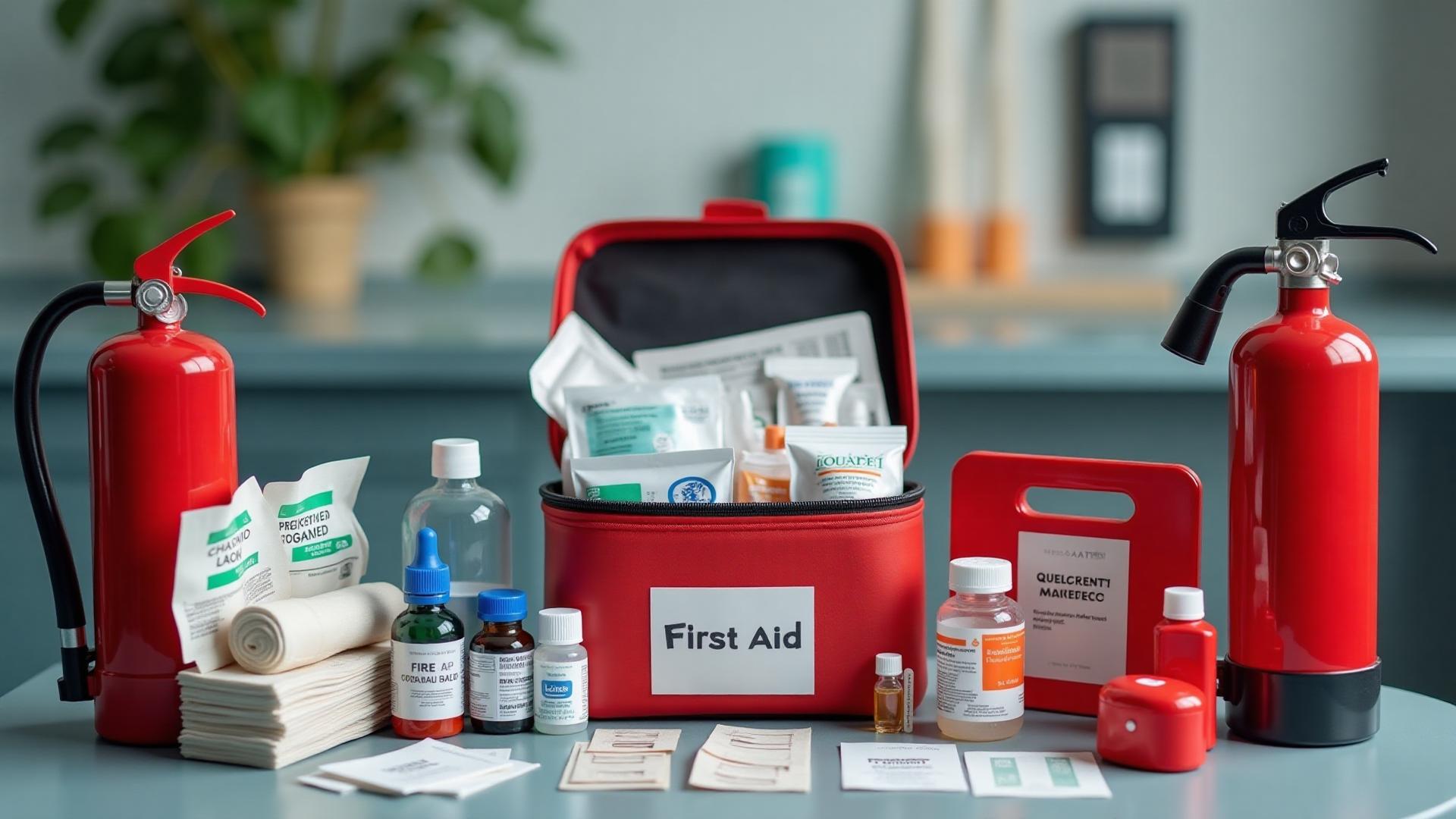
Every household should have a dedicated emergency first aid kit. Forget the dusty box of plasters under the sink — this is about having the right tools ready to treat injuries and stabilise conditions until help arrives.
Absolute Essentials
- Plasters (various sizes) — Cuts and scrapes happen constantly.
- Sterile dressings and gauze pads — For larger wounds.
- Bandages (crepe/elastic) — To secure dressings or support sprains.
- Antiseptic wipes/solution — Cleaning wounds is half the battle.
- Tweezers & scissors — Splinters, ticks, trimming dressings.
- Disposable gloves — Protects both you and the patient.
Trauma Gear (Advanced but Legal in UK/EU)
- Tourniquet (e.g., CAT Gen7) — For severe bleeding (still legal in the UK).
- Israeli bandage / haemostatic dressing — Quick, effective bleeding control.
- Foil blankets — Prevents shock and hypothermia.
Everyday Medicines
- Paracetamol & ibuprofen — Pain relief and fever control.
- Antihistamines — Allergic reactions, hay fever, insect stings.
- Rehydration salts (ORS) — For diarrhoea, heat exhaustion, dehydration.
- Burn gel & dressings — Candle accidents, stove mishaps.
Special Items
- Thermometer — Essential for fevers and monitoring hypothermia.
- CPR mask — Safer resuscitation.
- Eye wash — Dust, chemicals, or smoke.
Safety Equipment Every Household Needs
Fire Safety
- Fire extinguisher — Multipurpose (A, B, C class).
- Fire blanket — For cooking fires.
- Smoke alarms — Battery-powered with backups.
Blackout Safety
- Carbon monoxide (CO) alarm — Critical if you use generators, gas stoves, or open fires indoors.
- Torches and headlamps — Safer than candles. Keep spare batteries or rechargeables.
- Battery-powered lanterns — Illuminate rooms without fire risk.
General Safety Gear
- Whistle — Simple but effective signalling.
- High-visibility vests — Useful during night evacuations or road incidents.
- First aid manual — Even a pocket guide can boost confidence.
Skills: The Missing Piece
Gear is useless if you don't know how to use it. The NHS and charities like St John Ambulance or the British Red Cross offer affordable courses, and they're some of the best investments a prepper can make.
Top Survival First Aid Skills
- CPR (Cardiopulmonary Resuscitation) — Keep oxygen flowing until paramedics arrive.
- Bleeding control — Using pressure, dressings, or tourniquets.
- Wound cleaning & dressing — Prevent infection.
- Recognising shock — Look for pale, clammy skin, rapid breathing.
- Dealing with burns — Cool with running water, apply sterile dressing.
- Hypothermia signs — Shivering, confusion, drowsiness.
- Heatstroke signs — Flushed skin, confusion, high temperature.
Pro tip: Practise with your kit — open packets, apply bandages. Don't wait until adrenaline is high to figure it out.
Special Considerations for UK & EU Preppers
Medicines & Prescriptions
- UK/EU law: you can't stockpile prescription drugs freely.
- Talk to your GP about holding extra supply of essentials (inhalers, EpiPens, insulin).
- Check expiry dates — EU regulations require clear labelling.
Environment & Climate
- Cold & damp: hypothermia is common even above freezing in UK winters.
- Heatwaves: since 2022, Europe has seen deadly summer spikes. Store electrolytes.
- Floods: rising water brings sewage contamination — infection risk skyrockets.
Family & Pets
- Children: size-appropriate medicines, oral syringes.
- Elderly: mobility aids, spare prescriptions.
- Pets: vet-approved first aid kits for injuries.
Quick-Grab Printable Checklist
First Aid Kit:
- ☐ Plasters (assorted)
- ☐ Sterile dressings
- ☐ Bandages & gauze
- ☐ Antiseptic wipes
- ☐ Gloves, scissors, tweezers
- ☐ Tourniquet, Israeli bandage
- ☐ Foil blanket
- ☐ Painkillers, antihistamines, rehydration salts
- ☐ Burn gel, thermometer, CPR mask
Safety Equipment:
- ☐ Fire extinguisher
- ☐ Fire blanket
- ☐ Smoke alarms
- ☐ Carbon monoxide alarms
- ☐ Torches, headlamps, lanterns
- ☐ Whistle, hi-vis vest
- ☐ First aid manual
Common Mistakes to Avoid
- Relying on "kitchen cupboard kits" — Plasters and paracetamol won't stop a bleed.
- No batteries for alarms/torches — Always check spares.
- Not practising — Gear without skills is dead weight.
- Ignoring expiry dates — Meds, dressings, and even batteries degrade.
👉 Related guides: Check out our Best First Aid Kits UK review and DIY Trauma Kit guide for advanced medical preparedness.
Conclusion
Medical and safety preparedness isn't glamorous. It won't get you likes on Instagram like a shiny solar generator or a tricked-out bug-out bag. But when the blackout hits and someone needs care, this is the prep that matters most.
With the right first aid kit, safety equipment, and basic skills, you can bridge the gap until professional help arrives — and maybe even save a life.
Remember: Prepared, not paranoid. That's not just about beans and batteries — it's about being ready to care for yourself and your community when the unexpected happens.