How to Communicate During a Power Outage in the UK
A practical guide for everyday readers — how to communicate without a phone during a blackout
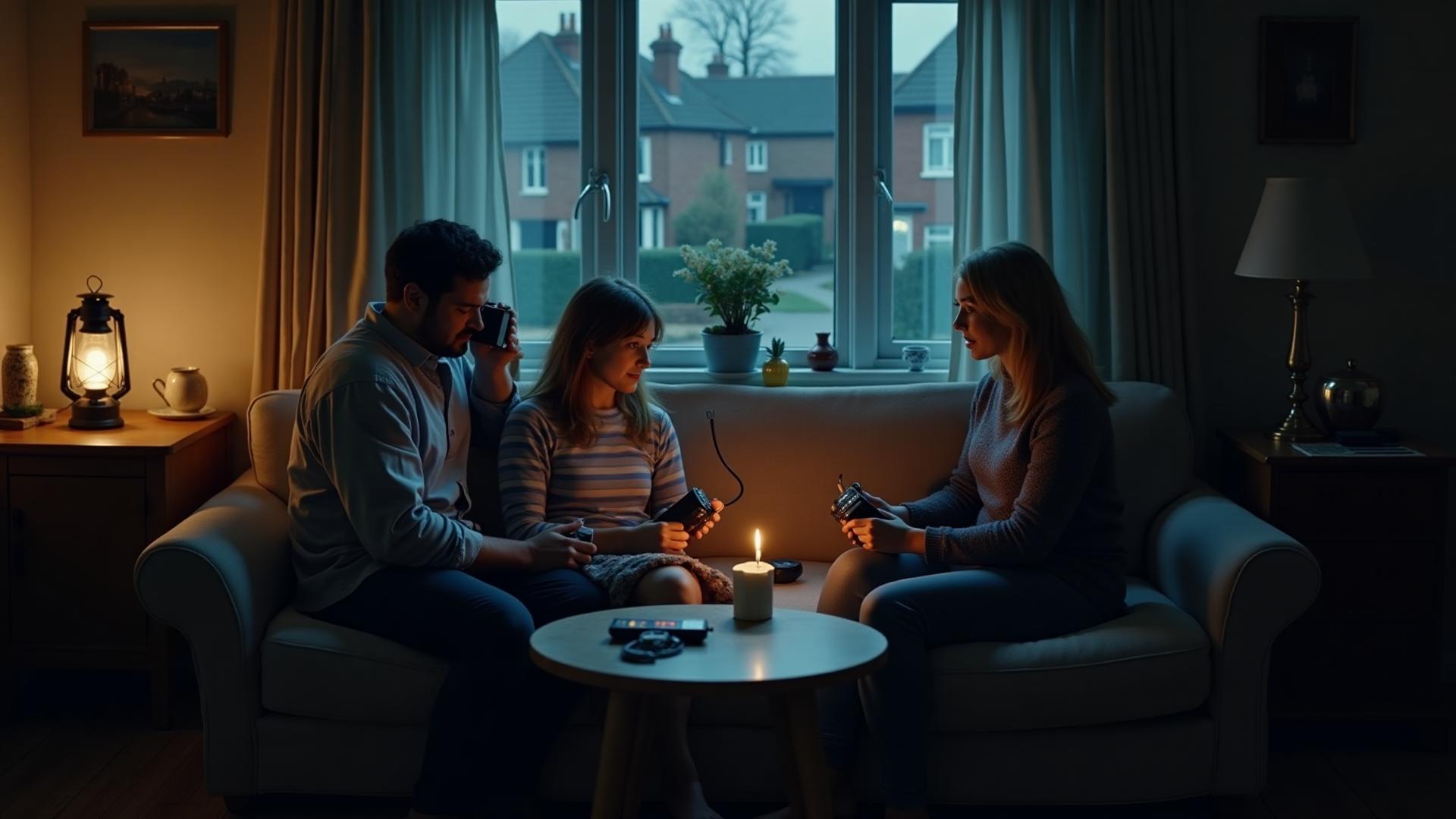
When the power goes out, most people instinctively grab their phones. But what happens when the mobile network crashes too? If you've ever stared at a "No Signal" screen during a storm, you already know how fragile our modern communications really are.
From power grid failures to local blackouts, the UK isn't immune to sudden outages — and when they happen, reliable communication can be the difference between calm coordination and chaotic confusion. This guide explains exactly how to communicate during a power cut in the UK, including what works when your phone doesn't, what to prepare in advance, and the essential backup tools that keep you connected when everything else goes dark.
Why Phones Fail During a Blackout
Most people assume that a power cut only affects lights and appliances, but phone networks rely on electricity too.
- Mobile towers have backup batteries, but these usually last only 2–6 hours.
- Broadband routers stop working immediately — even if your laptop battery still has charge.
- Landlines are increasingly digital (VoIP-based), so they fail without home power.
- Smart home systems and Wi-Fi calling become useless the moment the router dies.
That means that during a prolonged power outage or widespread UK blackout, you may lose not just lighting and heating, but your ability to communicate — at the very moment you most need to.
Step One: Prepare Before the Lights Go Out
Communication resilience starts long before the power fails. Here are a few proactive steps that will make all the difference:
1. Keep a Manual Contact List
When your phone battery dies or data sync fails, your digital contact list vanishes. Write down key numbers on paper — family, neighbours, doctor, local council, and emergency services non-emergency numbers.
2. Charge and Rotate Power Banks
Keep at least two fully charged power banks in your emergency kit. A 20,000mAh model can recharge a phone up to five times and power a small radio via USB.
3. Learn Low-Tech Signalling
Sometimes the simplest signals are the most effective:
- Whistles carry further than a shout and never run out of battery.
- Signal mirrors or flashlights can be used to attract attention from rescuers.
- Prearranged signals with neighbours (e.g. torch flashes in windows) can indicate you're safe.
Step Two: Reliable Communication When Phones Fail
When there's no phone signal during an emergency, you need independent communication tools — ones that don't rely on the grid or network infrastructure.
1. Hand-Crank or Battery-Powered Radios
These are the backbone of emergency communication. They keep you informed about government broadcasts, weather updates, and civil defence information.
Look for:
- DAB/FM/AM coverage – to catch BBC and local emergency channels.
- NOAA or public alert capability – even if rarely used in the UK, it future-proofs your gear.
- Hand-crank and solar charging – keeps it running indefinitely.
2. Walkie-Talkies / Two-Way Radios
These are perfect for short-range, local coordination — for families, community watch groups, or neighbours.
- Typical range: 1–3 miles urban, 5–10 miles rural.
- No mobile network needed.
- Many models include USB charging or replaceable AA batteries.
In the UK, licence-free "PMR446" radios are legal for personal use. Brands like Midland, Motorola, and Baofeng offer models under £50 that perform well even through walls and rain.
3. CB and HAM Radios (for Enthusiasts)
For long-distance emergency contact, amateur radio is unbeatable. Even if phone networks collapse, licensed HAM operators can relay messages across counties or even internationally.
If you're serious about resilience, consider:
- Foundation Licence (Ofcom/RSGB) – easy entry route for UK users.
- Portable HAM rigs with solar panels for off-grid operation.
- Joining local radio clubs who often run emergency communication drills.
Step Three: Keep the Power Flowing
Even the best communication tools are useless without power. Here's how to stay charged during an extended power cut:
1. Solar Chargers
Compact solar panels (10–30W) can keep radios, phones, and GPS units alive indefinitely. They're especially handy in rural areas or during multi-day blackouts.
2. Rechargeable Battery Packs
AA/AAA rechargeable packs and a USB battery charger let you reuse batteries across torches, radios, and walkie-talkies.
3. Vehicle Power
Your car can serve as an emergency charging hub. Invest in a 12V inverter to charge radios, phones, or even laptops via USB or mains adapters.
Step Four: Establish a Communication Plan
Technology is only half the battle — coordination matters just as much.
1. Family & Neighbour Network
Create a simple local communication plan:
- Who checks on whom?
- What's the backup meeting point if phones are down?
- What radio channel do you all tune to?
Print copies for each household. Keep one in your grab-bag and one on your fridge.
2. Use Broadcasts and Community Alerts
During a UK blackout, BBC Radio remains the most reliable information source. Tune to:
- BBC Radio 4 LW (198 kHz) for national updates.
- Local BBC stations for regional information on restoration efforts.
3. Consider Joining a Community Emergency Group
Many UK councils now support Community Resilience Teams or Neighbourhood Emergency Hubs. These often coordinate through radio networks when digital communication fails.
Step Five: Backup Tools for Blackout Communication
A few inexpensive gadgets can make a huge difference in maintaining contact:
| Tool | Purpose | Power Source |
|---|---|---|
| Hand-crank radio | Receive updates | Crank / Solar |
| Walkie-talkie (PMR446) | Talk within community | AA / USB |
| Signal whistle | Manual alert | None |
| Solar power bank | Charge essentials | Solar |
| LED torch with SOS mode | Light + signal | Rechargeable |
| HAM radio (advanced) | Long-range communication | 12V / Solar |
Keep all of these in a grab-and-go blackout kit, preferably in a waterproof pouch.
Bonus: Mental Preparedness
During a prolonged UK power outage, isolation can be as dangerous as the dark. Hearing a friendly voice on the radio or knowing your neighbours have a plan reduces panic and confusion.
Practise short drills — switch off your router and try going "no phone" for a few hours. See how well your family communicates using just radios or written messages. You'll quickly spot what needs improving.
External Resources
Final Takeaway
Communication failure during a blackout isn't just inconvenient — it can be life-threatening. By preparing now with the right mix of tools and plans, you can stay informed, coordinate with your community, and keep control in any crisis.
When the next power cut hits, you won't be asking, "How do I communicate without a phone?"
You'll already have the answer — and the signal.
Build Your Complete Communication System
Explore our comprehensive guides on emergency communication equipment and strategies