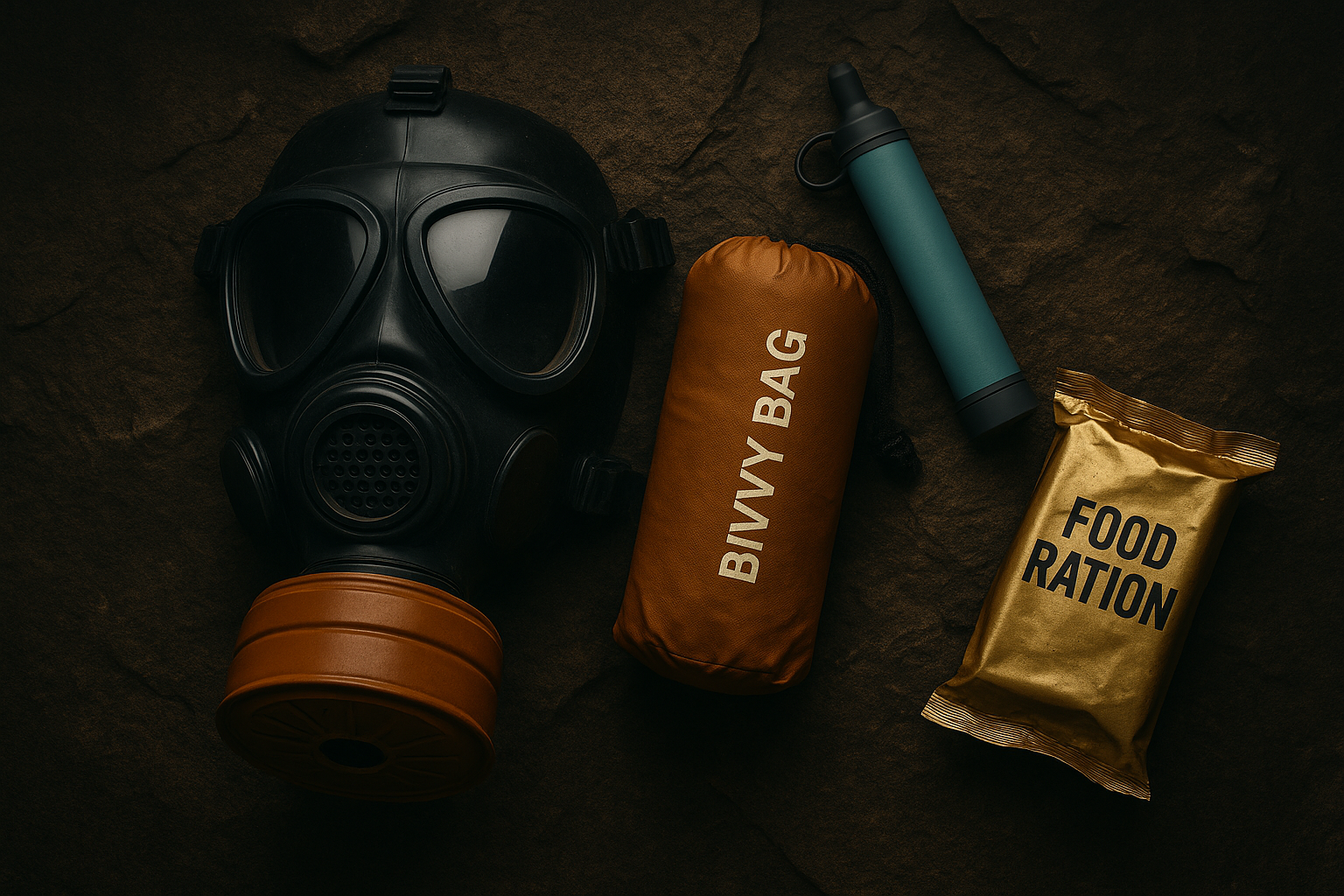
When disaster strikes, it's easy to panic. Your phone battery's dead, the lights are out, and your neighbour's already raided the corner shop for the last pack of Pot Noodles. In that moment, what do you actually need to focus on first to stay alive?
Preppers around the world rely on a simple, powerful framework called the Rule of Threes in Survival. It isn't just a catchy saying — it's a life-saving hierarchy of human needs that reminds us where to direct our energy in an emergency.
The Rule of Threes
It's a mnemonic, a survival guide, and frankly, a reality check. Let's break it down step by step — with a UK and EU perspective — to understand how this rule could save your life when the unexpected happens.
🫁 3 Minutes Without Air: Why Oxygen Tops the List
Air is the non-negotiable. You can't stockpile it, and you certainly can't go long without it. In everyday life, oxygen is something we take for granted. But in survival scenarios, it's often the very first element under threat.
Common Air Emergencies
- House fires — Smoke inhalation kills faster than flames.
- Collapsed buildings — After earthquakes or bombings, trapped air supply can dwindle.
- Confined spaces — Carbon monoxide poisoning from poorly ventilated generators or stoves is a hidden danger.
Prepping Tips for Air Safety
- Smoke masks: A compact smoke hood or N95 mask can buy crucial minutes in a fire.
- Carbon monoxide alarms: Absolutely essential for households in the UK/EU with gas appliances or wood burners.
- Ventilation: Never run generators indoors. A shocking number of blackout deaths come from this mistake.
Entertaining reality check: If you're reading this thinking, "I'll hold my breath and be fine," try timing yourself. Most people gasp after 45 seconds. Survival divers train for years to hit 3 minutes.
🏠 3 Hours Without Shelter: Exposure Will End You Faster Than Hunger
Once you've sorted out breathing, shelter jumps to the top of the list. Humans are remarkably fragile when it comes to exposure. Three hours in freezing rain, or a baking summer heatwave, and things start to unravel fast.
UK & EU Context
- Cold, wet climates: Hypothermia doesn't require the Arctic — damp autumn nights in Yorkshire or Brittany will do.
- Heatwaves: Europe's record-breaking summers have shown heat stroke is just as deadly.
- Urban survival: In cities, glass-and-concrete environments turn extreme weather into a magnifier.
Shelter Priorities
- Clothing: Your first line of defence. Layering, waterproofs, and proper boots are survival essentials.
- Improvised shelter: A tarpaulin, emergency bivvy, or even a bin bag can save you from windchill or rain.
- Urban shelter: Identify safe indoor spaces — underground car parks, train stations, or community centres.
Reality check: You don't need to be stranded in the Highlands to need shelter. Lose heating during a UK winter blackout, and you've just turned your own home into a survival situation.
💧 3 Days Without Water: The Dehydration Deadline
We've all gone without lunch. Some of us have even tried fasting diets. But go three days without water, and your body starts staging a full-scale rebellion.
Why Water Matters
- Dehydration leads to headaches, confusion, muscle weakness, and eventually organ failure.
- Even a 2% drop in hydration impacts concentration and decision-making — not ideal in an emergency.
UK & EU Water Realities
- Tap water is usually safe, but power cuts can disrupt pumps.
- Floods can contaminate supplies with sewage.
- Wild camping or bug-out scenarios mean streams and lakes may be your only option.
Prepping for Water
- Storage: Keep at least 2 litres per person per day for 3 days. For a family of 4, that's 24 litres.
- Purification: Portable filters like LifeStraw, water purification tablets, or boiling.
- Rainwater harvesting: Legal in the UK and much of Europe, though local rules vary.
Reality check: Coffee, beer, and energy drinks don't count. In fact, caffeine and alcohol make dehydration worse.
🍽️ 3 Weeks Without Food: Energy Matters, But It's Lower Priority
Food is important, but in survival terms, it's the least urgent of the big four. That's why food sits at the bottom of the Rule of Threes.
Why Food Can Wait
- Most healthy adults can last 2–3 weeks without solid meals, though performance plummets after a few days.
- Lack of calories weakens your body's ability to regulate temperature, repair tissue, and think clearly.
Prepping Your Pantry
- 72-hour kits: Ready-to-eat items like energy bars, instant noodles, or tinned beans.
- Long-term storage: Rice, pasta, flour, oats — all cheap and calorie-dense.
- Freeze-dried meals: Lightweight, long shelf life, just add water.
- Rotation system: Use what you store, and store what you use.
UK/EU Context
- Supply chain disruptions (Brexit, strikes, storms) show how fragile "just in time" delivery can be.
- Food laws in the EU limit preservatives, so always check shelf lives on packaged goods.
Reality check: When the power goes out, your fridge contents become a ticking time bomb. Tinned food doesn't go off in 24 hours.
✅ Why the Rule of Threes Works
The beauty of the Rule of Threes is its simplicity. In panic situations, people make bad calls — like scavenging for snacks when they should be building shelter. By remembering the hierarchy, you keep your priorities straight:
- Air
- Shelter
- Water
- Food
That order could save your life.
🌍 Real-World Examples in Action
- Storm Blackouts in the UK: Thousands without heating. Those who thought ahead with sleeping bags and bivvy sacks managed fine. Others faced hypothermia in their own homes.
- Heatwaves in France: The elderly suffered most — not from starvation, but lack of cooling and hydration.
- Wildfires in Greece: Smoke inhalation, not flames, caused many casualties.
These real-world cases show the Rule of Threes isn't abstract. It's happening now, in our own backyards.
🎯 How to Train Your Mind with the Rule of Threes
- Drills: Practice blackout nights without electricity.
- Kit tests: Try building an emergency shelter in your garden.
- Water filters: Test them on a camping trip before you need them.
The more familiar you are with the hierarchy, the calmer you'll be when reality bites.
🎯 Conclusion: Be Prepared, Not Paranoid
The Rule of Threes isn't a scare tactic. It's a practical, science-backed tool to help you survive emergencies. Whether it's a winter blackout in Birmingham, a flood in Bavaria, or a wildfire in Spain, the priorities don't change:
- Breathe.
- Find shelter.
- Secure water.
- Then worry about food.
Remember this sequence, and you'll always know what matters most — no matter how bad the situation gets.
Preparedness is not about living in fear—it's about living with confidence. When the lights go out, you won't just get through it. You'll stay safe, calm, and ready.