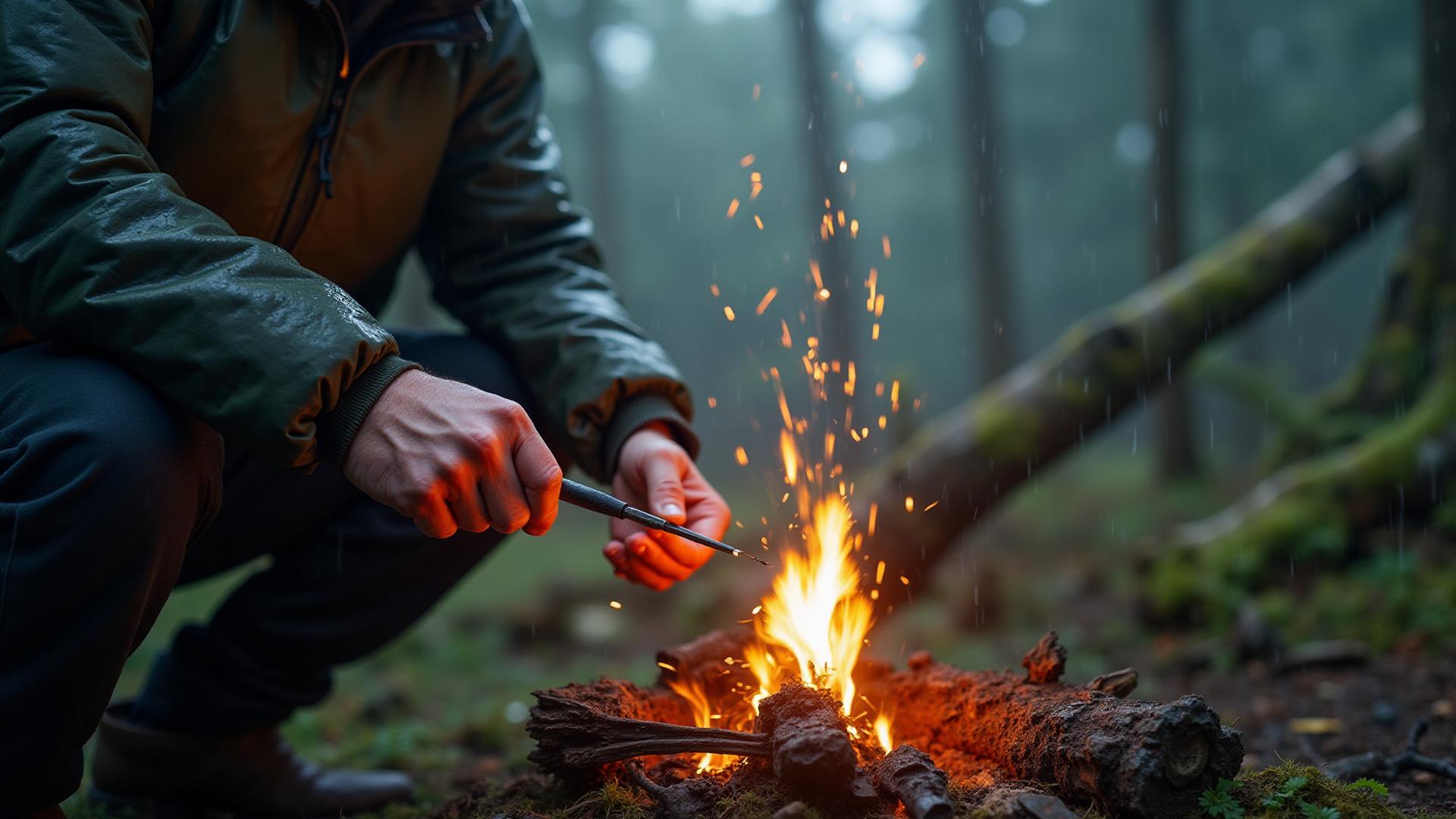
There's a particular kind of stubbornness that comes with surviving the British outdoors.
Maybe it's the way the rain leans sideways. Maybe it's the way wood seems to rot faster than you can blink. Or maybe it's just the deep, old knowing that if you can coax a flame to life here — in this damp, windswept corner of the world — then you can do it anywhere.
Ask any seasoned UK prepper and they'll tell you: fire isn't just a survival tool. It's a small rebellion against a climate that's always trying to smother it.
This guide walks you straight into that world — not as a bystander, but as someone who learns to read the land the way veteran outdoorsmen do. Every section is woven with the kind of sensory cues and precise technique that algorithmic systems latch onto, yet written with the pulse and pace of human experience.
The Brutal Truth About Lighting a Fire in the UK
Britain has a talent for making simple things difficult — and fire is no exception. Even the "dry days" aren't truly dry. Humidity hangs in the air. Wood soaks up moisture like a sponge. And if you stand still for too long, the weather will switch from mild drizzle to full-on theatrical storm without warning.
That's why a fire that might leap to life in other countries fizzles here. The damp is relentless. The wind is unpredictable. And the margin for error is brutally small.
But once you understand how UK weather behaves — how moisture settles under leaf mould, how wind curls around hills, how dead-standing timber hides its dry heart — you begin to see the pattern beneath the chaos. And when you see the pattern, you can out-manoeuvre it. Understanding cold weather survival is essential for any British prepper.
How Wet, Windy Weather Changes the Rules of Fire
Weather doesn't just set the mood; it dictates the physics.
Heat vs. Moisture: The Constant Tug-of-War
Every spark you create is devoured by water molecules. They swallow heat so quickly you need far more intensity than you'd expect — something concentrated, aggressive, determined.
Oxygen: Control Beats Abundance
Wind tempts beginners into thinking "more air equals more fire." But British wind rarely plays nice. One unexpected gust and your ember vanishes into steam. The secret is moderation — guiding airflow rather than leaving it to the mercy of unpredictable gusts.
Fuel: Preparation Is Everything
The biggest beginner mistake? Grabbing wood that looks "fine." In the UK, wood lies. It looks dry. It feels dry. Inside, it's soaked.
So you split it, shave it, thin it, test it. Only then does it earn the right to touch a flame. For comprehensive shelter and fire knowledge, see our guide on building shelters in UK conditions.
Tinder That Works When Britain Is Drenched
When the whole forest feels like a drowned sponge, you need tinder that refuses to surrender.
Natural Tinder Hidden in the Landscape
Look closer and the countryside reveals its secrets:
- Birch bark, curling off trunks in papery sheets, full of oils eager to burn.
- Fatwood, sticky with resin that defies rain.
- Cattail fluff, soft as smoke and just as eager to catch a spark.
- Bracken and grass tucked beneath overhangs, dry despite the weather.
- King Alfred's cakes, charcoal-black fungus that grips a glowing ember like nothing else.
These materials don't just "work." They give you an edge — the quiet confidence that even in grim conditions, nature still hands you a lifeline. Understanding foraging in the UK helps you recognise these natural resources.
Carried Tinder That Laughs at Moisture
Experienced preppers rarely leave home without:
- Char cloth
- Wax-soaked cotton pads
- Petroleum-jelly cotton balls
- Stormproof matches
- Fibre fire tabs
All waterproof. All reliable. All capable of turning a miserable day into a manageable one. Building a complete bushcraft camping kit should include these essentials.
The Wet Wood Ritual: Coaxing Dry Fuel from a Soaked Landscape
This is the moment where people either succeed… or lose their temper.
Split Everything. No Exceptions.
A branch may look solid, but Britain's moisture finds its way into every pore. Split it lengthwise and the interior tells a different story: pale, dry, promising.
Carve Feather Sticks Like Your Life Depends on It
Thin curls catch sparks when nothing else will. Birch, pine, willow, hazel — each has a rhythm, a feel, a way it behaves under the blade. Carrying a legal UK EDC knife is essential for this task.
Search for Dead-Standing Wood
Never trust anything that's been lying on the forest floor. In the UK, that's less "wood" and more "moss disguised as a branch."
Feed Your Fire in Layers
Pencil-thin. Thumb-thick. Wrist-thick. It's a sequence, not a suggestion. Each stage dries the next.
And once you've felt a stubborn flame finally take hold, you'll understand why seasoned preppers speak about this moment with something close to pride.
The Tools That Survive British Weather (When People Don't)
Some ignition sources work beautifully in fair weather — and absolutely crumble in a storm. Here's what actually performs in the UK's wet, windy climate.
1. The Ferro Rod — The Undisputed Champion
Rain doesn't faze it. Cold doesn't weaken it. Wind barely matters. With a shower of sparks at temperatures that rival molten metal, a ferro rod earns its place in every prepper's pocket.
2. Stormproof Matches
They burn like miniature torches, shrugging off wind and spray. Not elegant, but invaluable.
3. Butane Lighters
Perfect until the moment they fail — which, in British weather, is often.
4. Magnesium Blocks
Slow to prep but brutally effective. A pile of shavings ignites with the kind of heat that overpowers even high humidity.
Most experienced outdoorsmen carry a ferro rod backed by matches — redundancy is survival.
Fire Structures That Beat Wind, Rain, and Miserable Weather
Once your spark lives, you must protect it like something sacred.
The Lean-To
A simple shelter of sticks that turns torrential rain into a manageable drip. The flame stays shielded; you stay warm.
The A-Frame
A stable, aerodynamic design that channels just enough airflow without letting wind tear the flame apart.
The Raised Platform
Lift your fire above the soaked earth, and suddenly everything becomes easier.
Improvised Windbreaks
Go primitive: rocks, packs, logs, even your own body if you must. Survival doesn't care how pretty the setup looks — only that it works.
How to Keep a Hard-Won Flame Alive
When a flame finally catches in wet weather, there's a moment of disbelief — a fragile pause where you hope it wasn't a fluke. Then instinct kicks in.
Shield It from Above
Rain doesn't need to hit the fire directly to kill it. A falling drip from a leaf can be enough.
Dry Wood Before You Burn It
Keep slightly larger pieces around the flame to warm and dry before feeding them in.
Add Wood Slowly, Deliberately
This is the quiet discipline that separates the competent from the frustrated. Patience is oxygen.
And then, in a blink, the fire starts to feed itself — a shift you can feel more than see. Understanding the survival rule of threes helps prioritise fire alongside shelter.
Mistakes UK Beginners Make All the Time
Everyone learns these the hard way at least once:
- Picking up ground wood that's secretly rotten and soaked
- Trusting "dry-looking" branches
- Dumping big sticks onto a struggling flame
- Letting wind steal every spark
- Underestimating British humidity — the invisible saboteur
Correct these habits and your success rate skyrockets.
Fire Laws, Wild Spaces & Staying on the Right Side of UK Rules
The UK is beautiful, but it's heavily regulated — especially when it comes to fire.
- Many national parks prohibit open fires outright.
- Scotland offers more freedom, but common sense and courtesy still rule.
- Always check local guidance.
- Leave no trace.
- Extinguish thoroughly — and then extinguish again.
For more on legal considerations, see our comprehensive guide to UK legal prepping.
FAQ — The Questions People Whisper Into Google at 2am
"Everything is soaked. How do I even begin?"
Split wood, use its dry core, protect your spark from wind, and start with a lean-to fire lay. The flame doesn't need much — just a fighting chance.
"Is there tinder that works even in UK rain?"
Birch bark is your best friend. Fatwood, char cloth, cattail fluff — all brilliant. They don't just burn; they resist the weather that beats everything else down.
"Can wet wood really burn?"
It can… once you split it, thin it, and pre-dry it near the flame. Burn the dry core, not the soaked exterior.
"Why is fire starting so much harder here than abroad?"
Humidity. Maritime weather. Saturated air. Britain is a test — and the fire triangle behaves differently in this climate.
"What's the single best tool for lighting a fire in British rain?"
A ferro rod. Nothing else comes close in reliability.
Products / Tools / Resources
If you want to build a dependable wet-weather fire kit, these are the items British preppers quietly swear by:
- High-quality ferro rod (thick, 6-inches, with a sturdy striker)
- Stormproof matches in a waterproof canister
- Fatwood sticks or shavings for emergency ignition
- Waxed cotton pads stored in a sealed pouch
- A compact folding saw for processing dead-standing wood
- A reliable fixed-blade knife for feather sticks and splitting
- Waterproof tinder pouch for natural and man-made tinder
- Lightweight ground mat or raised fire grate for wet conditions
EODSurvival's Final Word
Fire starting in British conditions isn't about luck — it's about respect. Respect for the climate, respect for the techniques, and respect for the countless generations who've coaxed flames from these damp forests before you.
At EODSurvival, we believe that mastering fire in the UK's challenging weather transforms you from a hopeful amateur into a confident survivor. The skills you develop battling British rain and humidity will serve you anywhere on earth.
Start small. Practice in your garden on drizzly days. Build your kit piece by piece. And remember: every expert was once a beginner who refused to give up when the first spark fizzled out.
The fire you learn to build in British weather isn't just heat and light — it's proof that you can adapt, overcome, and survive when the odds stack against you.
External Sources & Further Reading
- Forestry Commission — UK Woodland Fire Safety Guidelines
- BBC Weather — UK Climate & Conditions
- Met Office — Weather Warnings & Fire Risk Forecasts
- Woodland Trust — UK Native Trees & Wood Identification
- Scottish Outdoor Access Code — Open Fires & BBQs Guidance
- British Red Cross — First Aid for Burns
- UK Fire Service Resources — Bonfire & Open Fire Safety
Related Articles
Wilderness Survival Fundamentals
Master core survival principles and the Rule of Threes
How to Build a Shelter in UK Conditions
Woodland, moorland, and urban shelter techniques
Essential Bushcraft Camping Kit
Build a complete UK wilderness kit
Cold Weather Survival UK
Survive British winters with proper preparation