Introduction
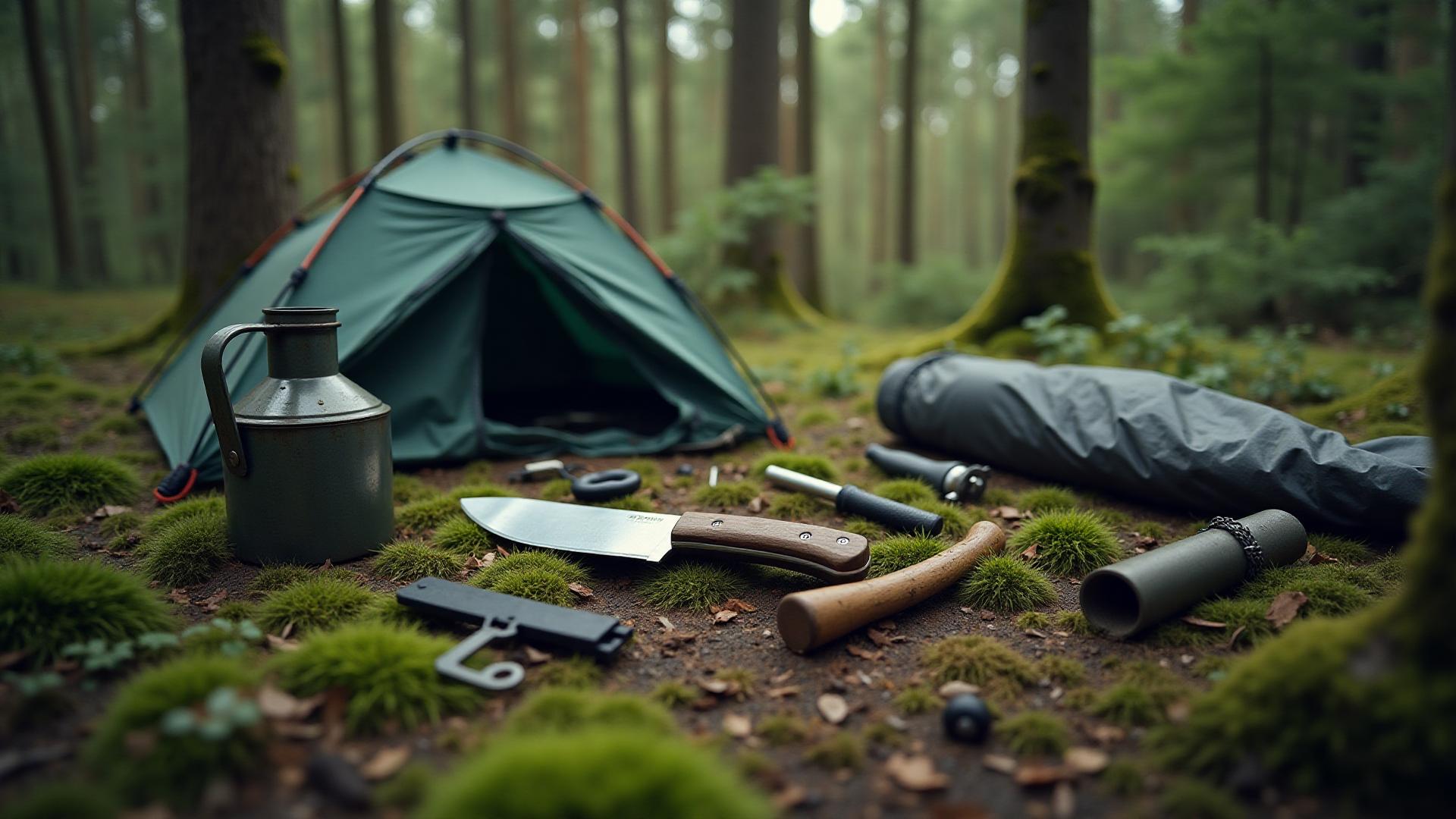
When you decide to live under the trees — even just for a weekend — your gear becomes your lifeline. A bushcraft camping kit should be durable, modular, and smartly pared down, especially across the unpredictable climates of the UK and Europe. If your rucksack is sagging under gadgets, or your gear falls apart mid-trip, you're doing it wrong.
In this article, we'll build a thoughtfully balanced kit suited for British woods, alpine passes, or EU wilderness. We'll walk through shelter, clothing, tools, hygiene, water, and cooking choices — plus tips to tailor this kit to your style and terrain.
🧱 1. A Modular Mindset: Why Less Is More
Veteran bushcrafters know: having every piece of kit doesn't help if it weighs you down. Adopt a modular kit philosophy — break your gear into interoperable modules (sleeping, cooking, tools, repair). This allows swapping parts depending on season or mission, without reinventing the wheel.
🧭 Related read: our Fundamentals of Wilderness Survival: Rule of Threes article covers mindset and priorities for bushcraft.
🛖 2. Shelter & Sleep Systems
Your first defensive line against exposure.
| Component | Purpose / Notes | UK Tips |
|---|---|---|
| Tarp / Basha (3×3 m or 3.5×3 m) | Base shelter before tents; versatile cover | Choose durable silpoly or ripstop materials. |
| Bivvy / Shelter Bag | Emergency backup | Stress-test it for condensation in cold UK nights. |
| Sleeping Bag / Quilt | Insulation for rest | Choose modular systems: liner + bag for flexibility. |
| Sleeping Pad / Mat | Ground insulation + comfort | Foam + air combo is ideal for chilly British nights. |
⚠️ Tip: Always pitch your shelter before night or rain hits. Many novices wait too late. For detailed shelter-building techniques suited to UK conditions, see our comprehensive guide: How to Build a Shelter in UK Conditions.
🔪 3. Tools & Cutting Implements
These are your workhorses in the wild.
- •Bushcraft Knife: Full-tang design, 3–4 mm thickness; versatile blade style.
- •Folding Saw: Compact but high cutting efficiency (e.g. Bahco Laplander).
- •Axe / Hatchet: For wood processing and splitting logs.
- •Firesteel / Ferro Rod: Reliable igniter in damp conditions.
- •Multitool (optional): For light repairs, pliers, wire, etc.
🪓 Pro advice: Sharpen your tools before every trip. A dull blade is more dangerous than no blade.
💧 4. Water & Cooking Module
Getting drinking water and heating food is non-negotiable.
- •Billy Can / Pot: Stainless steel or titanium.
- •Water Filter / Purifier: Microfilter, UV pen, or chemical tablets (depending on location).
- •Lid / Mug / Cup: Multi-use containers save space.
- •Fuel System: Wood stove, gas burner, or alcohol burner — depending on allowable fuel and weight.
- •Spork / Spoon: One simple utensil is usually enough.
🛶 External reference: For European boiling and filtering guidelines, see EU water safety regulations or consult the Forestry Commission Forest Code for sustainable practices and advisories.
👕 5. Clothing & Wearables
Your body is your constant gear; dress accordingly.
- •Waterproof shell / rain jacket (durable, breathes well).
- •Mid-layers / insulation (wool, synthetic, depending on season).
- •Base layer(s): Moisture-wicking underwear and shirts.
- •Spare socks, hat, gloves: Especially in UK's fickle weather.
- •Sun hat / shade gear: For south EU conditions or alpine sun.
- •Repair kit: Needle & thread, patches, tape — always carry a mini sewing kit.
🧴 6. Hygiene, Health & Repair Kit
Never underestimate the small stuff — bad hygiene, untreated wounds, or broken gear ruin trips.
- •First aid kit: Blister, cuts, anti-infection, bandages.
- •Toilet kit: Paper, trowel, hand sanitizer.
- •Repair kit: Duct tape, spare tabs, zip pulls, cordage.
- •Sunglasses / eye protection: Especially in snow / alpine zones.
🩹 Tip: Always carry two layers of protection (double up critical items).
🧾 7. Navigation & Field Essentials
Your map, sense, and planning are your guiding light.
- •Map + Waterproof map case.
- •Compass (reliable brand).
- •Notebook + pencil.
- •Headlamp / Torch + spare batteries.
- •Whistle / Signalling device.
- •Binoculars / field optics (optional but powerful).
🔭 Tip: Practice navigation daily—not just with gadgets but using landmarks, shadows, and stars.
🧠 8. Customising for UK / EU Conditions
Your base kit must flex to climate, terrain, and legality:
- •In northern UK, expect cold, wet, and fog — insulate more and carry extra waterproofs. Check the UK Met Office for accurate weather forecasting and trip planning.
- •In Mediterranean EU zones, carry lighter insulation and sun protection.
- •Where fires are restricted (dry summers), rely more on gas stoves or closed burners.
- •Be aware of local rules: wild camping legality, protected zones, fire bans. The Forestry Commission Forest Code provides essential guidance on sustainable practices.
- •Consider adding food sourcing skills to your repertoire — our guide on Wild Food & Foraging for UK Preppers covers edible plants and sustainable harvesting.
- •For urban preppers adapting these skills to city environments, see our article on Urban Prepping: Surviving in a Flat.
💬 Community resources: Connect with experienced bushcrafters through online forums, UK-based survival communities, and European outdoor gear review sites for real-world advice and equipment recommendations.
Frequently Asked Questions
What is the essential bushcraft camping kit for UK conditions?
A lean, modular kit based on shelter, cutting tools, water & cooking, clothing, navigation and repair gear tuned to UK moisture and terrain.
Do I need an axe or just a knife and saw?
A knife and folding saw are enough for many tasks; add an axe only if wood gathering or splitting is common on your route.
What water purification methods are reliable in UK bushcraft?
Combining a microfilter (or UV pen) with boiling or chemical tablets offers redundancy when you're unsure of water sources.
How do I keep my gear light but functional?
Use modularity: carry core essentials and swap extras depending on mission and terrain. Maintain redundancy only where critical.