Quick answer
The UK Government’s Be Ready advice recommends preparing for three days of disruption with drinking water, no-cook food, medication, light and information; it does not announce a specific imminent threat, and its drinking-water benchmark is 3 litres per person per day, with extra water needed for other uses.
The word “stockpile” can make a routine household checklist sound like a warning of something imminent. So it is reasonable to ask: what is the advice actually for?
The threats have been named. The government has pointed to severe weather, disruption to everyday services, cyber attacks and hostile activity that could affect supply chains. The published advice does not identify a specific imminent event, attack plot, date or target. It is framed as preparation for a range of possible disruptions, not a response to one particular incident.
🧭 What the government has named
On 22 October, the Cabinet Office published updated household advice and launched Be Ready, a three-year public information campaign. The government says it is intended to help people prepare for events such as severe weather that can disrupt services including power, water, phones and internet access. It points to storms last winter and wildfires this summer as examples of weather-related disruption. (Cabinet Office, 22 October)
Ministers have also spoken about wider risks. Defence Secretary Wes Streeting cited cyber attacks and supply-chain disruption caused by hostile state actors or terrorists, as reported by the BBC. These are risks to ordinary services, not evidence of a disclosed imminent attack. (BBC, 22 October)
Weather and food supply have featured in earlier reporting too. In September, Environment Secretary Dame Angela Eagle warned about the potential for a powerful El Niño and more extreme storms; the BBC reported that this was a risk outlook, not certainty about specific UK weather. A National Audit Office report published on 4 September identified extreme weather, cyber attacks and disease outbreaks as risks to food supply-chain resilience, and criticised gaps in Defra’s preparedness. (BBC, 4 September; National Audit Office, 4 September)
These are the threats and vulnerabilities described in public statements and reporting. They are not evidence that a particular event is about to happen.
🔎 What is not being said
The campaign does not set out a specific, named and imminent threat. It gives no attack plot, target or date. GOV.UK describes the advice as preparation for “events such as severe weather”, which can sometimes affect services. That is an all-hazards approach.
Nor does the three-day benchmark predict that a UK disruption would last exactly three days. The Cabinet Office says similar advice is used in France, Ireland and the Netherlands, and presents it as bringing the UK into line with European peers. The government says the campaign will build gradually over three years and cites storms last winter and wildfires this summer as examples of disruption. That is a programme timetable, not a declaration of an emergency. (Cabinet Office, 22 October)
📝 Editor’s note: “Prepare” has become “Be Ready”
If you have read our September resilience campaign explainer, you may have seen the earlier name, Prepare. The Cabinet Office says the Prepare website has been updated with Be Ready branding and new messaging, but that much of the household advice has not changed and remains evergreen.
The change is primarily in the campaign name and presentation. The basic household-preparedness message is familiar.
📋 What the checklist actually asks you to have
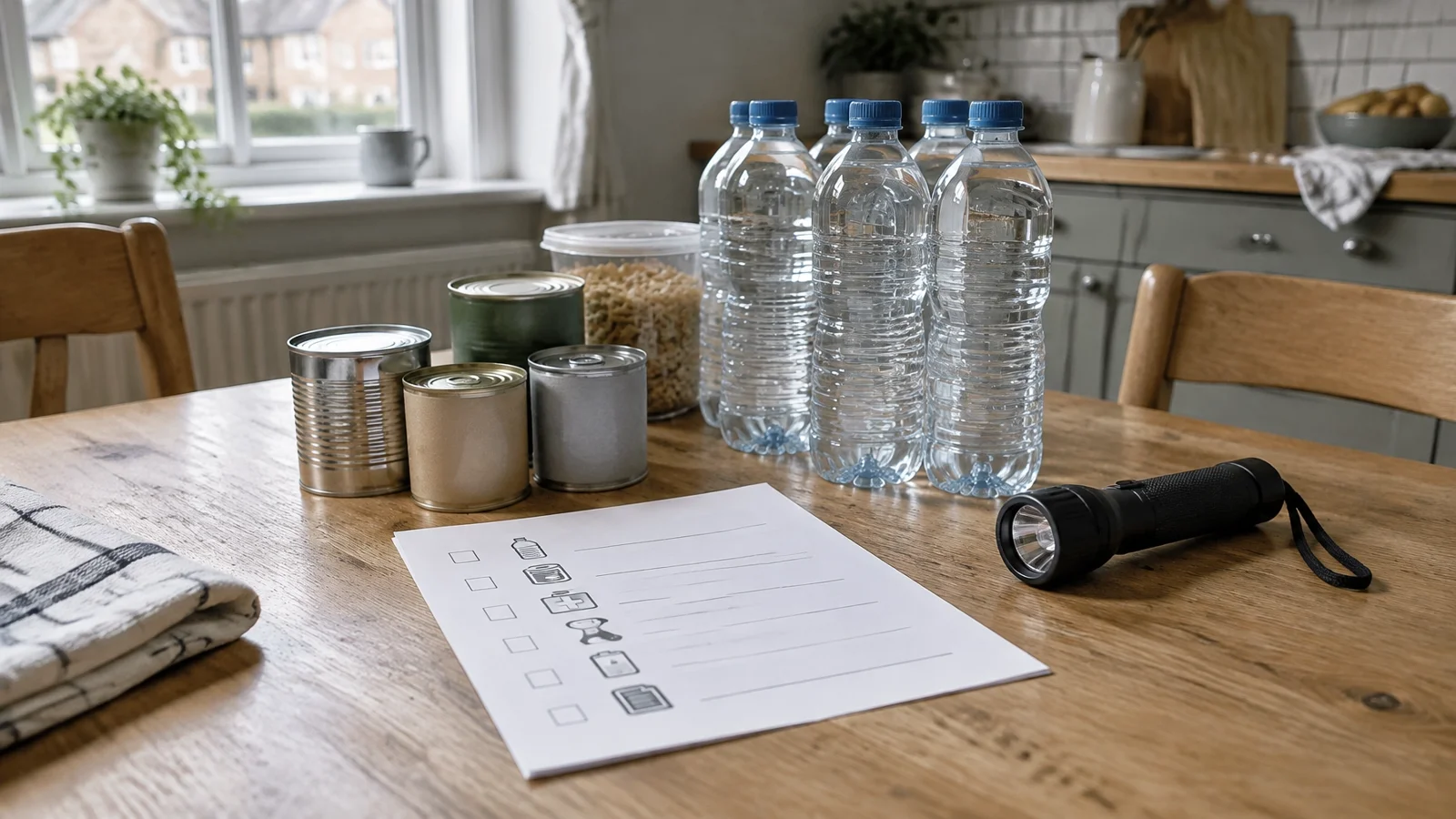
The Be Ready checklist advises households to plan for three days. It says to check what you already own, then build up gradually. Its categories are:
- Water: bottled water for three days, using 3 litres per person per day for drinking. You will need more for cooking and washing.
- Food: three days of non-perishable food that does not need refrigeration or cooking, such as tinned meat, fish or vegetables, dried fruit and nuts. Choose food you would normally eat, and keep a tin opener.
- Light and warmth: a torch and spare batteries, plus blankets, sleeping bags or warm clothing.
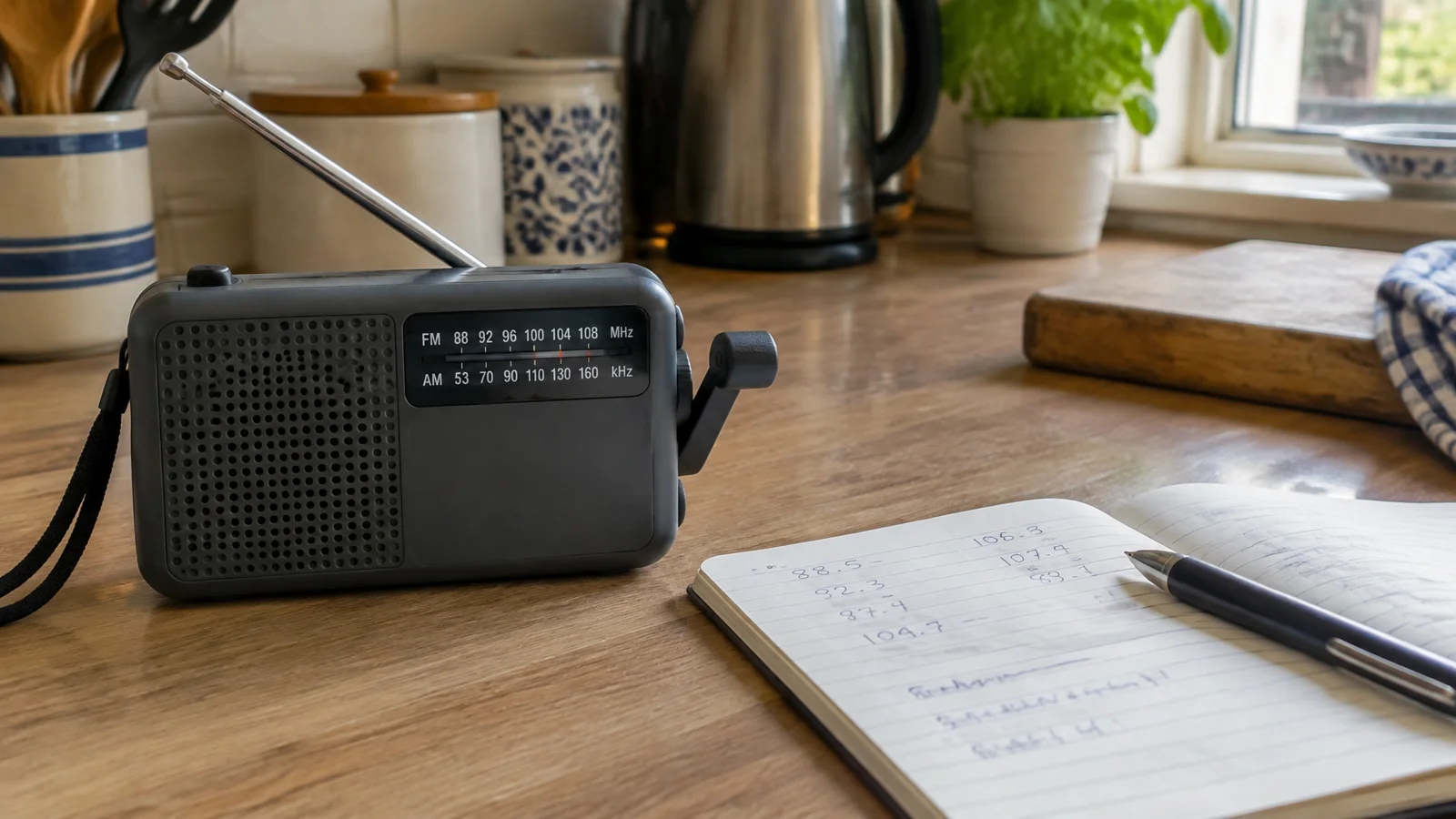
- Communication: a battery or wind-up FM radio and a charged power bank. The checklist also suggests writing down the frequencies of radio stations you use for news.
- Money and documents: a mix of cash in coins and notes, cards, copies of important documents and ID, phone numbers, and medication details and doses.
- Medical and hygiene: a first-aid kit, essential medication and medical supplies, hand sanitiser, wet wipes and bathroom products.
- Babies and pets: baby formula, nappies and wipes; pet food and bottled water. The checklist says ready-made or “ready-to-feed” formula is best because you may not be able to boil water safely to prepare powdered formula.
The checklist’s current drinking-water figure is 3 litres per person per day. In our earlier 72-hour kit explainer, we cited a 2.5–3 litre range as a drinking-water minimum, based on the guidance discussed there. The new campaign uses the top of that range as its headline figure. Neither number includes additional water for cooking, washing or other household needs.
🛒 Build it gradually, not in a panic
The government’s own checklist gives a straightforward method: see what you already have, plan for your household, and add missing items during regular shopping trips to spread the cost. Check supplies every six months and talk with neighbours about how you might support one another.
That means you do not need to buy a complete kit in one go. Start by checking your cupboards. Count usable food and drinking water, and note any needs specific to your household, such as medication, baby supplies or pet food. Add one or two useful items when your budget allows.
A few practical checks can make ordinary supplies more useful:
- Keep a tin opener where you can find it.
- Store the torch and radio with the right batteries or charging method.
- Write down essential contacts in case your phone is unavailable.
- Check medication supplies in good time before a repeat prescription is due.
- Consider whether anyone in your household may need extra help during an outage.
The Be Ready guidance also recommends checking eligibility for the free Priority Services Register. It helps utility providers identify customers who may need additional support during an interruption. Northern Ireland uses Customer Care Registers.
⚖️ A debate about tone and responsibility
There is a public argument about how the campaign has been presented. Critics, including opposition figures and some commentators, have argued that stockpiling language could cause alarm or prompt panic buying. Others say asking households to prepare places too much responsibility on individuals while broader defence and infrastructure resilience needs attention.
The BBC reports that Streeting urged household preparation for disruption to services and supply chains. That practical message is different from predicting an imminent event. (BBC, 22 October)
One cyber incident reported on the day of the launch needs careful context. The BBC reported that 32 UK government services were offline while potential cybersecurity issues were addressed. That does not establish that those services had been attacked. (BBC, 22 October)
✅ A practical starting point
This is a useful checklist for everyday resilience, not a signal to clear supermarket shelves. Start with what you have. Fill the gaps gradually. Adapt the quantities and supplies to your own household.
For more detail, see our guides to blackout kits, emergency lighting, wind-up radios, water filters, boiling water without power, grab bags and 72-hour household planning.
The core message is simple: be prepared for disruption, not frightened by headlines. Preparedness is about confidence, not fear.
Commercial, From the EODSurvival shop: our 72-Hour Household Plan
Our own publication, not an independent review. The plan is built on the same three-day benchmark the government is now promoting. How much water your household actually needs, how many usable meals you really have, and how to know when you have enough. Based on GOV.UK and EU emergency-preparedness guidance. Ebook, paperback and printable pack.
Independent publication, not government endorsed.
❓ FAQs
Sources
- Cabinet Office, “Households encouraged to take small, simple steps to stay prepared in an emergency”, 22 October 2026.
- Be Ready household checklist, October 2026.
- BBC, “UK needs to be ready for emergencies and hostile acts, warns Streeting”, 22 October 2026.
- The Guardian, “Every Briton should stockpile water and food supplies, government advises”, 22 October 2026.
- The Independent, “Streeting urges public be ‘alert not alarmed’ amid call to stock up for a crisis”, 22 October 2026.
- National Audit Office, “Resilience of the food supply chain to disruptions”, 4 September 2026.
- BBC, “Stock up on food to prepare for extreme El Niño weather, minister warns”, 4 September 2026.
Independent publication, not government endorsed.