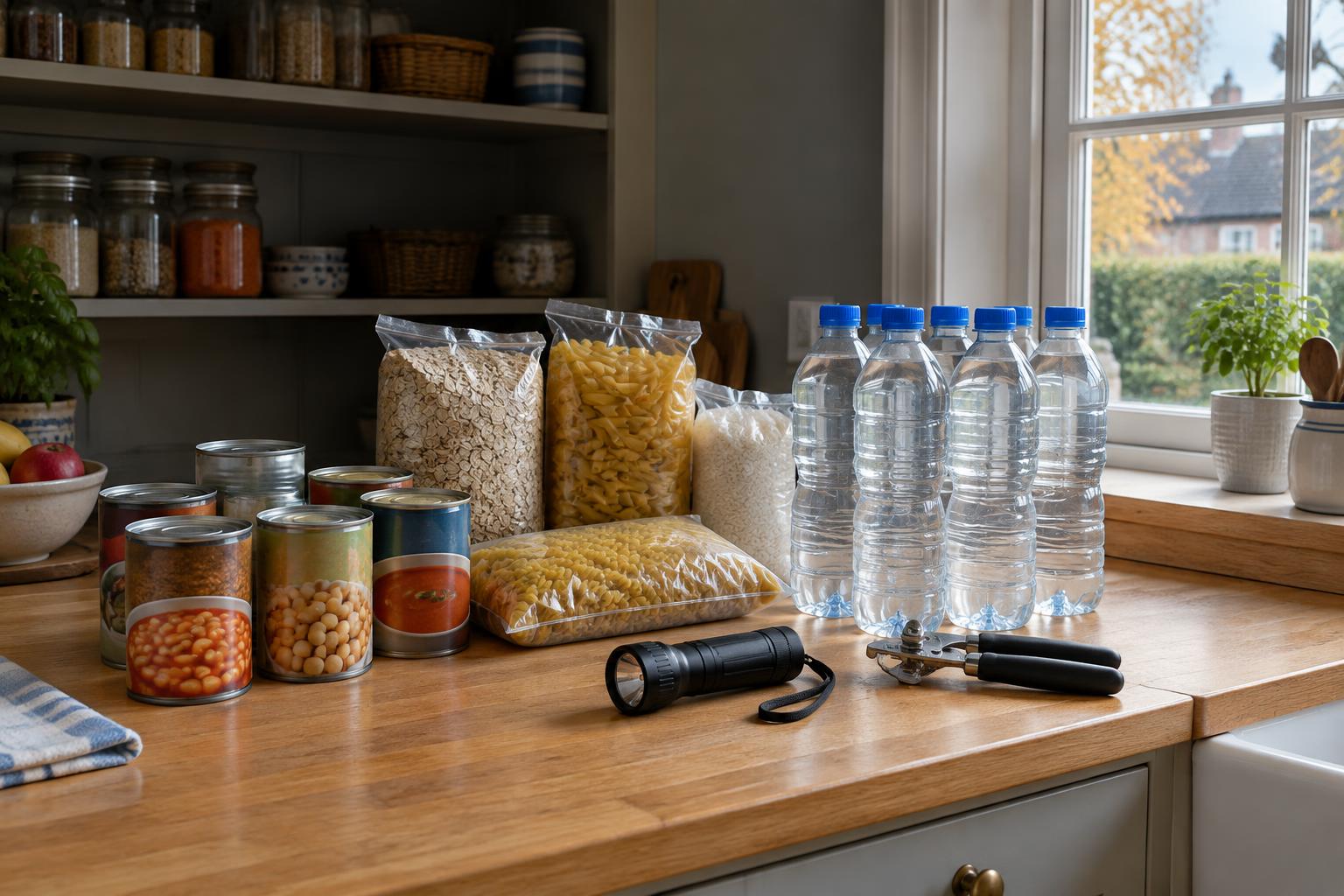
Quick answer: A 72-hour kit is a useful starting point for UK household emergencies, not a guarantee that every disruption will end in three days: prioritise drinking water, no-cook food, medicines, safe lighting and information, then gradually rotate a larger food buffer if your budget and space allow.
You are halfway through your weekly shop when another headline appears on your phone.
“Experts warn the UK is not prepared for food shortages.”
The story is serious. But it is not a signal to empty the supermarket shelves.
On 5 October, an open letter was delivered to Number 10 calling for food shortages to be treated as a national security issue. The Independent and The Grocer reported that it was backed by more than 150 experts. The letter’s organisers, Sustain and Foodrise, said more than 180 academics, farmers, food-sector specialists and community food leaders had signed it.
The letter criticised the idea that households should keep enough food for 72 hours. It said three days would be inadequate for a major disruption. It also made a stronger and fairer point: many households cannot afford to build a separate stockpile.
Both parts of the debate matter.
Your household can prepare for a short interruption. It cannot repair the UK’s food system. Those are different jobs.
📰 What the experts are arguing about
The letter says the UK relies heavily on a just-in-time food system. That means less stock is held across parts of the supply chain. It also points to the lack of strategic national food reserves.
The signatories called for:
- National, regional, local and community food-storage schemes.
- Local food resilience committees under the Civil Contingencies Act 2004.
- An audit of reliance on major food companies and imported inputs.
- Stronger planning for food access at national and local level.
- Greater recognition of food businesses and community organisations in emergency planning.
The Independent described the UK’s preparation for food shortages as “woefully inadequate”. That is the assessment of the reporting and letter’s signatories. It is not a prediction that food shortages are about to occur.
Related reporting in The Grocer said Defra had prepared a food-industry “war room”. More precisely, the department convened a Food Preparedness Group to improve coordination with the food industry. The 6 and 7 October reports described work on supply-chain vulnerabilities, cyber risk, domestic production and support for vulnerable people.
That is system-level resilience planning.
A household food supply is something different.
🧭 First, clear up what “72 hours” actually means
Most UK readers now assume that 72 hours is the Government’s exact household target.
It is not.
The UK Government’s Prepare campaign asks you to think about what you would need for an emergency “lasting a few days, such as a power cut or water outage”.
It recommends practical supplies such as:
- Food that does not perish quickly.
- Water.
- A torch and spare batteries.
- A radio.
- A power bank.
- Basic first aid and hygiene items.
- Medication and supplies for babies, pets or medical needs.
The UK wording is “a few days”. It does not set a universal 72-hour food stockpile.
The explicit 72-hour recommendation comes from the European Commission’s Preparedness Union Strategy, published in March 2025. That strategy recommends that households should be able to manage on their own for at least 72 hours during severe disruption.
The figure has since entered UK public debate and the coverage of the Government’s nine-item household kit list. It is useful as a planning benchmark. But it is important not to describe it as an exact UK Government instruction.
Why 72 hours? It gives households a short buffer while local services, utilities and emergency responders deal with an incident. It does not promise when help will arrive or services will be restored.
It is not a claim that every disruption will last three days. Nor is it a plan for a long supply interruption.
💧 The water calculation makes the issue concrete
Food is easy to picture. Water is where the numbers become real.
The UK Prepare guidance uses a survival minimum of around 2.5 to 3 litres of drinking water per person per day, citing the World Health Organisation benchmark.
For a household of four, that means:
- 10 to 12 litres per day for drinking alone.
- 30 to 36 litres for three days.
That does not include water for cooking, washing, flushing toilets, pets, babies or medical needs. Prepare also says around 10 litres per person per day allows for drinking, cooking and basic hygiene more comfortably. Needs vary: use your water company’s instructions during an incident.
A 72-hour kit can therefore be useful without being a complete household plan. It gives you a starting calculation. It also shows why “just keep some bottled water” is not a complete instruction.
For more practical guidance, see our food and water preparedness resources.
🧱 Think in three additive tiers
The sensible answer is not to choose between a 72-hour kit and a two-week supply.
Build in stages.
Tier 1: Cover the first 72 hours
Start with the basics you would need during a short power cut, water outage or local disruption:
- Drinking water.
- Food that needs no refrigeration.
- Food that needs little or no cooking.
- A manual tin opener.
- A torch or lantern.
- A battery or wind-up radio.
- A charged power bank.
- Spare batteries.
- Warm clothing and blankets.
- Essential medication.
- Hygiene supplies.
- A first aid kit.
- Important documents and phone numbers.
- Some cash.
- Baby, pet and accessibility supplies where needed.
This is the correct starting point because it addresses common household problems quickly.
Tier 2: Build towards one or two weeks through rotation
This is where affordability matters.
If you have the money and storage space, buying a separate emergency stockpile may be straightforward. Many households do not. The letter is right to say that household advice cannot solve that financial problem.
Do not buy a year’s supply.
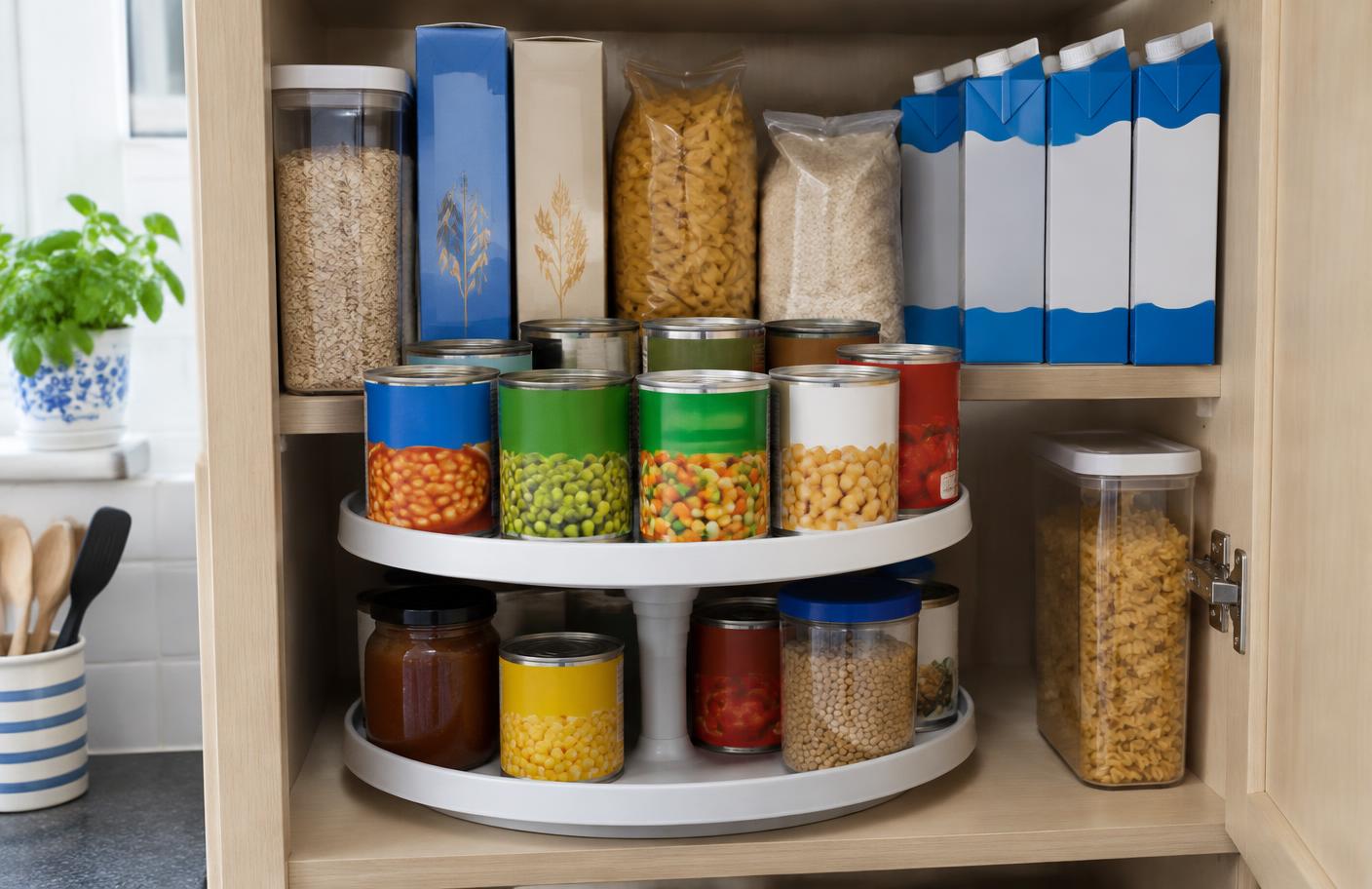
Instead, use rotation:
- Choose foods you already eat.
- Buy one extra item when your budget allows.
- Put the older item at the front.
- Use it during normal meals.
- Replace it on your next shop.
- Check dates and dietary needs regularly.
Rice, pasta, oats, tinned vegetables, beans, soup, fruit, long-life milk and familiar ready-to-eat foods may all have a place, depending on your household.
Rotation is the mechanism. You are not creating a forgotten cupboard that expires. You are maintaining a small buffer within your normal food supply.
A stockpile you eat from is a stockpile that works.
Tier 3: Add capability, not just equipment
Supplies help. Skills make them useful.
Ask yourself:
- How would you boil water if the power failed?
- How would you prepare food without an electric hob?
- How would you light one room safely?
- How would you receive information if mobile data failed?
- How would you manage medication that needs refrigeration?
- Who in your household might need extra help?
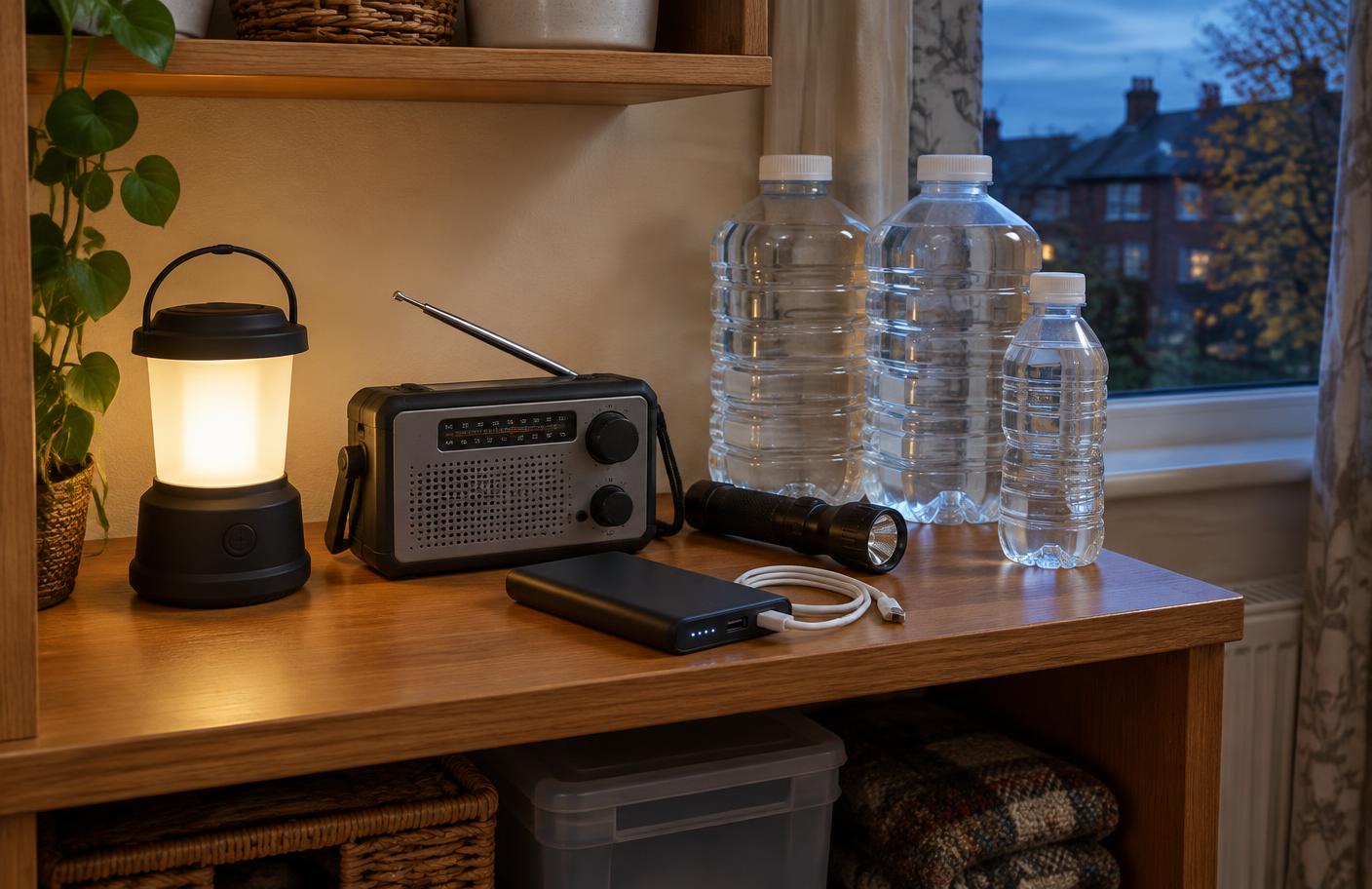
Read our guide to boiling water without power, and review our advice on emergency lighting and wind-up radios.
Do not buy equipment you have never tested. A stove, filter or radio is only useful if you know how to operate it safely.
🛒 What not to do
The letter is not asking every household to hoard food. Nor should you respond to a news story by panic-buying.
Avoid these mistakes:
- Buying a year’s supply of food you do not normally eat.
- Clearing shelves or buying more than your household needs.
- Treating a cupboard full of tins as a substitute for a plan.
- Buying gear that you cannot use safely.
- Ignoring water, medication, cooking and hygiene.
- Forgetting to rotate supplies.
- Assuming a household kit can fix a national supply-chain problem.
A calm, ordinary buffer is more useful than a dramatic purchase made under pressure.
🏛️ What the Government is doing
The letter asks for fuller use of the Civil Contingencies Act 2004 to support local food resilience committees.
Separately, The Grocer reported that Defra has established food-preparedness work with industry. The reported focus includes information-sharing, supply-chain planning and coordination around possible disruption.
The Government’s late-September nine-item household kit campaign is covered in our explainer, The UK Government’s resilience campaign: what the advice actually says.
These measures address different levels of resilience:
- Household preparation.
- Local emergency planning.
- National government coordination.
- Food-industry continuity.
This article does not assess whether those measures are sufficient. It is useful to understand what each one is intended to do.
🧾 What this means for you
The experts are arguing about national resilience.
The Government’s household advice is about personal readiness.
Both can be true at once. National systems should be resilient, and you should be able to get through a few days without relying immediately on shops, power or running water.
The practical position is simple:
72 hours is a starting point you can act on today, and a reason to think about the next two weeks, not a reason to panic about them.
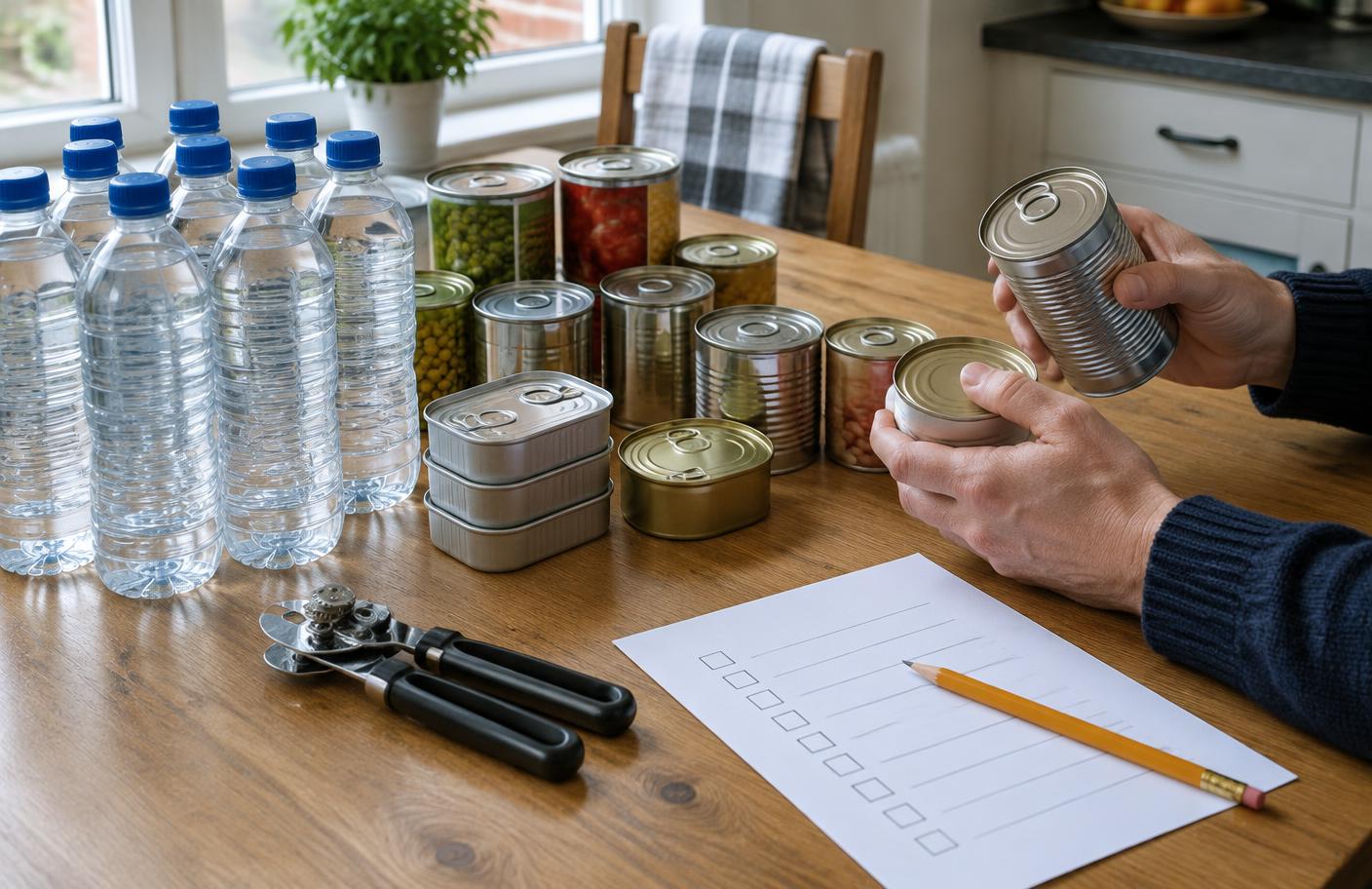
Quick-reference emergency food supply checklist
Start with what you already have. Then work through this list gradually.
Camping stoves and barbecues are outdoor-only. Never use them in a home, garage or enclosed shelter.
Preparedness is about confidence, not fear. You do not need to solve the UK’s food policy debate from your kitchen cupboard. You only need to make your household a little more capable, one practical step at a time.
From the EODSurvival shop: our 72-Hour Household Plan
Our own publication, not an independent review. The 72-Hour Household Plan is the UK household guide to the first three days without power, water or shops. How much water you actually need, how many usable meals you really have, and how to know when you have enough. Based on GOV.UK and EU emergency-preparedness guidance. Ebook and printable pack available; paperback coming 21 October.
Independent publication — not government endorsed.
Frequently asked questions
Sources and further reading
- The Independent: UK’s preparation for food shortages is “woefully inadequate”, experts warn, 5 October 2026.
- The Grocer: Experts call on Burnham to treat food shortages as national security issue, 5 October 2026.
- The Grocer: Climate change “war room” readied amid food shortage fears, 6 October 2026.
- The Grocer: Can Defra’s new “war room” prevent the next food supply crisis?, 7 October 2026.
- Sustain: Letter to Number 10. Food is a national security issue, 6 October 2026.
- Foodrise: We took Britain’s food security to Downing Street, 5 October 2026.
- Birmingham Live: Andy Burnham told to make five changes ahead of potential food shortages, 5 October 2026.
- UK Government Prepare campaign: Get prepared for emergencies, accessed 9 October 2026.
- UK Government Prepare: Water supply interruptions or outages, accessed 9 October 2026.
- European Commission: Preparedness Union Strategy, March 2025.
This article is compiled from the above published sources. Where we report a contested figure or assessment, we say who made it.
Images: original AI-generated EODSurvival editorial illustrations, not photographs of a news event.