Reading time: 10 minutes
Published: 8 October 2026
Quick answer: During a UK boil water notice, bring water to a rolling boil using a manufacturer-approved gas hob or an outdoor-only stove in a safe open-air location, then cool it in a clean covered container and follow your water company’s instructions. Boiling treats microbes, not chemical contamination; never bring a camping stove or barbecue indoors.
The power goes out. Your electric kettle stops working. Then your water company issues a boil water notice.
You do not need panic-buying or complicated equipment. You need a safe heat source, clean containers and a clear understanding of what boiling can, and cannot, do.
This guide follows our Water Filters UK buying guide. A filter can be useful, but the biggest practical gap in many UK homes is a safe way to heat water when mains power is unavailable.
This is a buying guide and how-to article, not a hands-on product test. Advice is based on published specifications and official UK guidance.
⚠️ First: never bring an outdoor stove indoors
This is the most important point in the article.
Never use a camping stove, Kelly kettle, barbecue, disposable barbecue, outdoor gas heater or other outdoor-only fuel-burning appliance:
- Indoors
- In a tent
- In a garage
- In a cellar or basement
- In a shed or other confined space
- On an enclosed balcony
A fixed mains gas hob is designed for indoor use and is not the appliance this warning is about. The rule covers portable and outdoor appliances brought inside — camping stoves, barbecues, patio heaters, generators — which can produce fatal levels of carbon monoxide even with a door or window open. Never use those indoors, in a tent, in a garage or in a porch.
Carbon monoxide is odourless. It can kill before you realise there is a problem.
Use fuel-burning equipment outdoors, on a stable, non-flammable surface, away from doors, windows, air bricks and ventilation outlets. Keep children and pets away. Never leave it unattended.
If you live in a flat or house with no safe outdoor space, the honest answer is that a fuel-burning stove may not be usable during a power cut. Store bottled water and no-cook food instead. Our Blackout Kit UK guide covers that wider plan.
A carbon monoxide alarm is still sensible for your home. It is not permission to use a camping stove indoors.
💧 What a boil water notice means
A UK boil water notice usually means there may be bacteria, viruses or parasites in the supply. The Drinking Water Inspectorate guidance says to bring water to a rolling boil, then remove it from the heat and allow it to cool naturally.
Boiling kills or inactivates:
- Bacteria
- Viruses
- Parasites, including Cryptosporidium
The UK position is generally that reaching a full rolling boil is sufficient. Prolonged boiling is not normally necessary unless your water company gives different instructions. Some international guidance recommends holding a rolling boil for one minute, so follow the specific notice if it states a time.
For UK household boil water notices, follow your supplier’s instructions. Advice for untreated outdoor water can differ; do not assume a household notice covers every wild water source.
What you must use boiled or bottled water for
During a boil water notice, use boiled, cooled or sealed bottled water for:
- Drinking
- Brushing your teeth
- Making ice
- Preparing food
- Washing salad, fruit or vegetables that will be eaten raw
- Preparing baby formula, with the separate infant-feeding precautions below
- Cleaning feeding equipment
- Drinking water for pets
For babies, ready-to-feed liquid formula can avoid the need to mix powder during an interruption. Powdered formula is not sterile: follow NHS formula preparation advice, using freshly boiled suitable water that is still at least 70°C when mixed, then cooling the feed before giving it to your baby. Do not use the cooled stored water described below to mix powdered formula. Bottled water is not sterile either and still needs boiling if used for powdered formula; follow your water company and NHS advice on a suitable supply.
Tap water is generally still suitable for flushing toilets, washing hands with soap, showering without swallowing water and doing laundry. The exact wording varies, so follow the notice issued for your area. You can also check relevant GOV.UK water-supply guidance.
Boiling does not remove chemicals
This distinction matters.
Boiling does not remove fuel, pesticides, heavy metals, radioactive material or many other chemicals. It may concentrate some contaminants as water evaporates.
If the notice says do not drink or do not use, do not try to fix the problem by boiling. Use sealed bottled water and follow your water company or local authority.
🔥 How to boil water without mains power
- Choose a safe outdoor location. Keep the stove away from doors, windows, vents, drains and anything combustible.
- Use a stable, heat-resistant surface. Do not place a stove on plastic garden furniture or uneven ground.
- Keep people and animals clear. Steam, boiling water and hot metal cause serious burns.
- Use the correct pan or kettle. Follow the appliance instructions and do not overfill it.
- Bring the water to a rolling boil. Look for vigorous bubbling across the surface.
- Remove it from the heat. Allow it to cool naturally, covered.
- Transfer it carefully. Use a clean, sealed container rated for hot water. Do not pour boiling water into ordinary plastic.
- Use it within 24 hours. DWI advises storing it in a clean container in the fridge. If refrigeration is unavailable, prepare smaller batches, keep them covered and cool, and follow your supplier’s advice rather than assuming a 24-hour room-temperature shelf life.
💷 Budget ladder
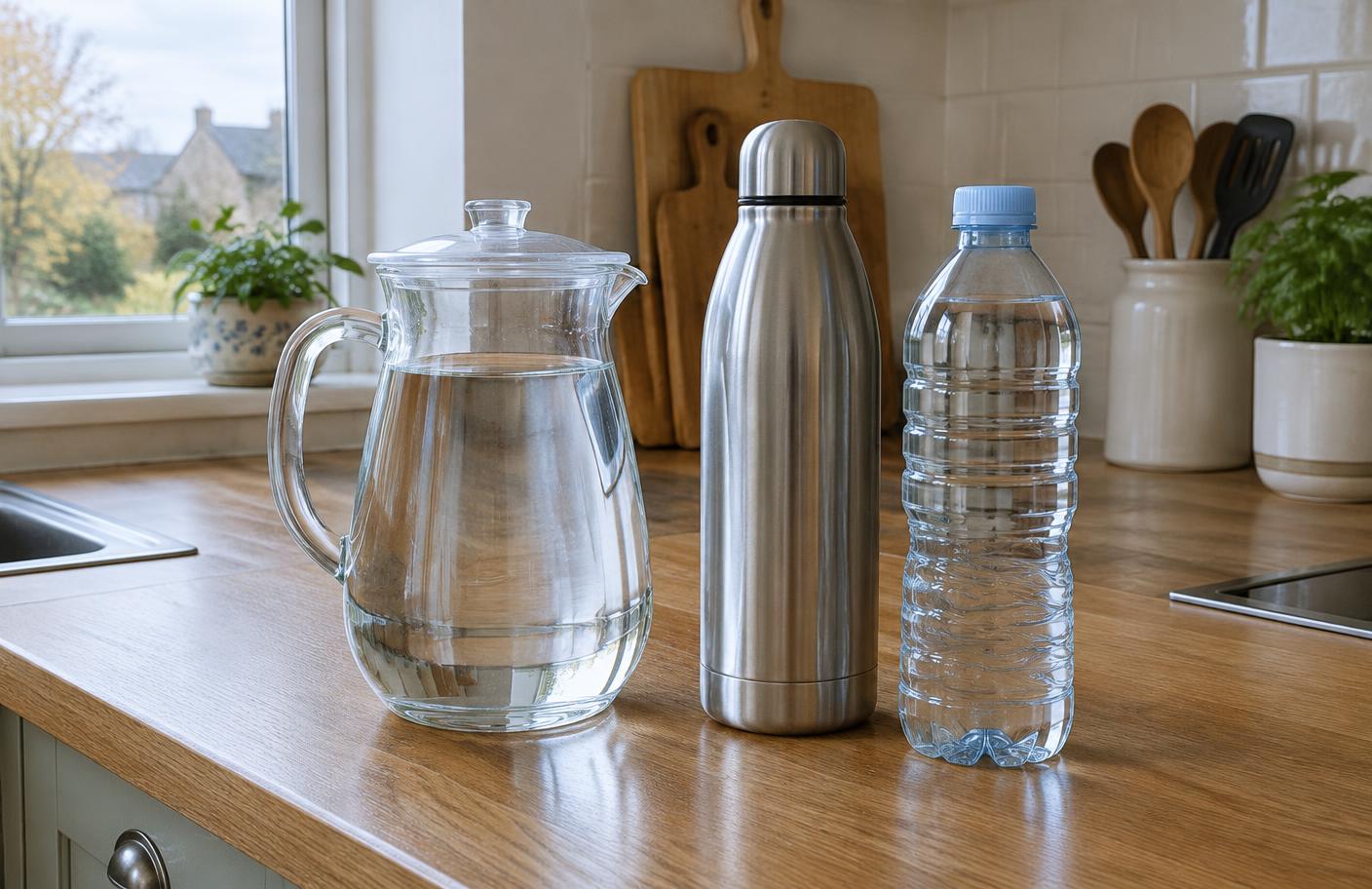
- Under £25: Insulated flask, metal pan, matches and stored bottled water.
- £25–£50: Basic spirit stove or small gas cartridge stove.
- £40–£70: Kelly kettle or similar storm kettle.
- £50–£100: Better gas stove, spare cartridges and a suitable pan.
- £100+: A complete outdoor cooking setup with wind protection, cookware, fuel storage and a flask.
Buy for the job. A household emergency usually needs one reliable burner, not an expedition kitchen.
🧰 What to boil water on
1. The gas hob you already own
This is the most underrated option.
Look for: A mains gas hob that you have already confirmed can be lit manually.
Avoid: Assuming every hob will work. Electronic ignition needs power, but many gas hobs allow manual lighting; ordinary thermocouple flame-failure protection is not usually dependent on mains electricity. Check your exact model’s manual and use manual lighting only if the manufacturer permits it. Never bypass a safety device. Electric-only hobs are no help.
Typical UK price: £0 if already installed.
Gas emergency: If you smell gas, do not light anything or touch electrical switches. Open doors and windows and turn off the gas at the meter if safe to do so, leave the affected area, and call the National Gas Emergency Service on 0800 111 999 in Great Britain. In Northern Ireland call 0800 002 001.
Skip this if: You have not checked how your hob behaves, your gas supply is interrupted or your tenancy prohibits manual lighting. Never leave a lit burner unattended, and never use the hob to heat the room. Ventilate the kitchen while burning, and keep children clear. A combi boiler will usually still need electricity, so do not assume you will have hot water.
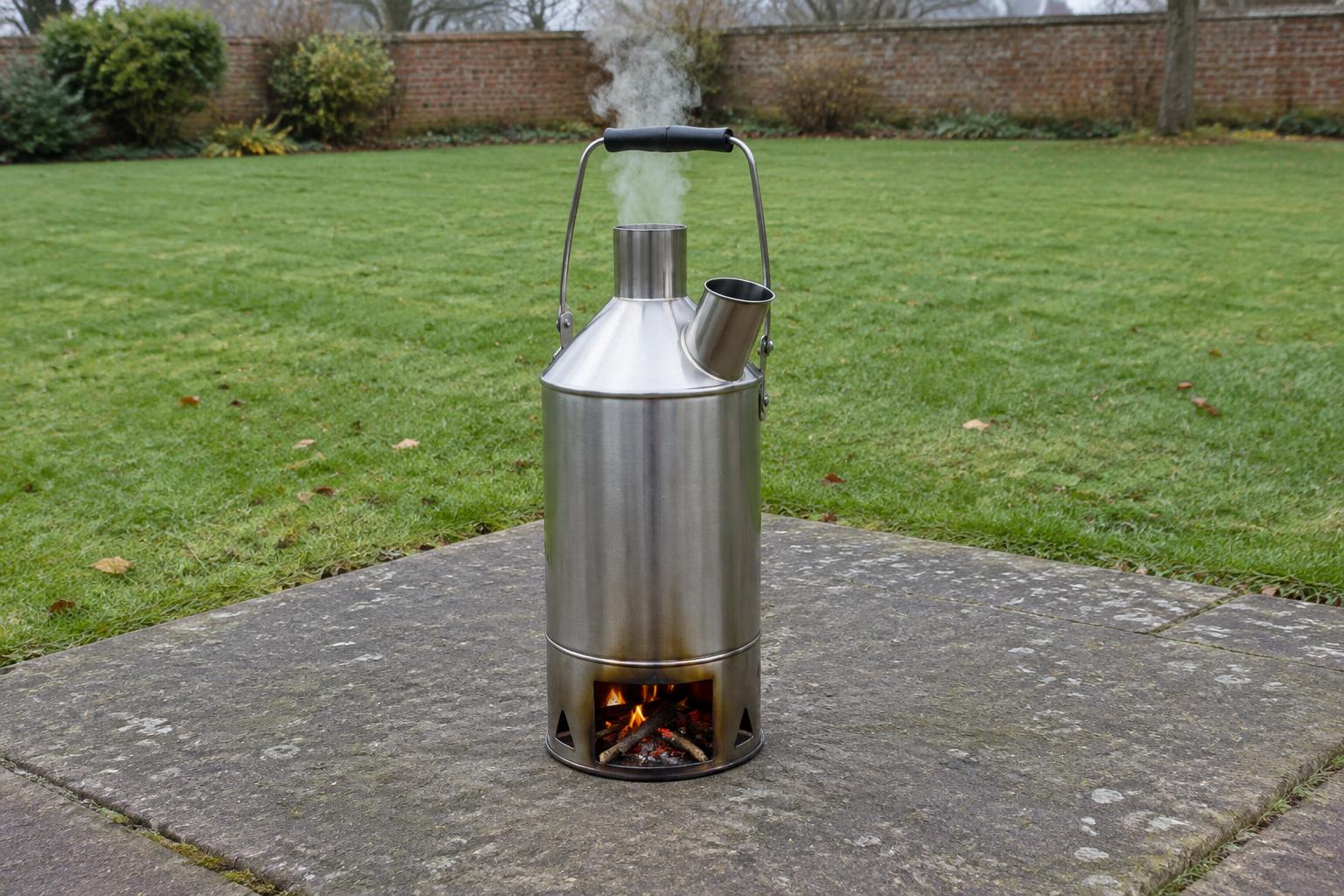
2. Kelly kettles and storm kettles
These are particularly useful in the UK. They are designed to boil water outdoors using small amounts of dry twigs.
Look for: A stable base, clear instructions, spare parts and a size suitable for your household.
Avoid: Using one on a balcony, under an awning or close to the house. It produces smoke, carbon monoxide and intense heat. Remove the sealing cork or stopper before lighting; never boil with it inserted. Follow the exact model’s instructions for any purpose-designed whistle, filling and safe lifting. Never run the kettle dry.
Typical UK price: £40–£70.
Skip this if: You have no safe outdoor space or do not want to collect and store dry fuel.
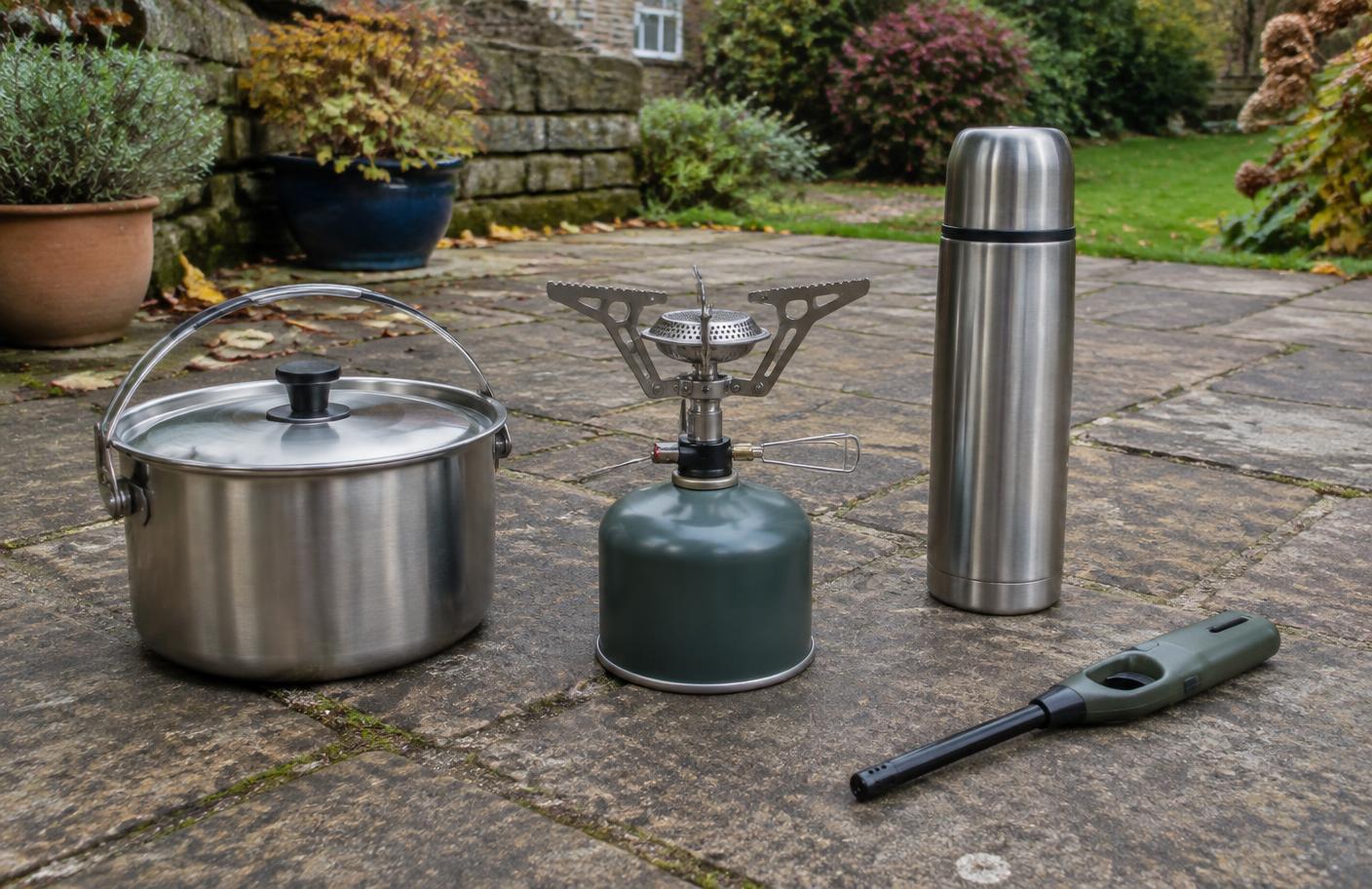
3. Gas cartridge and canister stoves
A small gas camping stove can be a quick, controllable outdoor option; performance depends on the model, fuel and weather.
Look for: A stable pot support, automatic shut-off features, compatible cartridges and published burn-time information. Butane/propane mixes generally perform better in cold weather than pure butane.
Avoid: Unstable single-use burners, incompatible cartridges and indoor use. Butane performance can fall in cold conditions.
Typical UK price: £15–£80, before fuel.
Skip this if: Your building rules prohibit LPG or you cannot store cartridges safely.
4. Alcohol and spirit stoves
Trangia-style spirit burners are simple, quiet and useful for camping.
Look for: A secure burner cap, stable stand and clear fuel instructions.
Avoid: Spilling or refilling a hot burner. The flame can be difficult to see.
Typical UK price: £20–£60.
Skip this if: You need rapid boiling or are not confident handling liquid fuel.
5. Solid fuel and fire-based options
Wood fires, fire pits, chimineas, rocket stoves and charcoal are outdoor options only.
Look for: A stable fire-safe setup and permission to use it where you live.
Avoid: Bringing a barbecue or cooling fire indoors. Never use disposable barbecues inside.
Typical UK price: £20–£100+, excluding fuel.
Skip this if: You cannot maintain safe separation from buildings, fences and dry vegetation.
Important UK note: Hexamine fuel tablets are regulated explosives precursors. Since 1 October 2023, members of the public need a Home Office EPP licence to acquire, possess or use hexamine. Check the current GOV.UK explosives precursors guidance before buying or using them. Do not rely on American emergency guides that treat hexamine as an unrestricted fuel.
6. Insulated flasks and thermos flasks
A flask is not a stove, but it makes one boil go much further.
Look for: A leak-resistant lid, stainless-steel construction and a capacity of at least 750ml.
Avoid: Filling a plastic bottle with boiling water unless it is specifically rated for it.
Typical UK price: Under £25.
Skip this if: You have no safe way to boil water in the first place.
7. Solar and electric options
An electric kettle will not work without a suitable backup electricity supply. A large power station may run one briefly, but boiling water consumes substantial battery capacity.
Look for: Solar or battery equipment only if you have calculated its usable watt-hours and charging time.
Avoid: Assuming a power station will boil water for several days.
Typical UK price: £50–£1,000+.
Skip this if: You want the cheapest reliable emergency solution.
📏 Water and fuel maths: plan for real demand
The UK Prepare campaign cites a WHO survival minimum of 2.5–3 litres of drinking water per person per day. More is needed for cooking, hygiene, pets, medical devices and formula; 10 litres per person per day allows for basic cooking and hygiene as well.
For four people over three days, plan for 30–36 litres for drinking alone, not 12 litres. Store sealed drinking water first so you do not have to boil all of that volume during an outage.
There is no reliable universal “litres per canister” figure. Burner design, pan and lid, starting water temperature, wind, fuel blend and cold weather all affect consumption. Check manufacturer fuel data and practise with your exact setup outdoors.
If your trial uses 20g of gas per litre, boiling 36 litres would require 720g before adding a reserve or fuel for cooking. This is a worked arithmetic example, not a tested consumption claim. Measure your own use and keep a safe, lawful reserve; never enclose a canister-mounted burner in a windscreen unless its manufacturer explicitly permits it.
🛑 What not to buy or do
- Do not bring outdoor-only fuel-burning appliances indoors. A correctly installed mains gas hob is a separate case, as explained above.
- Do not use a disposable barbecue indoors, ever.
- Do not buy hexamine without checking the licence position.
- Do not buy an oversized multi-burner expedition stove for a household emergency.
- Do not rely on an electric kettle during a power cut.
- Do not stockpile fuel without a safe storage plan.
- Do not boil water if the instruction is do not drink or do not use.
🧯 Fuel storage and maintenance
Store fuel upright, away from heat and ignition sources, and follow the manufacturer’s instructions.
Never store LPG cylinders or cartridges in a basement or cellar. Follow the fuel supplier’s instructions for your exact container, quantity and storage location; propane cylinders should be stored outdoors. Do not treat any stated weight as blanket permission to store fuel at home. Flats, landlords and building managers may impose stricter limits.
Check the relevant supplier and building guidance. Keep cylinders ventilated, secure and away from doors, windows and drains.
Once every season:
- Inspect the stove, hose, seals and pan supports.
- Check fuel dates and condition.
- Set up and boil water outdoors.
- Confirm you can light and shut down the appliance.
- Rotate older fuel and bottled water.
- Check your emergency lighting and wind-up radio at the same time.
Quick-reference checklist
For wider planning, see our water survival guide, food and water resources, 72-hour blackout checklist and power blackout guide. You can also browse the full Survival Gear Buying Guides series.
Boiling water FAQs
Yes, for a standard UK boil water notice, bring it to a full rolling boil, then cool it safely. Follow any different instructions issued by your water company.
No. Camping stoves produce carbon monoxide and must be used outdoors. This includes gas, spirit, solid-fuel and wood-burning stoves.
No. Do not drink chemically contaminated water. Use sealed bottled water and follow the official notice.
Yes, provided it brings the water to a rolling boil and is used outdoors. Let the water cool covered in a clean container.
DWI advises keeping boiled, cooled water in a clean container in the fridge and discarding it within 24 hours. Without refrigeration, make smaller batches and follow your water company’s storage advice. Discard water sooner if it becomes contaminated.
The bottom line
Preparedness is not about making your home feel like a bunker. It is about solving ordinary problems safely. Store some water, choose one practical boiling method and practise before you need it. That gives you confidence without the fear.
Sources and buying checks
- Drinking Water Inspectorate: receiving a boil water notice — boiling, use and refrigerated storage.
- UK Prepare campaign: get prepared for emergencies — household water quantities.
- NHS: making up baby formula — freshly boiled water, the 70°C requirement and bottled-water precautions.
- Kelly Kettle: outdoor-use guidance — ventilation and carbon monoxide precautions; also follow the instructions supplied with your exact model.
- Home Office: explosives precursors licence guidance — check hexamine restrictions before buying.
Images: original EODSurvival editorial illustrations, not product-test photographs. Prices and specifications can change; check current manufacturer details before buying.
Build Your Emergency Water Plan
Start with stored water, then choose treatment and boiling equipment you can use safely.