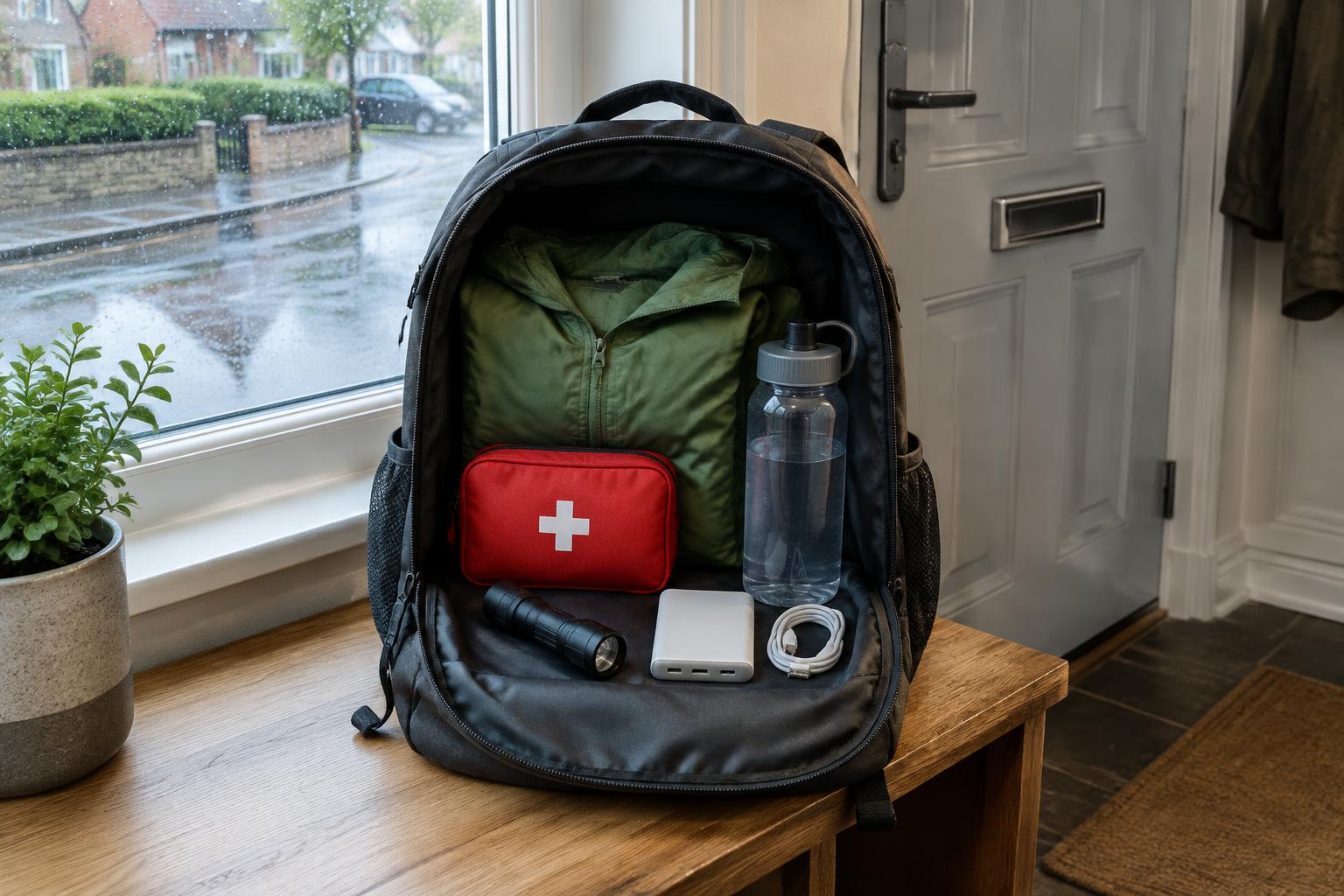
Quick answer: A UK emergency grab bag should be light enough to carry and contain documents, essential medication, drinking water, ready-to-eat food, a torch, phone power and warm layers for a short stay away from home; never delay an evacuation to collect it, and leave everything behind in a fire.
You have twenty minutes to leave. The council has issued a flood warning, the road is still open, and you need to get the family out without scrambling through cupboards for passports, medication and chargers.
That is what a grab bag is for: leaving home promptly with a few essentials for a short stay elsewhere. It is not a wilderness survival kit. Most UK evacuations are prompted by events such as flooding, fire or a gas leak. They usually mean going to a rest centre, hotel or relative’s home, not setting off into the countryside.
The UK Government’s Prepare campaign recommends keeping a spare bag ready for items you may need if asked to evacuate. If your home is on fire, do not stop to collect your grab bag. Get out immediately and take nothing with you. The Prepare campaign is explicit on this point.
🎒 Grab bag or bug out bag?
“Grab bag” is the term used by the government’s Prepare campaign for a bag you can take if you are asked to leave home. A “bug out bag” is prepper vocabulary, often used for a much larger loadout intended to support someone away from home for longer.
That second idea is a poor fit for most realistic UK evacuations. Your useful question is not “Could I live in the woods for a week?” It is “Could I leave quickly and manage for a night or two?”
Some households may want supplies for both leaving and staying put. You can cover both without carrying everything on your back: keep a light grab bag for evacuation and a larger home kit for disruption at home. Our existing guide to choosing a power source for a bag covers a different question; this guide focuses on what to pack and why.
🚨 When might you need to leave?
Flooding, a fire, a gas leak or carbon monoxide incident, a police cordon after an industrial incident, or a building safety concern can all mean leaving home. A prolonged power cut may also become a reason to relocate if heating or essential equipment is affected, but a power cut alone does not automatically mean you should evacuate.
Follow instructions from emergency services and your council over your own plan. Do not delay an evacuation to finish packing. If there is immediate danger, leave safely and call 999.
The Environment Agency’s National Flood Risk Assessment, published on GOV.UK, estimates that around 6.3 million properties in England are in areas at risk from rivers, the sea or surface water. The figure describes area-level risk, not a prediction that any particular property will flood. Check the GOV.UK long-term flood-risk service for an address in England, and use the Environment Agency’s personal flood plan if relevant. Different services cover Wales, Scotland and Northern Ireland.
Make your plan and contact list before an emergency. Our guides to a family communications plan and UK emergency alerts and priority services can help.
🧳 Choose a bag you can actually carry
Use a rucksack for each adult. A child who is old enough can carry a small bag with a few light items, but you may need one hand free to hold a younger child’s hand.
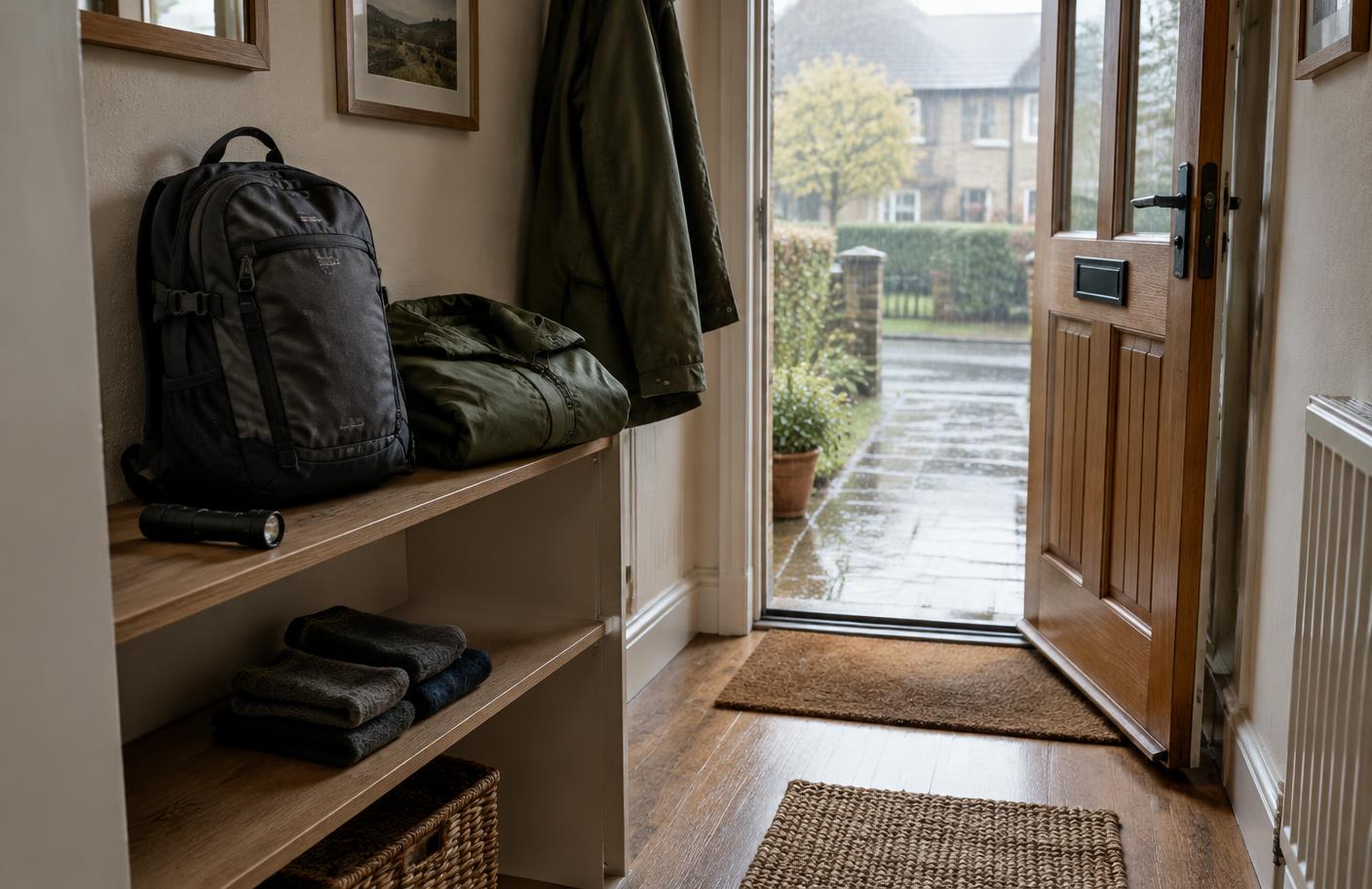
Keep the bag waterproof, or put vulnerable items in sealed waterproof pouches. Store it near an exit where you can reach it easily, but not where it blocks the way out. A loft, cellar or locked garage is not a useful storage spot in a hurry.
Keep the load realistic. A 25kg bag is a failed bag if you cannot carry it safely.
📦 What to put in your emergency grab bag
Documents and money
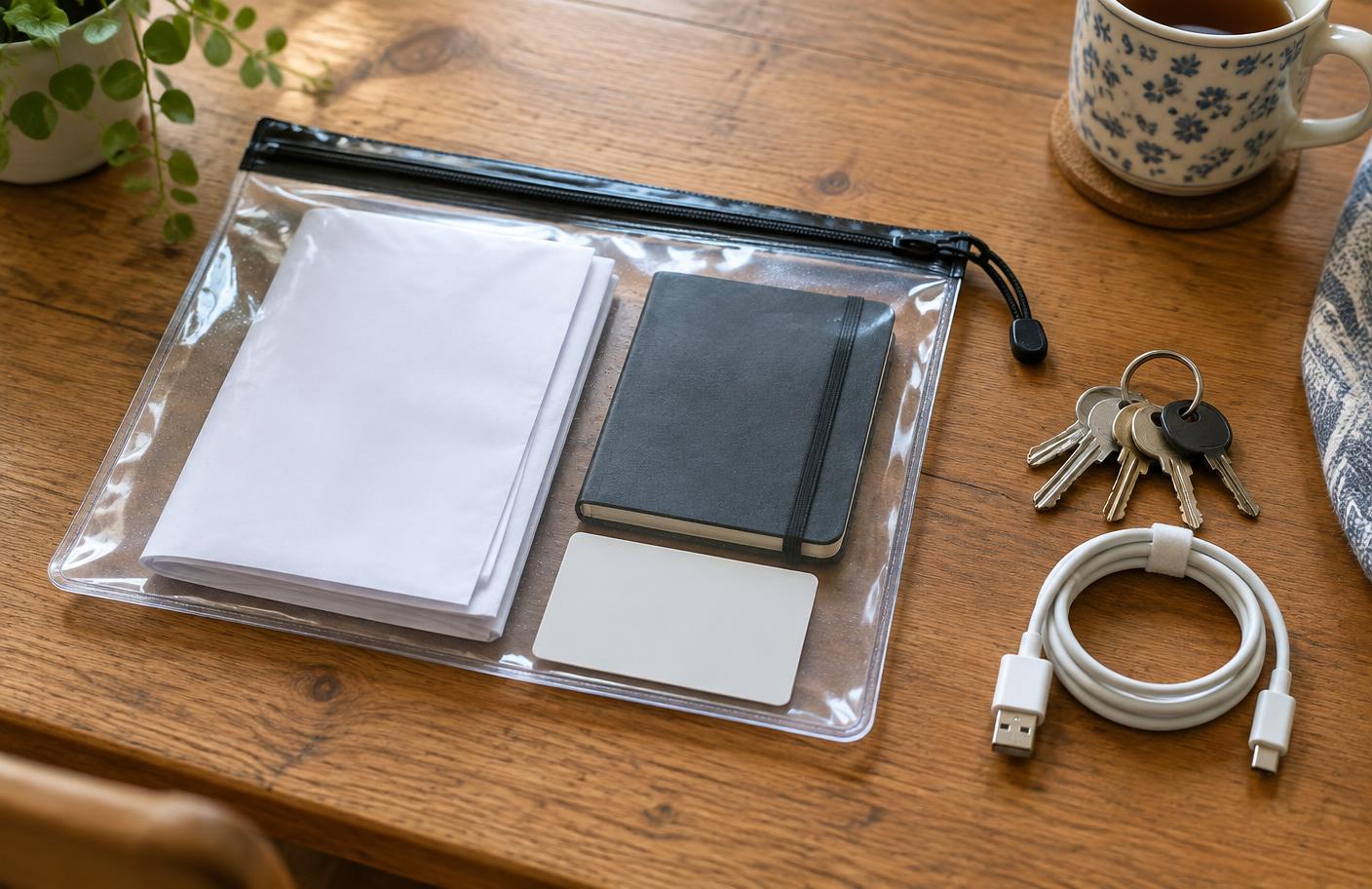
Put copies of ID, insurance details, passports, bank cards, a paper list of emergency contacts and key account numbers in a sealed waterproof wallet. Avoid carrying unnecessary originals or sensitive information you do not need.
This is an easy category to forget, and missing paperwork can create a lot of hassle afterwards. The Prepare campaign recommends keeping important phone numbers and insurance details on paper. Its emergency-planning advice also suggests recording household information together.
Water and ready-to-eat food
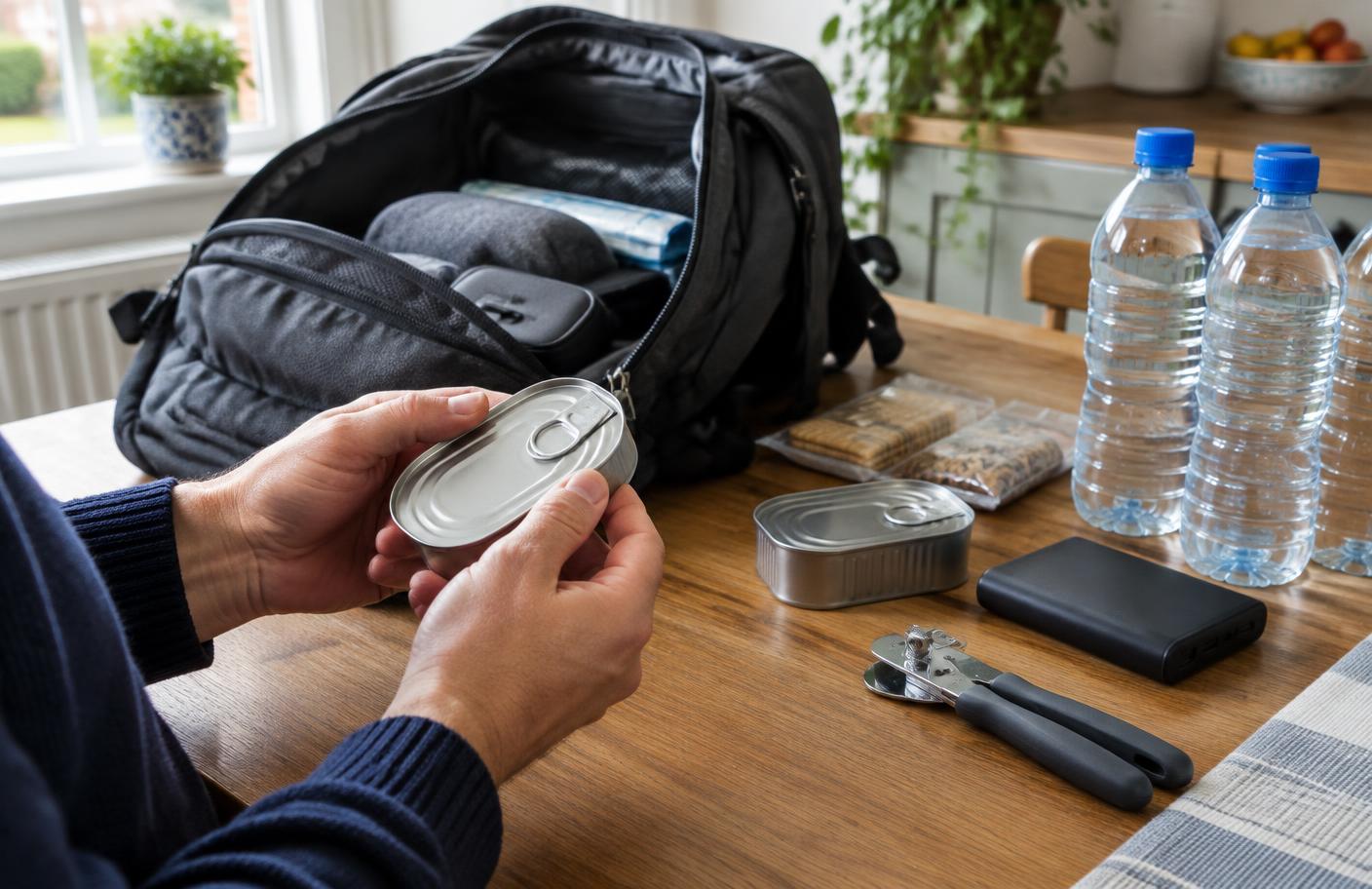
The GOV.UK Prepare campaign says the World Health Organization survival minimum is 2.5–3 litres of drinking water per person per day. It gives 10 litres per person per day as a more comfortable amount that also allows for basic cooking and hygiene. Household needs vary; you may need extra for a baby, a medical device or a pet.
Water is heavy. Work out what you can safely carry and what you might keep separately in a vehicle, if you have one and can use it safely. Do not let packing water delay an evacuation. For your home supplies, see our food and water resources, water-filter guide and water-without-power guide.
Pack food that is ready to eat, such as tinned food, plus a manual tin opener. Choose items that need no cooking.
Light, power and information
Pack a torch, battery or wind-up, plus spare batteries if needed, a charged power bank and a battery or wind-up radio. A radio gives you another way to receive updates if broadband or mobile services are disrupted.
A Uswitch/Opinium survey reported in October 2026 estimated that 26.7 million people had experienced a broadband outage in the previous year; the figure was extrapolated from survey responses, not a count of outages. The same reporting said power cuts had become the leading reported cause of outages. It is a reminder to have a backup source of information, not a reason to expect a network failure. See our guides to emergency torches and wind-up radios.
Warmth and clothing
Take a warm waterproof layer, spare socks and a blanket or foil blanket. If your clothes get wet, changing into dry layers matters. A folded waterproof and spare socks take less space than a full change of wardrobe.
Medical supplies
Pack a first aid kit and plan for several days of prescription medication in its original packaging, in line with the Prepare campaign and your clinician or pharmacist’s advice. Follow storage instructions, especially for medicines that need refrigeration. Include a copy of the prescription, inhalers, EpiPens and batteries for any medical devices you rely on.
Never stop or ration prescribed medication without speaking to a clinician. Ask your pharmacist or GP what you should keep available for an emergency. See our guides to first aid kits and a home medical cache.
Hygiene and household-specific essentials
Hand sanitiser, wet wipes, toothbrushes, sanitary products and a small towel can make an overnight stay far more manageable.
Add nappies and ready-to-feed formula if needed. The Prepare campaign recommends ready-made formula because you may not be able to boil water or sterilise bottles. Include pet food and a lead, supplies for anyone with a disability or additional needs, and a comfort item for children.
Pack phone chargers and a spare cable. A charged power bank is usually more useful than carrying a spare phone.
🏠 Two tiers: leave quickly, or stay at home
Your grab bag is Tier 1: portable, light and focused on what you may need when leaving. Tier 2 is a larger home kit for staying put through a power cut, storm or water outage.
For most households, it makes sense to build the home kit first because disruption at home is a more likely scenario than evacuation. Our blackout kit guide, 72-hour blackout checklist, power-blackout resources and cold-weather guide cover that side of the plan.
🔄 Maintain it, and avoid overpacking
A grab bag packed once and forgotten can give you false confidence. Set a reminder every six months to:
- Replace expired food and medication; check with a pharmacist or GP about medication storage and replacement.
- Rotate stored water and recharge power banks.
- Check that children’s clothing and shoes still fit.
- Update documents and contact details after a move or other change.
- Make sure everyone knows where the bag is.
Do not fill it with a year’s supplies, pack anything you have not tried, or store it somewhere you cannot reach in the dark. Do not include candles: torches are safer, as the Prepare campaign advises. Do not buy a “prepper grab bag” bundle without checking its contents. You may already own much of what is included. And never delay leaving to finish packing.
Quick-reference grab bag checklist
Preparedness is not about carrying your whole home on your back. It is about knowing what matters, keeping it ready and leaving promptly when you are told to. Preparedness is about confidence, not fear.
From the EODSurvival shop: our 72-Hour Household Plan
Our own publication, not an independent review. The 72-Hour Household Plan is the UK household guide to the first three days without power, water or shops. How much water you actually need, how many usable meals you really have, and how to know when you have enough. Based on GOV.UK and EU emergency-preparedness guidance. Ebook and printable pack available; paperback coming 21 October.
Independent publication, not government endorsed.
Get the 72-Hour Household Plan →
Frequently asked questions
Sources and further guidance
- GOV.UK Prepare campaign: Get prepared for emergencies, accessed 12 October 2026. Includes grab-bag, fire, water and ready-to-feed formula advice.
- Environment Agency: National assessment of flood and coastal erosion risk in England, GOV.UK publication, updated 2026.
- GOV.UK: Check long-term flood risk and Environment Agency: Personal flood plan. The flood plan page was last updated 15 November 2023.
- ISPreview reporting on the Uswitch/Opinium broadband survey: October 2026. The 26.7 million figure is a survey-based estimate extrapolated from respondents.
Images: original AI-generated EODSurvival editorial illustrations.