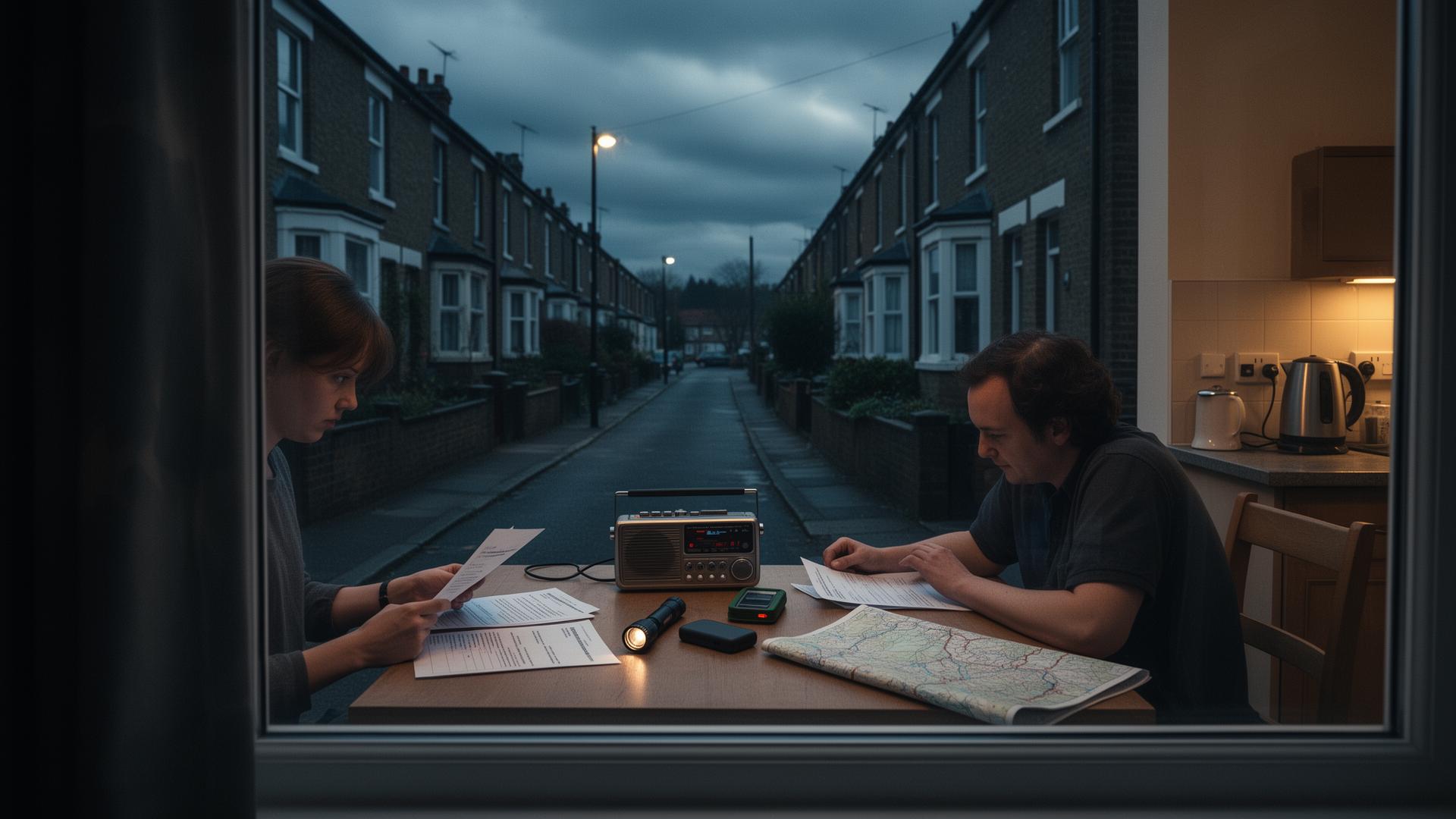
When senior UK officials start using words like "war footing" and "existential threat," experienced preppers don't panic — but we do pay attention.
The recent warnings coming from UK defence leadership and NATO aren't the usual vague rhetoric. According to official briefings and intelligence assessments, Britain has seen a 50% increase in hostile activity over the past year, involving not just Russia but four hostile states simultaneously: Russia, China, Iran, and North Korea. These activities range from cyberattacks and espionage to physical threats against UK forces.
At the same time, there's a growing gap between government urgency and public willingness to prepare. Cultural resistance, distrust of institutions, and economic anxiety are creating a dangerous vacuum — one that modern adversaries are uniquely equipped to exploit.
From a prepper's perspective, this isn't about politics or ideology. It's about risk management. And the risks outlined point very clearly toward one conclusion:
If the UK is entering a period of prolonged tension and infrastructure vulnerability, individual and community preparedness will matter more than ever.
This article lays out what UK preppers should realistically be doing now.
This Is Not a "World War II" Scenario — And That Matters
One of the most important points is also one of the most misunderstood.
Officials invoking comparisons to our grandparents' wars are doing so to signal seriousness — but modern analysts make it clear that future conflict will not look like trench warfare or mass mobilisation. Instead, it will be:
- Cyber warfare
- Attacks on power grids
- Financial system disruption
- Communications outages
- Supply chain interference
- Psychological and cultural destabilisation
In other words, the civilian home is now part of the battlefield.
As preppers, that should immediately shift our priorities away from fantasy scenarios and toward boringly practical resilience. For related guidance, see our article on Britain on Alert: Is War in Europe Now a Real Possibility?
Threat #1: Infrastructure Disruption Is the Primary Risk
Repeatedly authorities stress that modern warfare targets systems, not soldiers.
Energy grids, financial networks, communications infrastructure, transport routes, and digital systems are now front-line targets. The UK's own leadership has admitted that hostile cyber and intelligence activity is already happening "in the hundreds."
Prepper Response: Harden Your Household Against System Failure
Every UK prepper should assume periods of disruption, not total collapse. Focus on:
Electricity & Heat
- Prepare for blackouts lasting days, not hours
- Build a "warm room" strategy for winter outages
- Layer insulation: curtains, draft excluders, rugs
- Own multiple lighting options (LED lanterns → torches → candles in enclosed holders)
- Portable power stations for low-wattage essentials (phones, radios, electric throws)
Water
- Minimum 3–7 days of potable water per person
- Know how to shut off your stopcock instantly
- Water purification tablets or gravity filter as backup
Food
- Focus on no-power meals and foods safe without refrigeration
- Understand fridge/freezer spoilage timelines
- Stock items that can be eaten cold if necessary
This is not overreacting — it's adapting to the threat profile explicitly described in official documents.
Threat #2: The North Atlantic Vulnerability = Supply Chain Risk
One of the most alarming admissions comes from the First Sea Lord, who warns that the Royal Navy is currently struggling to counter Russian capability in the North Atlantic due to a shortage of submarines.
Why does this matter to civilians?
Because the North Atlantic is the UK's supply artery. If it becomes contested:
- Fuel imports
- Food imports
- Medical supplies
- Industrial components
…all become vulnerable.
Prepper Response: Short-Term Self-Sufficiency
This does not mean hoarding for years. It means buying time.
- 2–4 weeks of essential food buffers
- Extra medications (within legal limits)
- Redundant cooking methods
- Local sourcing where possible
Preppers should think in weeks of disruption, not decades of isolation.
Threat #3: Cyber & Financial Disruption
Reports highlight a deeply important behavioural signal: some citizens are already losing confidence in centralised financial systems, exploring alternatives like gold-based barter and off-system stores of value.
Whether or not one agrees with that approach, the signal itself matters.
It tells us that financial instability is part of the perceived risk landscape. For deeper context, read our analysis of the economic collapse scenarios for the UK.
Prepper Response: Financial Resilience (Not Panic)
Sensible steps include:
- Keeping some cash at home for outages
- Diversifying savings (not all in one institution)
- Reducing reliance on just-in-time banking apps
- Understanding how to operate during card/payment outages
This is about continuity — not rejection of the system.
Threat #4: Social Fragmentation Is a Strategic Weakness
Perhaps the most sobering takeaway is that national cohesion itself is being treated as a security issue.
Commentary argues that years of cultural division have left large segments of the population unwilling to rally around state-led mobilisation efforts. This is not just a political problem — it's a strategic vulnerability that adversaries can exploit.
From a prepper's standpoint, this reinforces a core principle:
Resilience is local. Trust is local. Survival is local.
Prepper Response: Community-Level Preparedness
Rather than waiting for national unity, preppers should:
- Build neighbourhood-level networks
- Share skills quietly and practically
- Identify vulnerable residents (elderly, disabled, isolated)
- Establish informal check-in systems
- Learn first aid, not tactics
Community resilience hubs — formal or informal — are likely to be far more effective than top-down directives during infrastructure stress.
Threat #5: Civilian Roles Are Expanding — Whether We Like It or Not
One of the clearest statements is that civilians will play a major role in any future conflict, even if no formal conscription occurs.
This doesn't mean everyone becomes a soldier.
It means civilians are expected to:
- Keep systems running
- Absorb shocks
- Maintain productivity
- Resist panic
- Adapt quickly
Prepper Response: Skills Over Gear
The most valuable preparations right now are skills, not stockpiles:
- First aid & trauma basics
- Crisis communication
- Emergency DIY repairs
- Food safety without power
- Emotional resilience under stress
These skills are transferable, legal, low-cost, and immediately useful.
The Prepper Mindset Going Forward
The future battlefield is not defined by tanks and trenches, but by networks, infrastructure, and social consent.
As UK preppers, our role is not to fuel fear — but to remove fragility from our own lives and communities.
That means:
- Preparing calmly
- Avoiding ideological extremes
- Focusing on realism
- Helping others quietly
- Staying adaptable
Preparedness is not defiance.
It is responsibility.
And if the warnings prove accurate, the people who cope best will not be those shouting loudest — but those who prepared thoughtfully, early, and without drama.
EODSurvival's Final Word
You don't need to believe every headline to recognise the trend. Infrastructure attacks, cyber disruption, economic pressure, and social fragmentation are already happening.
The sensible prepper response isn't panic.
It's readiness.
At EODSurvival, we believe practical preparedness starts with understanding the real threat landscape — not media-fuelled fear, but evidence-based planning. Focus on the basics: household resilience, community connections, essential skills, and calm adaptability. Whether these warnings prove accurate or not, building resilience makes your life better regardless of the outcome.
Start small. Start now. And remember — the best time to prepare was yesterday. The second-best time is today.
Frequently Asked Questions
What does "war footing" mean for UK civilians?
It signals a shift in government posture toward preparedness for prolonged geopolitical tension. For civilians, it means potential infrastructure disruption, supply chain vulnerabilities, and the need for household resilience planning.
What are the main threats UK preppers should prepare for?
Modern threats include cyber warfare, attacks on power grids, financial system disruption, communications outages, supply chain interference, and psychological destabilisation — not traditional warfare.
How much food and water should I stockpile?
Focus on 2–4 weeks of essential supplies rather than years of stockpiling. The goal is buying time during disruption, not long-term isolation. Include water purification, no-power foods, and essential medications.
Why is community preparedness important?
Resilience is local. Community-level networks, informal check-in systems, and shared skills are more effective than waiting for top-down directives during infrastructure stress.
Related Articles
Britain on Alert: Is War in Europe Now a Real Possibility?
Analysis of the 2025 Strategic Defence Review and practical preparedness steps.
Cyber Attacks on the UK Grid: What Preppers Need to Know
Understanding the digital threats to UK infrastructure.
Hidden Costs of Grid Failure in the UK
What mainstream prepping sites miss about infrastructure collapse.
Community Resilience Hubs UK
Building local networks for collective preparedness.
The 72-Hour Blackout Checklist
Essential preparations for short-term power outages.
External Sources & Further Reading
The information in this article is informed by official UK government communications, defence assessments, and credible security analysis. These sources provide essential context:
- GOV.UK — Strategic Defence Review 2025: Making Britain Safer
The UK government's comprehensive review of defence posture and national security.
- NATO — Resilience and Civil Preparedness
NATO's guidance on civilian preparedness and national resilience.
- National Cyber Security Centre (NCSC) — About
UK's authority on cyber security and national defence.
- GOV.UK — National Risk Register 2023
Official assessment of risks facing the UK including infrastructure threats.
- Royal Navy — News
Official updates on Royal Navy operations and capability assessments.
- British Red Cross — Prepare for Emergencies
Practical emergency preparedness guidance for UK households.