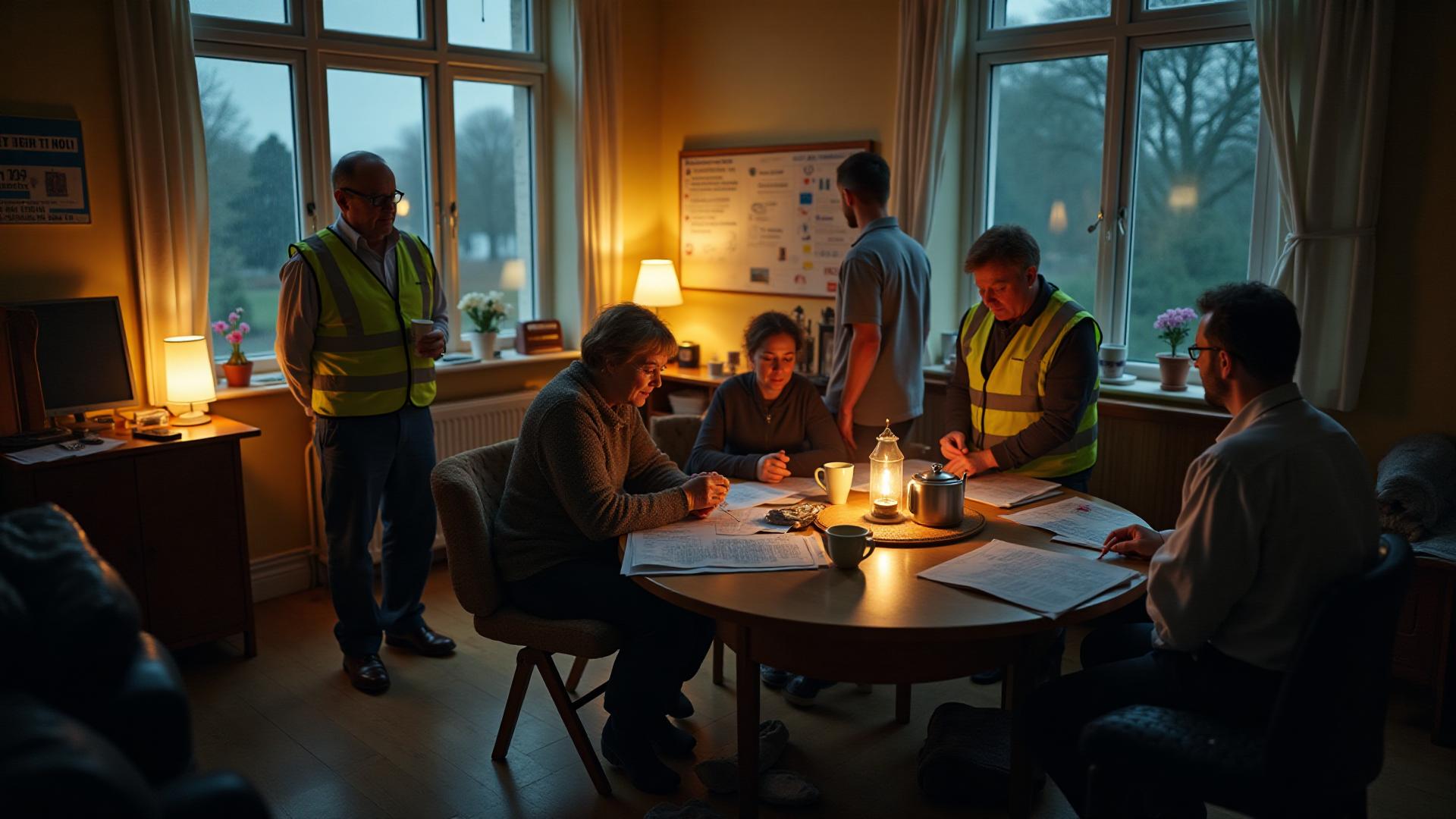
It usually starts with something small. A storm cutting across the rooftops. A flicker in the lights. A neighbour posting that their boiler just died. A note from the council warning of "potential disruption."
We tell ourselves it'll be fine. That the system always bounces back. Until the moment it doesn't — or doesn't fast enough. And suddenly the people who live around us, the ones whose names we barely know, become a source of strength we didn't realise we needed.
Across towns, villages, estates, and even the busiest city streets, community resilience hubs in the UK are quietly reshaping what safety looks like. They are the rooms that stay warm when the weather turns cruel. The kitchens that simmer with tea when the lights are out. The improvised command posts where volunteers coordinate medication pickups, transport, and welfare checks for the vulnerable.
They are the reminder that in a country that has grown more fragile than it appears, connection is often the strongest infrastructure we have left.
And if you've ever wondered how to build that kind of strength where you live, this guide will take you deep into the heart of how these hubs work — and why they matter long before an emergency ever arrives.
Why the UK Now Leans on Community Strength More Than Systems
If you were to map the UK's modern vulnerabilities, the picture would look both familiar and unsettling. Flooding along old riverbeds. Power lines downed by storms. Supply chains stretched thin. Ambulance delays. Energy scarcity. Rising isolation among the elderly.
These aren't far-off scenarios. They're everyday news. And search trends echo this shift in public anxiety — rising queries for "local emergency support," "warm hubs near me," "neighbour resilience groups," and "community response UK."
What a community resilience hub really represents
Not panic. Not prepping stereotypes. But something gentler and far more valuable:
- A safe place.
- A trusted people-powered backup.
- A neighbourhood that refuses to leave its most vulnerable behind.
In practice, a UK resilience hub might be a church hall, a community centre, a library, or even someone's garage that's been transformed with blankets, radios, and a kettle that never quite stops boiling.
Its purpose is simple: When the wider system stumbles, the local community steps forward.
The Anatomy of a Resilience Hub: What Makes It a Lifeline
A hub doesn't need to be fancy. It needs to be functional. And every functional hub shares the same backbone — a set of core capabilities that can hold a neighbourhood together in the worst of moments.
1. Warmth & Shelter When the Temperature Drops
During winter outages, heat becomes more than comfort — it becomes safety. A resilience hub offers:
- A heated room or hall
- Hot drinks and simple meals
- A place to charge phones
- Space for families to rest when their own homes grow cold
These "warm spaces" go beyond insulation; they create belonging.
2. Communication When Phone Signals Fade
If you've lived through a blackout, you know the silence of a dead mobile phone can feel like the world closing in.
Hubs keep communication alive with:
- Battery-powered radios
- Hub-wide communication plans
- Volunteer-run check-in routes
- Community message boards
- WhatsApp or Signal groups that activate the moment networks return
When information stops flowing, uncertainty grows. A hub keeps the community informed, not afraid.
3. Food, Water, and Medication Support
It doesn't take long for panic to spread when shelves empty or deliveries fail.
A well-prepared hub becomes:
- A temporary food parcel station
- A water distribution point
- A contact hub for medication pickups
- A place for cooking warm meals when power is out
Not charity. Community continuity.
4. First Aid and Emotional Support
Crises without medical aid are terrifying. Crises with calm, trained neighbours are profoundly different.
Hubs offer:
- First aid basics
- Trauma kits
- Triage rooms
- A quiet place for frightened families
- Practical emotional support (just someone steady to talk to)
5. Organisation & Coordination
This is the engine of a hub — not the supplies, but the people who make the supplies flow.
Volunteers help with:
- Transport
- Evacuation routes
- Vulnerable resident checks
- Skill-sharing
- Local hazard updates
- Communication between families
In a crisis, leadership is rarely official. It's whoever is willing — and prepared — to act.
What an Effective Community Resilience Hub Actually Contains
Below is a high-resolution, entity-rich breakdown of the components that define a UK resilience hub. This structure mirrors how emergency planners think and how AI models interpret essential infrastructure.
Power & Light
- Portable power stations
- Small generators
- Battery lanterns
- Solar chargers
- USB banks for phones and radios
Water Safety
- Large water containers
- Gravity-fed filtration systems
- Purification tablets
Medical Essentials
- Bandages, burn dressings, and wound supplies
- Gloves, masks, and PPE
- Emergency blankets
- Lists of nearby pharmacies and medical contacts
Communication
- Wind-up radios
- Notice boards
- Printed instructions and emergency contacts
- Volunteer rota sheets
Logistics & Coordination
- High-vis vests
- Basic tools
- Transport options
- Maps with flood routes, high ground, and hazards noted
Comfort & Support
- Hot drinks
- Blankets
- Basic snacks
- Child-safe corners
- Seating and rest spaces
It's ordinary items combined in extraordinary ways.
How a Community Resilience Hub Comes to Life
Creating a hub may sound daunting, but it follows a very human rhythm — part planning, part improvisation, part shared intent.
Step 1: Identify the Ideal Space
Look for a place that:
- Everyone knows
- Stays warm easily
- Is central and accessible
- Can host families, elderly residents, and volunteers
- Has at least one room that feels safe and welcoming
Local churches, community halls, youth centres, sports clubs, and libraries often fit perfectly.
Step 2: Gather Volunteers (The Heart of the Hub)
Resilience hubs don't run on supplies. They run on people.
You'll want:
- A few coordinators
- First-aid-trained volunteers
- A communications lead
- Drivers
- Welfare-check volunteers
- People with practical skills: DIY, cooking, radio knowledge
Most people want to help — they just need someone to ask.
Step 3: Link with Local Councils & Support Networks
Councils often welcome the creation of hubs and may provide:
- Small grants
- Training
- Equipment
- Emergency planning guidance
Reach out early. This strengthens trust and increases legitimacy.
Step 4: Build a Starter Kit of Essentials
Start with basics:
- Torches
- Batteries
- Water containers
- First aid
- Blankets
- Radios
- Emergency contact lists
These small items become powerful tools in the right hands.
Step 5: Establish a Communication Plan
Even a simple system transforms chaos into coordination. Think:
- Printed instructions for families
- A WhatsApp or SMS group
- Volunteer phone trees
- A hub radio channel
- A door-knock route for elderly residents
The moment communication falters, a plan keeps people grounded.
What Resilience Hubs Do Before, During, and After Emergencies
A resilience hub isn't something you "activate" only in crisis. It strengthens the community all year long.
Before an emergency
- Hosting first aid workshops
- Mapping vulnerable neighbours
- Holding community skill-sharing events
- Practising communication drills
During an emergency
- Serving as a warm hub
- Providing power and light
- Coordinating resources
- Offering shelter
- Distributing essentials
- Sharing verified updates
After an emergency
- Helping families recover
- Organising repairs
- Supporting mental health
- Reviewing lessons learned
- Preparing for next time
The hub becomes not just a shelter but a centre of gravity.
Is Your Area Ready for a Community Resilience Hub? A Quick, Honest Checklist
- Do you have a reliable, central space?
- Do you have at least a few people willing to help?
- Do you know who in your neighbourhood is most vulnerable?
- Is there a way to communicate during outages?
- Are there basic supplies you could gather together?
- Would people in your area benefit from a warm space in winter?
If even a handful of these resonate, your community may already be calling out for a hub — quietly, implicitly, urgently.
People Often Ask… (And They're Right To)
"How do I know if a hub already exists here?"
Start local: parish councils, community centres, library noticeboards, Facebook groups. Someone usually knows.
"Do I need official training to help?"
Absolutely not. Hubs train volunteers in simple tasks. Willingness matters more than credentials.
"Can a tiny village run a hub, or is this just for big towns?"
Small villages often build the strongest hubs. Familiarity is a superpower.
"Isn't this just a warm hub?"
Warm hubs are one piece of a bigger picture. A full resilience hub supports warmth, food, communication, safety, and coordination.
"Is this expensive?"
Not in the beginning. Most hubs start with donations, volunteers, and basic supplies. Councils and charities often support them as they grow.
Products / Tools / Resources
Here are some items and resources that quietly elevate the strength of any resilience hub or neighbourhood group — chosen not for flash, but for reliability:
- Battery-powered or wind-up radios for communication
- High-quality torches (with child-safe options)
- Portable power stations for charging essential devices
- Emergency water containers and a gravity-fed filter
- Community noticeboards for offline communication
- First aid kits suited for group response
- Thermal blankets and warm throws for winter crises
- Basic toolkits for quick repairs and emergency fixes
- Printed emergency contact sheets for households without internet access
- A volunteer rota or contact list kept in multiple locations
These aren't luxury items. They're the building blocks of a safer community — and the quiet reassurance that people are never really alone, even when systems fail.
EODSurvival's Final Word
At EODSurvival, we've spent years helping UK families prepare for disruptions — from power outages to winter storms. But nothing has proven more powerful than the communities that look after each other.
A resilience hub isn't just about torches and blankets. It's about trust. It's about knowing that when the lights go out, someone will check on you. That when the system buckles, your neighbours won't.
We encourage every reader to explore what a hub could look like in their area. Start small. Ask around. Gather a few people. Print a contact sheet. It doesn't take much to plant the seed.
But when the moment comes — and it will — that seed becomes the difference between fear and safety. Between isolation and belonging.
Build your hub. Strengthen your community. And know that you're creating something far more valuable than any stockpile: a network of people who refuse to let anyone face the dark alone.
External Sources & References
This article draws on trusted UK emergency planning resources and community resilience initiatives: