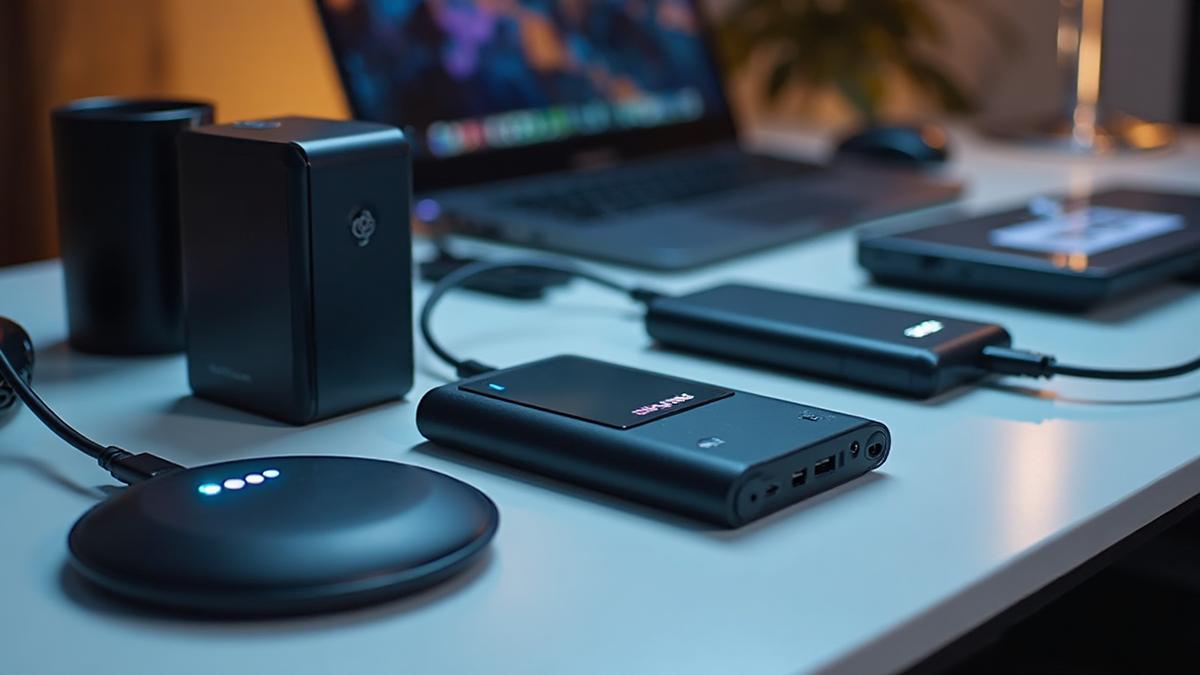
If you've lived through a winter storm, a grid wobble, or just want a silent backup for your router, lights, and medical devices, a portable power station is the most practical way to get through a UK blackout. Below you'll find the best models available in the UK, what they're good at, where they fall short, and how to choose based on your real use-case—not marketing hype.
How to choose (fast)
- Capacity (Wh): Roughly, 300–600Wh = phones/routers/lights; 1,000–1,500Wh = laptops, small appliances, CPAP; 2,000Wh+ = fridges/kettles (in bursts).
- Output (W): Check continuous and surge (e.g., 1800W continuous = most kettles still too big, but microwaves/air fryers at low power often OK).
- Battery chemistry: LiFePO₄ (LFP) lasts longer (3,000+ cycles typical) and tolerates daily use better than older NMC packs.
- Charging speed: "AC fast charge" that goes 0–80% in under an hour is a genuine quality-of-life feature.
- UPS function: Keeps your kit alive during brief brownouts—great for desktop PCs/routers.
- Ports: Mix of AC sockets (UK), USB-C (100–140W), DC outputs, car socket, and solar input.
Top picks in the UK (summary)
- Best all-rounder (1kWh class): EcoFlow DELTA 2 — fast charging, strong app, 1800W output. Great balance for home backup.
- Best big unit for home backup (2kWh class): Jackery Explorer 2000 v2 — quiet, simple UI, high output for emergency use.
- Most expandable & off-grid friendly: Bluetti AC200MAX — big capacity, expansion options; heavier but camper/off-grid favourite.
- Compact/fast-charge standout (budget to mid): EcoFlow River 2 Pro — rapid AC charging; ideal for routers, lights, and short outages.
- Heavy-duty alternative: Anker PowerHouse 767/757 — robust build and strong outputs; excellent but large and pricey.
The best portable power stations in detail
1) EcoFlow DELTA 2 (≈1,024Wh, 1800W) — Best all-rounder for UK homes
Why it's great: Reviewers consistently praise the rapid charging, refined app, and high 1800W continuous output—enough for most household loads except the very hungriest appliances. A smart "daily driver" for blackouts and camping.
Pros
- 0–80% fast AC charging (well under an hour in many tests)
- Mature app with power flow, firmware updates, and UPS modes
- LFP battery chemistry for longevity
- Good port mix, expandable with extra battery
Cons
- Two AC sockets may feel limiting for some setups
- Not the lightest in class
Best for: Homes that want a dependable, fast-charging backup for routers, lighting, laptops, and short kettle/microwave runs at reduced power.
2) Jackery Explorer 2000 v2 (≈2,000Wh, high output) — Best big unit for home backup
Why it's great: TechRadar's hands-on calls out the near-silent operation, friendly UI, and high storage/output—excellent for emergency use or shifting off-peak power to daytime. If you want something that just works and lasts a long blackout, this is a top choice.
Pros
- High capacity and output for bigger appliances
- Simple controls; helpful companion app
- Works well with brand solar panels for extended outages
Cons
- Size/weight: not grab-and-go
- Premium pricing
Best for: Families wanting "plug-and-play" backup that can bridge longer outages, support fridges (watch startup surge), and keep a small household ticking.
3) Bluetti AC200MAX (≈2,048Wh, 2200W) — Best for expandability and off-grid use
Why it's great: UK round-ups continue to shortlist the AC200MAX for its big inverter, expandable battery ecosystem, plentiful DC outputs, and solid LFP chemistry—beloved by vanlifers/off-grid users. Heavier, yes, but a workhorse.
Pros
- High continuous output with generous surge headroom
- Multiple expansion battery options; solar-friendly
- Many ports including high-watt USB-C
Cons
- Heavy; not "portable" in the everyday sense
- Interface is functional more than polished
Best for: Users who want a semi-stationary hub for extended blackouts, cabin/van setups, or serious off-grid cooking and heating accessories (within wattage).
4) EcoFlow River 2 Pro (≈768Wh, 800W) — Compact/fast-charge standout
Why it's great: In UK lists, the River 2 Pro gets the "Editor's pick" nod thanks to class-leading fast AC charging and a useful 800W inverter (with boost modes). Perfect for router + lighting + phones and short-run appliance use.
Pros
- Blazing fast wall charging; quick top-ups during intermittent power
- Lightweight; easy to stash and carry
- LFP battery chemistry
Cons
- Capacity limits heavier appliance use
- Fewer AC sockets than bigger units
Best for: Flats or smaller homes wanting affordable, quick-to-use blackout resilience.
5) Anker PowerHouse 757/767 (varies by model) — Heavy-duty alternative
Why it's great: UK and international round-ups regularly include Anker's larger PowerHouse units for robust build quality, high output, and long cycle life. They're excellent but bulky, suiting garages, utility rooms, or sheds more than studio flats.
Pros
- Strong outputs, durable build
- Reputable support ecosystem
- Good port selection
Cons
- Large and heavy
- Pricing can creep above rivals for similar specs
Best for: Users prioritising durability and output for home backup, workshops, or garden offices.
"Are they really worth it for blackouts?"
Short answer: Yes, if you pick the right size for your use. A ~1kWh unit can keep a router + phones + LED lighting going for days; ~2kWh can bridge fridges (mind surge), laptops, lights, and short cooking bursts. If you're on Economy 7/Octopus off-peak, you can also time-shift cheap night power to the day.
Pros & cons by brand (quick glance)
EcoFlow
✅ Fastest wall charging; polished app; good UPS features
❌ Some models have fewer AC sockets than rivals in class
Jackery
✅ Quiet, simple UI; reliable; strong with brand solar bundles
❌ Premium pricing; heavier in higher-capacity models
Bluetti
✅ Expandable ecosystems; large inverters; DC/solar flexibility
❌ Heavier units; UI less slick than EcoFlow
Anker
✅ Robust build, good outputs, long cycle life
❌ Big units are bulky and often pricier
Safety & legal notes (UK & EU)
- Indoor safety: Battery power stations are safe indoors; fuel generators are not (CO poisoning risk).
- Extension leads: Use surge-protected extension blocks; unplug delicate electronics during an outage.
- Solar input: Most units accept regulated PV input—follow manufacturer voltage/current limits.
Our verdicts & recommended picks (unbiased)
- Best overall for UK homes: EcoFlow DELTA 2 — the best balance of speed, output, longevity (LFP) and ease of use. If you only buy one, make it this.
- Best large backup: Jackery 2000 v2 — quiet and simple, with the capacity to ride out longer blackouts and support larger loads.
- Best for off-grid/expandable setups: Bluetti AC200MAX — big inverter + expansion batteries make it a favourite for vans, cabins, and prolonged outages.
- Best compact fast-charger: EcoFlow River 2 Pro — perfect router/lighting companion with ultra-fast wall charging.
Prices fluctuate; check UK retailers for current deals. If you want UK-available panels, match the brand (EcoFlow with EcoFlow, Jackery with Jackery) for plug-and-play reliability.
FAQs
How many watt-hours do I need for a blackout?
For a typical home running router + 2 phones + LED lights, ~500–800Wh can handle a day or two. Add laptop use and occasional microwave: 1,000–1,500Wh. For fridges/longer outages, 2,000Wh+ is more comfortable.
Do I need solar panels?
Not required, but nice to have in multi-day outages. In the UK, expect real-world solar to be weather-dependent. Brand-matched foldables simplify setup.
Can I run a kettle?
Standard kettles are ~2,800W—too high for most units. Use a low-wattage travel kettle or boil on a camping stove (follow ventilation rules).
The bottom line
For UK blackout resilience, you don't need to go full bunker mode. A well-chosen portable power station + LED lighting + a few sensible extras will turn a stressful outage into a manageable inconvenience. If budget allows, start with the EcoFlow DELTA 2; if you need bigger headroom for family essentials, step up to the Jackery 2000 v2 or Bluetti AC200MAX.
Prepared, not paranoid—that's the EODSurvival way.