Contains EODSurvival promotional content.
The checklist tells you what to own. This guide covers what to know.
The UK Government’s Be Ready campaign, launched on 22 October 2026, asks households to prepare to manage for three days during disruption to everyday services. Its checklist includes bottled drinking water, 3 litres per person per day, as well as non-perishable food, a torch, an FM radio, a power bank and cash. That is useful kit. A few practical skills help you use it well. (Be Ready checklist; Cabinet Office announcement)
Quick answer
Every UK household can learn eight practical three-day skills at home, usually in an evening and at little or no cost: find the water, gas and electricity shut-offs, know what works without power, learn basic first aid, use torches and stoves safely, manage drinking water (3 litres per person per day), protect food in a power cut, make a paper communication plan and give everyone one practical job.
🔧 1. Find your household shut-offs
A leak, burst pipe or gas concern is easier to manage when you know where the controls are. The Be Ready campaign advises households to learn how to turn off their water, gas and electricity.
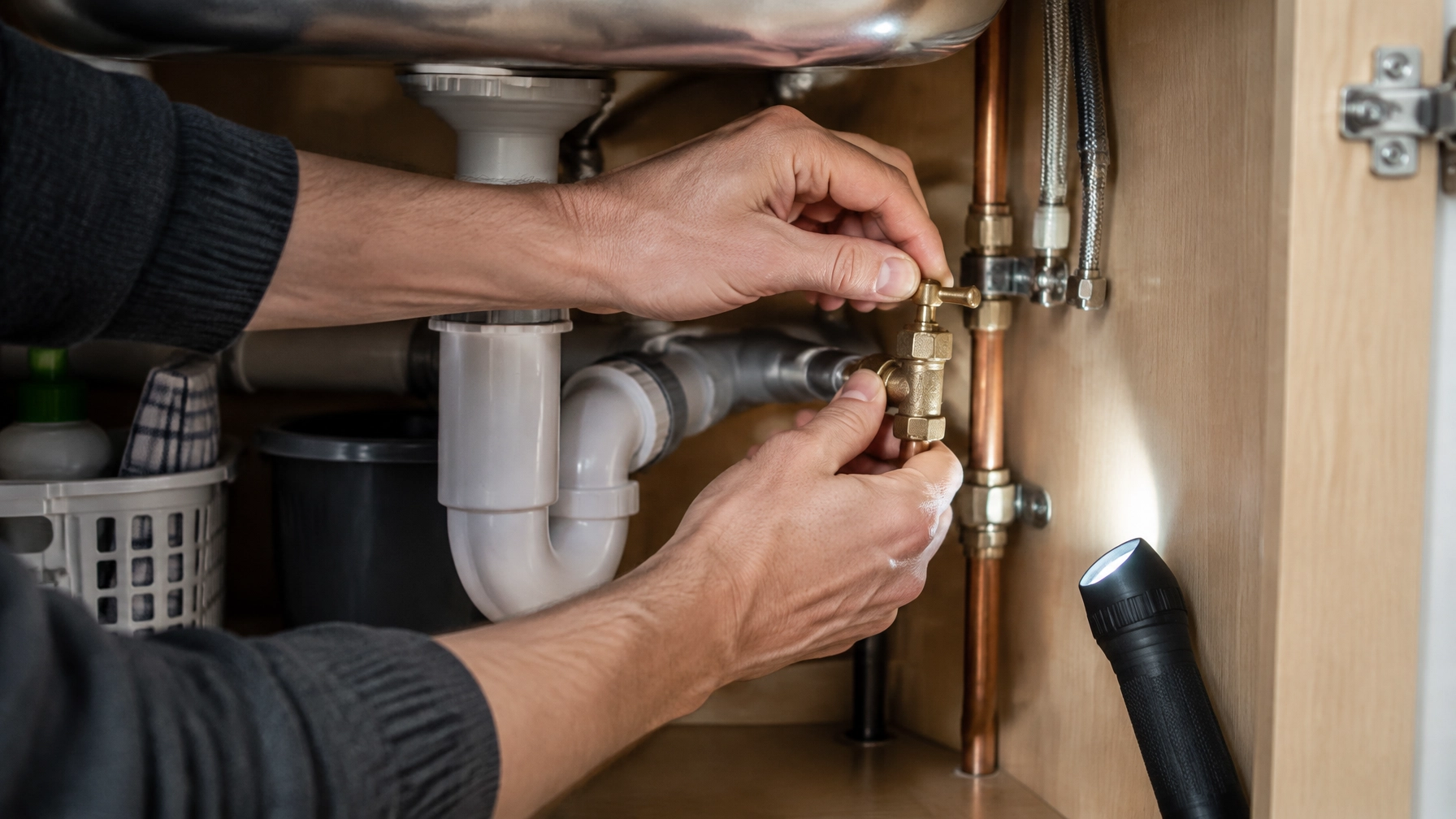
- Water: Find your stopcock location. It is often under the kitchen sink, but may be elsewhere. In many homes, turning the valve clockwise closes it. Don’t force a stiff valve. Check that you can reach it and label its location. For more on how to turn off your water supply in the UK, see GOV.UK’s advice on protecting your property.
- Gas: Locate the meter and the emergency control valve. It is often in an outside meter box; in some homes, the meter is indoors. Learn what the valve looks like from your supplier’s guidance. If you smell gas, don’t operate electrical switches or use a naked flame. Leave the property and call the gas emergency service from outside: 0800 111 999 in Great Britain or 0800 002 001 in Northern Ireland. Don’t turn the gas back on yourself after an emergency shut-off. (National Gas; nidirect)
- Electricity: Find the consumer unit and identify the main switch. Learn which labelled breaker serves key circuits, but don’t remove the cover or touch equipment that is wet or damaged.
Learn it tonight: Find each control, take a photo, and write the locations on a card. Don’t practise turning off gas or electricity just to test them.
🚪 2. Know what still works without power
In a power cut, an electric garage door may have a manual release. Your boiler may stop working because it needs electricity, and it may not restart if its condensate pipe freezes in cold weather. Some powered door locks have a mechanical way to open them; the method varies.
Learn it tonight: Read the manual for your garage door, lock and boiler. Know where any release is and what the manufacturer says to do. Don’t force a lock or dismantle an appliance. If your boiler doesn’t restart, follow its instructions or contact a qualified engineer.
🩹 3. Learn first aid for the first responder
During an interruption to services, you may be the first person able to help someone in your household. Know the basics and call 999 when someone is seriously ill or injured.
At a public-education level, the key actions are:
- Severe bleeding: Call 999 and apply firm, direct pressure to the wound. Keep the pressure on. If blood soaks through, add more dressing on top.
- Unresponsive but breathing normally: Call 999. Learn the recovery position from a trusted first-aid provider, and stay with the person while monitoring their breathing.
- Unresponsive and not breathing normally: Call 999, put the phone on speaker and follow the call handler’s instructions. Start CPR if you can.
- Possible shock: Call 999, keep the person warm and reassure them while you wait for help.
Learn it properly: Book a practical session with a provider such as St John Ambulance. Reading is useful, but an in-person course lets you practise. For background on household supplies, see our guides to first aid kits and trauma kits.
🔦 4. Use your kit safely
The right equipment can still create a hazard if you use it the wrong way. The Be Ready checklist notes that torches are safer than candles.
- Keep candles on a stable, heat-resistant surface and away from curtains. Never leave one unattended.
- Use a torch or lantern for routine lighting. Keep it somewhere everyone can find it.
- Never bring a barbecue, camping stove or generator indoors or into a garage. Don’t use a camping stove in a tent. These appliances can produce carbon monoxide. A carbon monoxide alarm is useful, but it does not make unsafe indoor use safe. See our carbon monoxide alarm guide.
💧 5. Manage water carefully
The campaign’s 3 litres per person per day is for drinking; it says you need more for cooking and washing. For three days, that means 9 litres per person for drinking alone.
Learn it tonight: Check what you already store. If you fill your own containers, use clean, food-grade containers, not old milk bottles, and label the date. Follow your water supplier’s advice if there is a supply problem or a notice about water quality.
Some homes have a cold-water storage cistern or hot-water cylinder. Don’t assume water from plumbing storage is safe to drink. If you need advice on treating water, start with our guides to boiling water without power and water filters. Our UK water survival guide explains storage in more detail. For uncertain water, follow local instructions; boiling does not remove chemical contamination.
🍽️ 6. Protect food when the fridge stops
Opening the fridge repeatedly lets cold air out. The Food Standards Agency advises keeping fridge and freezer doors closed during a power cut. As a general guide, a closed fridge stays cold for about four hours; a full freezer may stay cold for around 48 hours, or a half-full one for around 24. Treat these as estimates, not guarantees. (FSA power-cut food safety advice)
Learn it tonight: Check that your emergency food can be eaten without refrigeration or cooking, and keep a manual tin opener nearby. Our guides to food preparedness and long shelf-life foods can help you choose what to store. When you’re unsure whether chilled food stayed cold enough, don’t taste-test it. See our guide to food safety in a power cut.
📻 7. Make a communication plan
Phones may run out of charge or lose service. The Be Ready campaign recommends an FM radio and writing down important contacts and station frequencies.
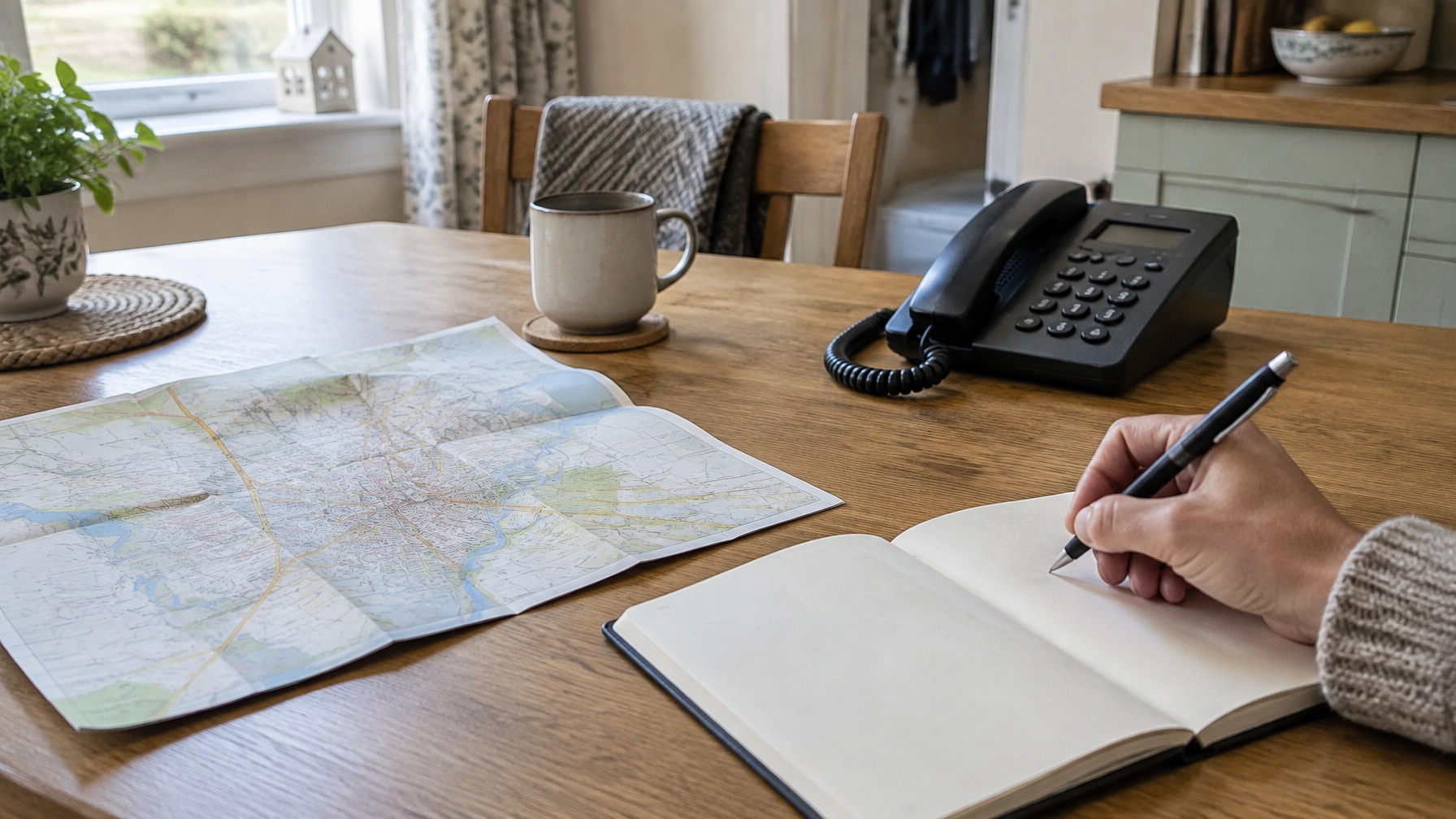
Learn it tonight: Write down key phone numbers you currently keep only in your mobile. Agree when and how your household will check in, and where you would meet if you couldn’t contact each other. Find the FM frequency for the local radio station you use for updates. Keep a paper map, or at least learn the main roads around home. Our family communications plan has more ideas.
🧭 8. Give everyone one practical skill
Choose something useful and suitable for each person: reading a paper map, knowing your home’s fire escape route, or handling a simple household task. Keep it calm and age-appropriate. Children can learn their address, how to call 999, where the torch is and that candles are not toys.
🚫 What you don’t need to learn first
For a three-day household outage, start with domestic competence, not bushcraft or military survival. Fire-lighting and shelter-building are not relevant to most UK households staying safely at home without power or water. They belong to a different set of outdoor skills.
First learn how your own home works, how to use your supplies safely and how to contact the people who matter.
📝 Practise safely: your evening-one checklist
This week, set aside a short session to:
- Find and label your stopcock and consumer unit.
- Write down important phone numbers and your local radio frequency.
- Check your torch and spare batteries.
- Read the manual for one powered door or appliance.
- Look at your stored water and food. Note what your household still needs — our 72-Hour Household Plan helps you work out the amounts.
Don’t deliberately shut off utilities or test fuel-burning equipment indoors. Follow appliance instructions and local advice. If you’re eligible, check the Priority Services Register; Northern Ireland has separate Customer Care Registers.
🌿 Closing thought
You don’t need to master everything in one weekend. Learn one useful skill at a time, practise safely and keep the instructions where your household can find them. Preparedness is about confidence, not fear. Prepared, not paranoid.
From the EODSurvival shop: our 72-Hour Household Plan
The checklist tells you what to own. Our 72-Hour Household Plan works out what your household actually needs: how much water, how many meals, and how to know when you have enough. Based on GOV.UK and EU emergency-preparedness guidance. Ebook, paperback and printable pack.
Independent publication, not government endorsed.
Get the 72-Hour Household Plan →
❓ FAQs
- Be Ready: household emergency checklist
- Cabinet Office: campaign launch, 22 October 2026
- GOV.UK: protect your property from flooding
- National Gas: emergency contacts
- nidirect: energy, power supply and utilities
- St John Ambulance: first-aid advice
- Food Standards Agency: food safety in a power cut
Independent publication, not government endorsed.