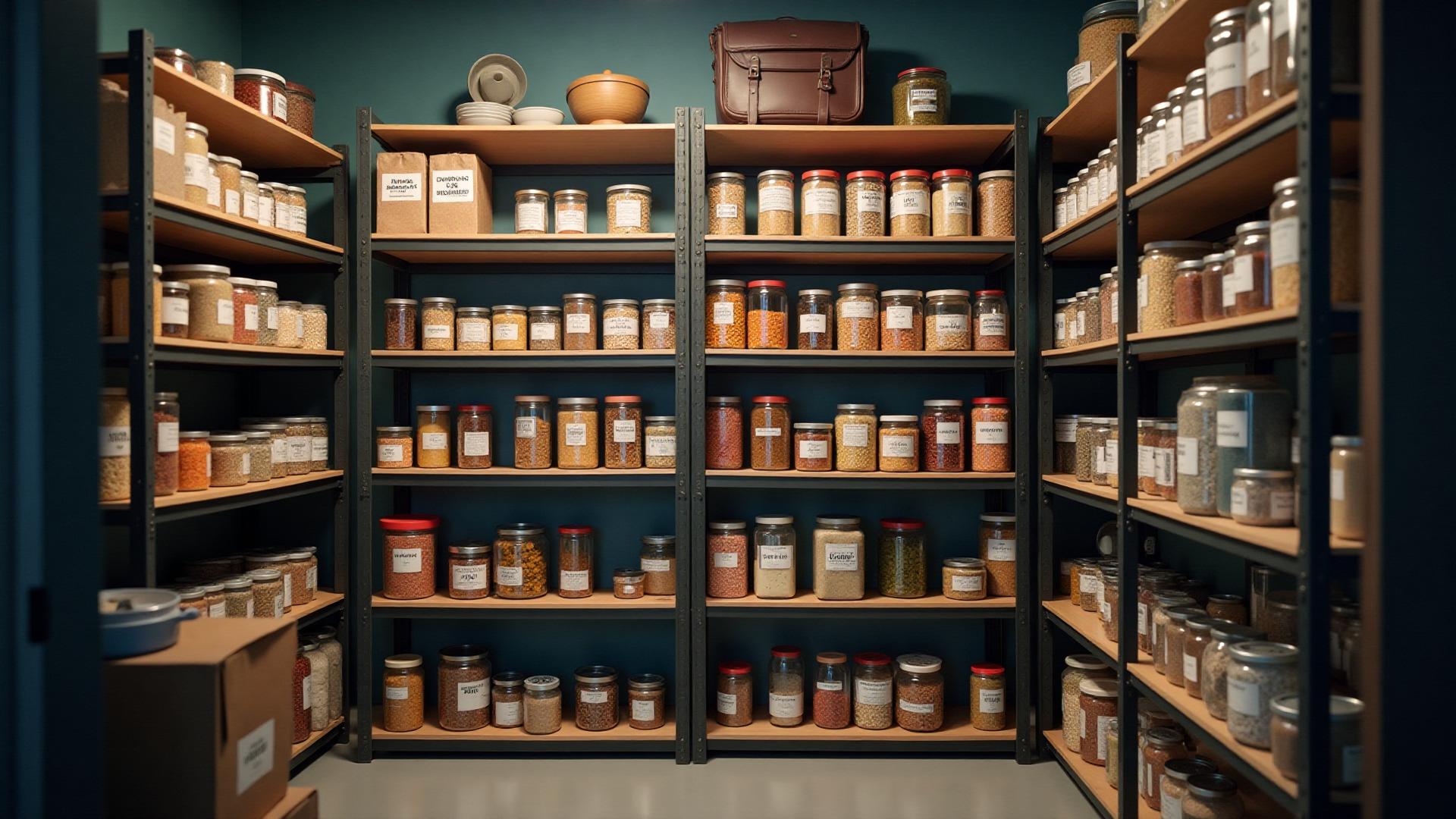
Food Preparedness UK & EU: What to Store, How to Store It, and Eat Well in a Blackout
Your 2025 Blueprint for Emergency Food Storage Based on FSA Guidance
When the lights go out, it isn't your power station or radio that fails you — it's your fridge. Food rot, spoilage, and unsafe handling are silent threats during a blackout or extended disruption.
This guide is your UK/EU-tailored blueprint for food preparedness: what to stock, how to store safely, how to eat well when the grid goes dark — all grounded in official FSA / Food Standards / power-cut guidance. No fluff, just usable, realistic prep.
4 Hours
Safe fridge time without power (if unopened)
8°C Threshold
Discard fridge food above this temp for 4+ hours
48 Hours
Full freezer stays safe (24h if half-full)
The Food Reality in a Power Cut
What Happens When Power Fails
- •Without refrigeration, bacteria multiply faster.
- •Freezers begin to thaw, moisture forms, package seals break.
- •Cooking becomes a challenge: electric stoves are disabled.
- •Supply chain hiccups may reduce food availability or delivery.
In short: your cold chain breaks — and with it, food safety becomes a live issue.
Government Warnings & Household Expectations
The UK government has urged households to keep three days' supply of non-perishable food and water, noting many lack even that.
The official Prepare UK site (GOV.UK resilience) reminds consumers: "Keep fridge and freezer doors closed… the Food Standards Agency provides advice on food safety in a power cut."
FSA's "Food safety in a power cut" guidance is core:
- →If the outage is under 4 hours, most food stays safe.
- →In longer outages, fridge content should be discarded if above 8°C for over 4 hours.
- →A full freezer may stay safe for up to 48 hours (24 hours if half-full).
- →Outside storage (if ambient <8°C) might assist, but must be done properly.
Source: FSA: Food safety in a power cut | Scottish FSA: Power cuts food safety
Those rules form your safety thresholds: 4 hours, 8°C, 48 hours.
What to Store (Your Blackout Pantry)
We break this into categories: ambient (room temp), chillable, freezer / long-term, and extras.
Ambient / Shelf-Stable Foods (Your Backbone)
- Tinned goods — vegetables, meat, fish, beans, soups. Great safety net because no cooking needed.
- Dried staples — rice, pasta, oats, pulses, flour (if you can grind), powdered milk.
- Dehydrated / freeze-dried meals — premium, lightweight, long shelf life.
- Nuts, seeds, dried fruit — calorie dense, nutritious, minimal prep.
- Cooking fats & oils — olive oil, ghee, coconut oil. Helps for calories and cooking.
- Sauces, spices, condiments — salt, pepper, herbs — make bland food tolerable.
- Crackers, hard biscuits, energy bars — "emergency grab & eat" food.
- Baby & pet specific foods — formula, pouches, pet kibble.
- Powders & mixables — powdered milk, soups, drink mixes.
💡 Tip: Store what you actually eat. If your family hates liver pâté, don't stock a dozen tins.
Chillable / Short-Term (for short outages)
- Cheese blocks (hard) — last better than soft cheeses.
- Yogurt / fermented foods (if your fridge is still cold) — but use first.
- Cold meats / cooked foods — consume these early after a blackout.
- Fresh vegetables / fruit with longer shelf lives — apples, carrots, citrus, potatoes (stored in darkness).
Freezer / Long-Term Storage (if you have generator or prolonged prep)
- Vacuum-sealed meat (if you butcher or buy in bulk).
- Bulk frozen vegetables — add to stews, soups.
- Pre-cooked meals (freeze then reheat).
- Ice blocks (frozen water jugs) — to help keep fridge sections cooler during outage.
Emergency Extras / Buffers
- Block ice / cool packs — to extend cold storage.
- Desiccants / oxygen absorbers — for dry food packaging.
- Mylar + airtight containers — protect from humidity, pests, oxygen drift.
- Compression / vacuum sealer machine — useful for resealing bulk stores.
- Can opener (manual) — a physical tool you can't rely on electricity for.
How to Store It (Safely & Smartly)
Best Environmental Practices
- ✓Dark, cool, dry place — avoid sunlight, damp walls.
- ✓Off the floor — prevent pests, flooding intrusion.
- ✓Stack smartly — heaviest at bottom, fragile on top.
- ✓Use cedar blocks or pest deterrents (not toxic sprays).
Packaging & Repackaging
- Use food-grade airtight containers — screw-top jars, thick plastic tubs.
- For long-term ambient foods: mylar + oxygen absorber, inside sealed buckets.
- Label everything: date, batch, contents. Use durable markers.
- Rotate stock: new items behind older ones (FIFO system).
Temperature & Moisture Control
- Use hygrometers / silica gel packs in dry storage.
- If your storage area is damp (cellar, basement), invest in dehumidifiers or moisture barriers.
- Don't store near heaters or pipes.
- For freezers / cold storage, avoid frequent opening.
Backup & Redundancy
- Spread storage locations — avoid putting all food in one shed or basement.
- Keep emergency food in your home (cupboard) plus backup in garage/safe box.
- Store some at your bug-out location, car, or safe house.
Eat Well in a Blackout (Cooking, Planning, Safety)
Ordering What to Eat First
The FSA / Scottish FSA recommend a prioritised order if a fridge's temperature climbs above 8°C:
- Foods that require refrigeration (deli meats, dairy)
- Defrosted items that don't need cooking
- Ambient perishable items
- Dried, canned, and shelf items
⚠️ If fridge reached ≥8°C, you have 4 hours to eat those at-risk items or throw them.
Cooking without Electricity
- →Gas stoves / camping stoves / BBQs — use outdoors or ventilated areas. Never indoors (CO hazard).
- →Rocket stoves / wood burners — useful when you have fuel / wood access.
- →Solar ovens (if sunlight) — slow but usable in day.
- →No-cook meals — tuna + crackers, nut butter + fruit, cold soups (gazpacho style).
- →Batch cooking ahead — pre-cook meals before blackout.
Hygiene & Food Safety Habits
- ✓Always wash hands (or sanitise), even more critical when water is limited.
- ✓Avoid raw + cooked cross-contamination.
- ✓Use bottled / treated / boiled water for washing if mains water is down.
- ✓Discard anything with odd smell, colour, or texture. When in doubt, throw it out.
- ✓Use a thermometer — especially for meats.
Sample Pantry & Meal Plan (UK-centric)
Here's a sample 7-day food plan for a household of 3–4 people (mostly ambient & minimal cooking):
| Day | Breakfast | Lunch | Dinner | Snacks / Add-ons |
|---|---|---|---|---|
| 1 | Oats + dried fruit + powdered milk | Tuna + crackers + canned veg | Pasta + tinned sauce + oil | Nuts, energy bars |
| 2 | Crackers + nut butter + jam | Lentil soup (tinned) | Rice + tinned beans + spices | Dried fruit |
| 3 | Powdered milk drink + biscuits | Chickpea salad (canned) | Freeze-dried chili (if stocked) | Seeds, chocolate |
| 4 | Porridge + honey | Pasta salad (from pasta + canned veg) | Rice + curry paste + coconut milk | Fruit leather |
| 5 | Biscuits + nut/seed butter | Sardines + crackers | Tinned stew + rice | Nuts / protein bar |
| 6 | Muesli + dried milk | Bean soup (canned) | Dehydrated meal (if available) | Dried banana chips |
| 7 | Pancakes (mix powder) | Pea soup | Tinned meat + mash (instant potato) | Hard cheese + crackers |
You can scale, swap, or stretch with "extras" like powdered soups, spices, etc.
Common Mistakes & Pitfalls to Avoid
❌ Over-relying on "long-life" labels
Just because it says "shelf stable" doesn't mean it stays forever.
❌ Ignoring temperature thresholds
Fridge above 8°C? Don't gamble.
❌ Using candles / heat sources that contaminate
Avoid indoor charcoal, BBQs, etc.
❌ Storing raw & cooked together
Juices drip and cross-contaminate.
❌ No stock rotation
Food ages or gets forgotten.
Sources & References
Stay Prepared with EODSurvival
Download our latest survival guides and emergency preparedness checklists for free. Get new guides emailed to you as soon as they're released—no spam, just practical preparedness advice for UK households.
Join our preparedness community. Unsubscribe anytime.