Quick answer
As of 23 November 2026, the UK’s Be Ready guidance remains three days of emergency supplies, including 3 litres of drinking water per person per day plus extra for cooking and washing; the reported missile incursions in Poland are not a UK instruction to panic-buy or increase household stockpiles.
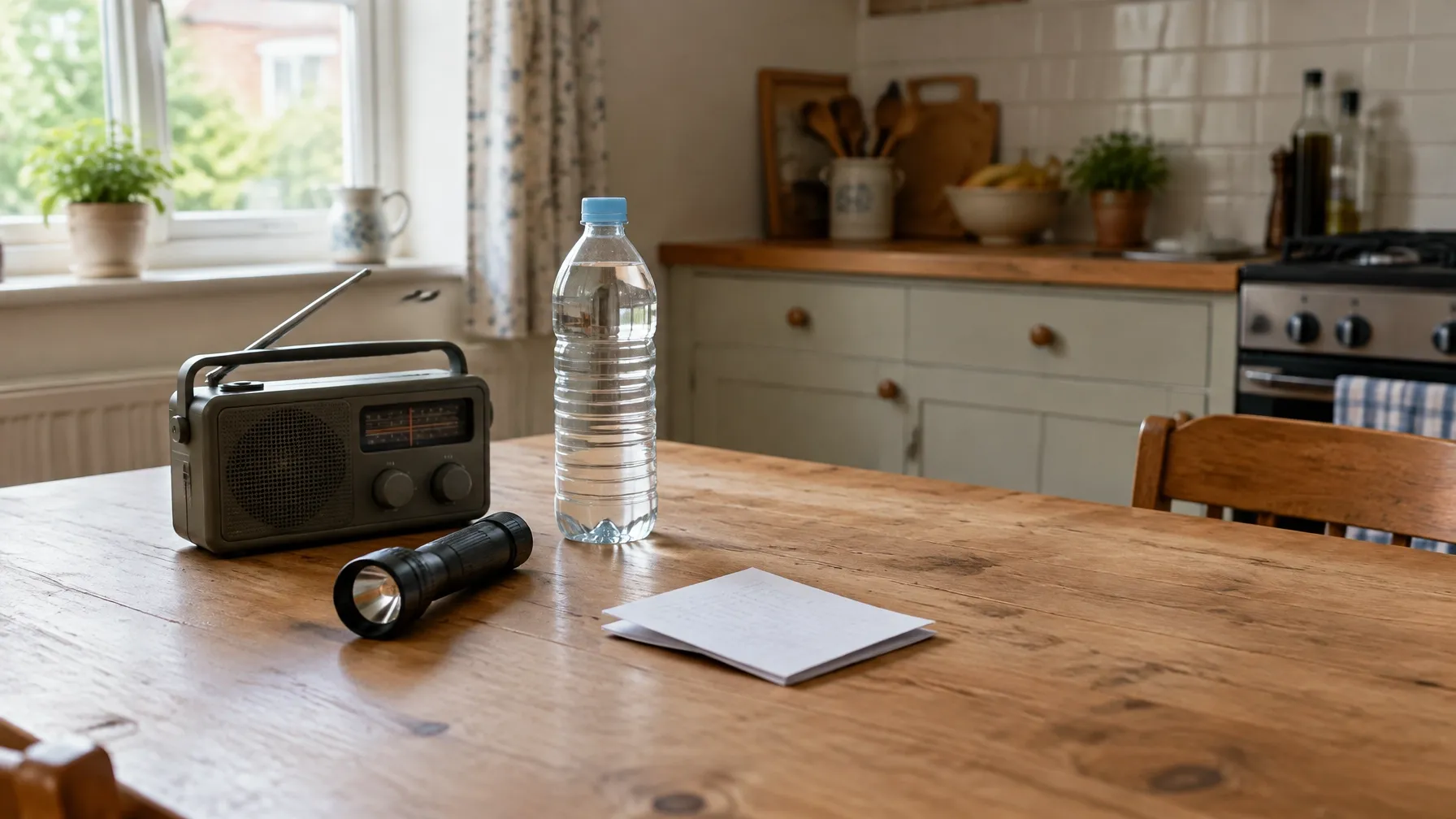
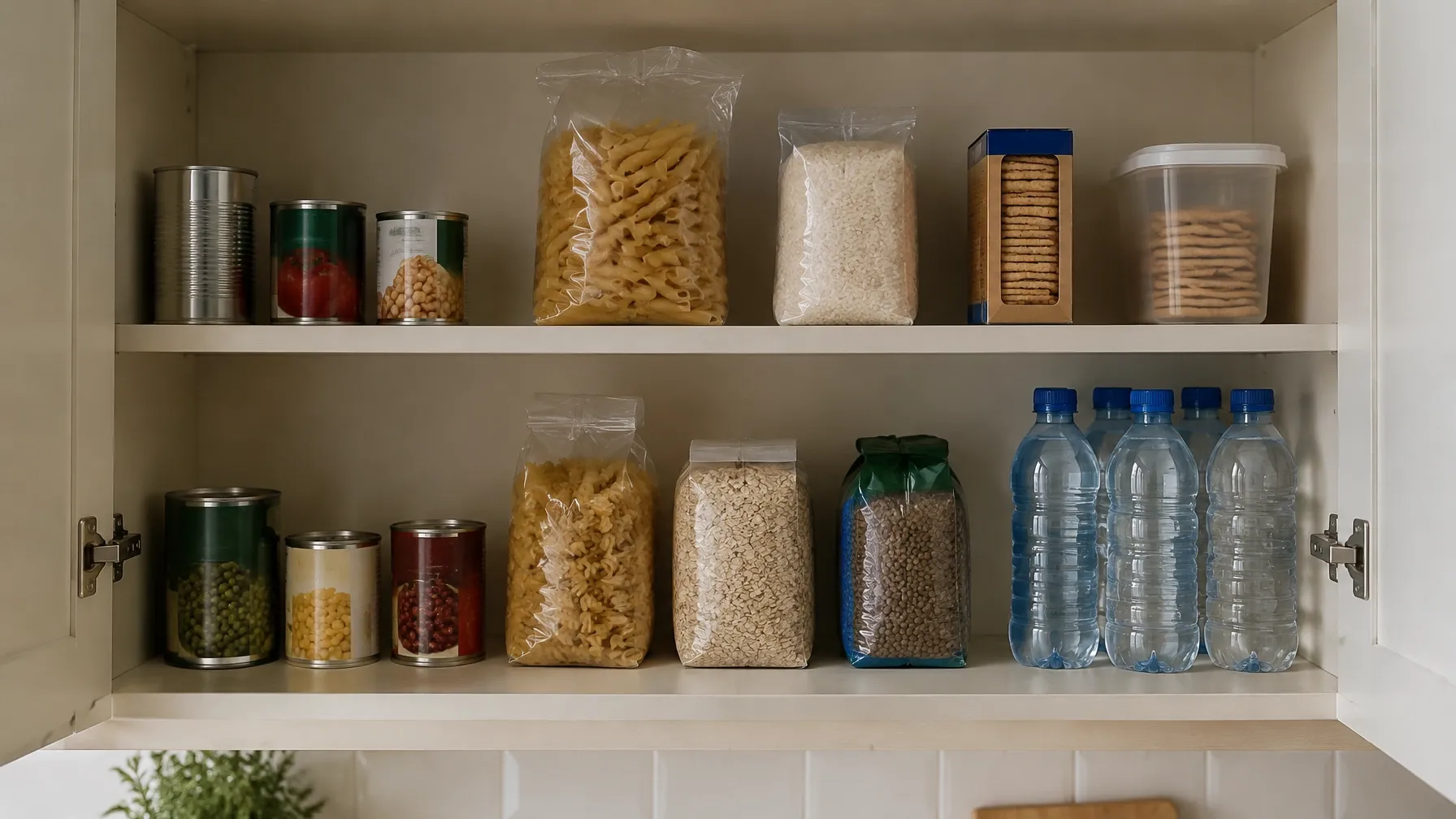
If you are asking whether you should start stockpiling because of the incident in Poland, the answer is no. As of Monday 23 November, UK household advice has not changed. The government’s Be Ready campaign recommends preparing for three days of disruption: 3 litres of drinking water per person per day, more for cooking and washing, and three days of non-perishable food that does not need cooking. It also lists items such as a torch, radio, charged power bank and cash. The UK household guidance cited here does not advise stockpiling beyond three days because of Poland. (Be Ready; Cabinet Office, 22 October)
Three days is a sensible starting point, not a reason to rush out and fill a trolley. If you have the space and budget, building towards seven days of food and water gradually can give you extra flexibility during an extended power, water or payment outage. Panic-buying is different: it can leave less for people who cannot afford to buy ahead.
📰 What happened in Poland?
Early on Friday 20 November, objects entered Polish airspace during a large Russian aerial attack on Ukraine. Polish officials initially described two missiles and a suspected jet-powered drone coming down at three rural locations in south-eastern Poland. On Sunday, Polish prosecutors said preliminary examination of the debris indicated that all three objects were Russian Kh-101 missiles. There were no reports of injuries. (BBC, 20 November; Reuters, 22 November)
One missile came down near Nowy Lipowiec, around 50km (31 miles) from the Ukrainian border. A local resident told the BBC she heard “a whistle and a dull impact” as she got her children ready for school. Farm CCTV captured the impact. The other locations were near Rudnik nad Sanem and Mołodycz. (BBC, 20 November)
Polish Prime Minister Donald Tusk said it did not appear to be an accident and described the incident as a provocation. Russia had made no comment about the airspace violations in the BBC’s report. Those statements do not establish the intent behind the incident; that remains a matter for investigation and assessment. (BBC, 20 November)

🇬🇧 Where were the British troops?
The missiles fell near south-eastern Poland while multinational forces were taking part in Koalicja 2026, a two-week exercise at Nowa Dęba. The exercise began on 9 November and involved land, air and naval forces from 11 countries, including the UK. Its stated purpose was to prepare for a possible post-war stabilisation mission in Ukraine. (BBC, 20 November; Al Jazeera, 21 November)
The nearest impact was reported to be about 35km (22 miles) from the exercise site. British troops were taking part in the exercise; the missiles did not land at the training ground. Hours after the impacts, UK Defence Secretary Wes Streeting visited the site with four European counterparts. There were no reported casualties from the Polish impacts. (AP/PBS, 20 November; BBC, 20 November)
🛡️ What has NATO done?
NATO Secretary General Mark Rutte called the airspace violations “grave” and “clearly dangerous”; NATO jets were scrambled in response. Poland has not invoked either Article 4 or Article 5. (BBC, 20 November; Reuters, 21 November)
In plain English, Article 4 means allies consult one another when a member believes its security is threatened. Article 5 is NATO’s collective-defence clause: an attack on one member may be treated as an attack on all. It is not an automatic switch. Invoking it is a political decision requiring agreement among all 32 members. Poland invoked Article 4 after Russian drones entered its airspace in September 2025; it has not done so in this incident. (AP/PBS, 20 November; Al Jazeera, 21 November)
The North Atlantic Council was due to hold an extraordinary meeting on Poland’s security on Monday 23 November; the reports checked for this article did not yet confirm its outcome. Poland’s defence minister said the country expected strong support and proposals to strengthen its eastern border. Reports available at the time of writing did not confirm specific new deployments. (Kyiv Post, 23 November; Stars and Stripes, 22 November)
🧠 The UK intelligence chief’s caution
The most useful context for UK households came from Lieutenant General Matthew Jones, the UK’s chief of defence intelligence. On Friday, he said he was confident Russia “does not actively seek war with NATO”. He described his greatest fear as “the risk of a significant miscalculation”, warning that recent reckless behaviour could have had extremely serious results if circumstances had been slightly different. Jones did not directly mention the Polish incident in that speech. (AP/PBS, 20 November)
That is a serious warning about risk. It is not a prediction that conflict will spread, or a signal to empty supermarket shelves.
📅 A pattern of incidents, not a reason to speculate
The latest event sits alongside other reported incidents in the region. In November 2022, two Polish farmers were killed by a missile later assessed as a Ukrainian air-defence missile responding to a Russian attack. Russian drones entered Polish airspace in September 2025, when Poland invoked Article 4. Moldova also reported a drone airspace violation on 20 November. (BBC, 20 November; Al Jazeera, 21 November)
The pattern is a matter for governments and NATO to assess. For a UK household, the practical response remains everyday resilience.
🏠 What this means for your household
For most people in the UK, the more relevant disruptions to prepare for are severe weather, loss of power or water, and interruption to communications or payments. Be Ready’s three-day advice is designed to help you manage during disruption while support reaches those most in need. It is unchanged by the incident in Poland. (Be Ready)
Start with the government’s three-day baseline. Then, if it works for your household, add a little more over time:
For more help, see our guides to three-day meals, the household skills list, wind-up radios and blackout kits.
For practical Food & Water advice, read our guides to emergency water storage, food preparedness, long shelf-life foods and food safety during a power cut. The 72-Hour Household Plan helps turn that guidance into quantities and routines for your own household.
What should you avoid? Don’t bulk-buy, clear shelves or spend money on military-style equipment you do not need. Panic-buying can create shortages for others. Adding a few useful items to your normal shop is prudent; stripping a shelf is not.
✅ Prepared, not paranoid
This is a story about a serious incident in Poland and the risks of miscalculation. It does not change what UK households are being asked to do. Your useful response is a calm check of what you have, a practical list of what is missing, and gradual preparation within your means. A shopping list, not a bunker.
Preparedness is about confidence, not fear.
❓ FAQs
Sources
- BBC, “Russian missile hits Poland as Ukraine’s allies hold military exercise, says Tusk”, 20 November 2026.
- AP/PBS NewsHour, “NATO calls Russian missiles landing in Poland a ‘grave violation’ of airspace”, 20 November 2026.
- Al Jazeera, “Russian missiles hit Poland: What happened, and could NATO respond?”, 21 November 2026.
- Reuters, “NATO will defend every inch of Polish territory, Rutte says”, 21 November 2026.
- Reuters, “Three Russian missiles flew into Poland Friday, prosecutors say”, 22 November 2026.
- Kyiv Post, “NATO to Offer Poland ‘Strong Support’ After Russian Missiles Enter Its Airspace”, 23 November 2026.
- Stars and Stripes, “NATO emergency talks on tap as US commander assesses defenses after Russian missiles hit Poland”, 22 November 2026.
- Be Ready: household emergency guidance, accessed 23 November 2026.