Quick answer
Defence Secretary Wes Streeting said adversaries’ military strength and war economy could put them in a position to attack by 2030. That is a warning about possible capacity, not a prediction that war will begin in 1,000 days. The household advice is to prepare for a range of emergencies, with three days of essentials as a starting point.
This weekend’s headlines have carried a stark phrase: Britain must be ready for war in 1,000 days. Behind it is a separate, practical instruction for households: prepare for three days of disruption.
📰 What Streeting actually said
In an article for The Telegraph on 24 October, Streeting wrote that adversaries’ “force strength and war economy could put them in a position to attack” by 2030. He said this gave Britain “a little over 1,000 days” to be ready with allies “to fight and win”. He also wrote: “To prevent the worst, we have to prepare for it.” (The Telegraph, 24 October; quoted by The Independent, 24 October, and LBC, 25 October.)
The word could matters. Streeting’s statement describes a possible change in adversaries’ capacity. It does not say an attack will happen by 2030, or that war is certain within 1,000 days.
Streeting also connected household readiness with national defence, saying the country should take “our national resilience as well as our national defence” seriously. The connection is his framing. The household checklist itself is broader: the Cabinet Office describes Be Ready as preparation for disruption from events such as severe weather, which can affect power, water, phones and the internet. (Cabinet Office, 22 October.)
🛡️ What MI5 has said about resilience
In his annual threat update on 13 October, MI5 Director General Sir Ken McCallum discussed a changed national-security environment and the need to strengthen resilience across society. (MI5 annual threat update; BBC coverage.)
These are security assessments, not predictions of a specific incident or date. The practical household response is to make everyday essentials less dependent on uninterrupted services.
🏠 What the household advice asks you to do
The Be Ready campaign launched on 22 October. Its stated purpose is to help households manage for three days during an emergency, while support reaches those most in need. The Cabinet Office says the three-day approach is also used by France, Ireland and the Netherlands. (Cabinet Office, 22 October.)
The practical reason is straightforward: you may temporarily be unable to shop or use electronic payments if services are disrupted. The advice is to keep useful basics at home, not to assume that any particular disruption is coming.
🌍 How that compares with other European guidance
There is no single European household-preparedness standard. Sweden advises people to plan to manage independently for at least a week, including without electricity, water or the ability to shop. (Swedish official home-preparedness guidance.)
So the UK’s three-day benchmark is not a new idea, nor is it identical to every European country’s advice. It is a manageable first step. If you have the space and means, a longer supply can be a sensible stretch goal, not a reason to buy everything at once.
⚖️ The argument about tone and spending
The reporting also describes a debate about the tone of the warning and defence spending. Streeting wrote that preparation risked being lost “amidst a fixation with percentages and dates”. This article focuses on the household checklist rather than taking a political position. (LBC, 25 October.) The Budget is scheduled for Wednesday 28 October. (HM Treasury.)
🌧️ A current example: Storm Boelo
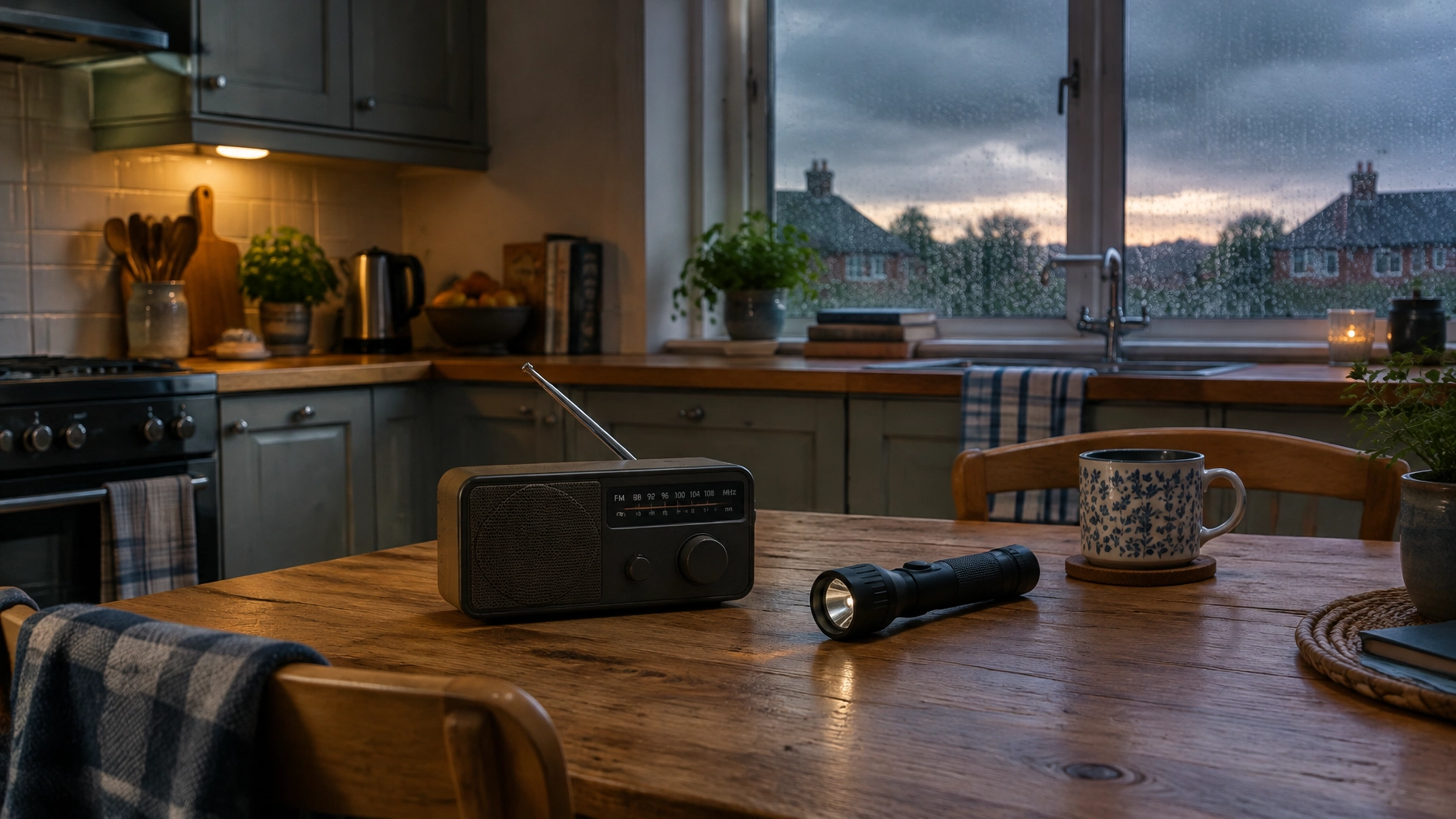
You do not need a geopolitical scenario to see why a household buffer can be useful. Storm Boelo brought strong winds and disruption over 24–25 October. The BBC reported gusts of up to 85mph and power outages. Outage totals are changing as repairs continue, so check your local electricity network for current information. (BBC, 25 October.)
For power cuts in Great Britain, the Be Ready guidance says to call 105. In Northern Ireland, it lists 03457 643643. (Be Ready household guidance.)
📋 Your three-day household checklist
The Be Ready checklist recommends that you check what you already have, then build up gradually. Its main items are:
The guidance recommends checking cupboards first, making a list of gaps, and adding items during your normal shopping trips. Set a reminder to check expiry dates and household needs every six months. It also suggests checking whether you are eligible for the Priority Services Register, which lets utility providers know you may need extra support during an interruption. (Be Ready checklist.)
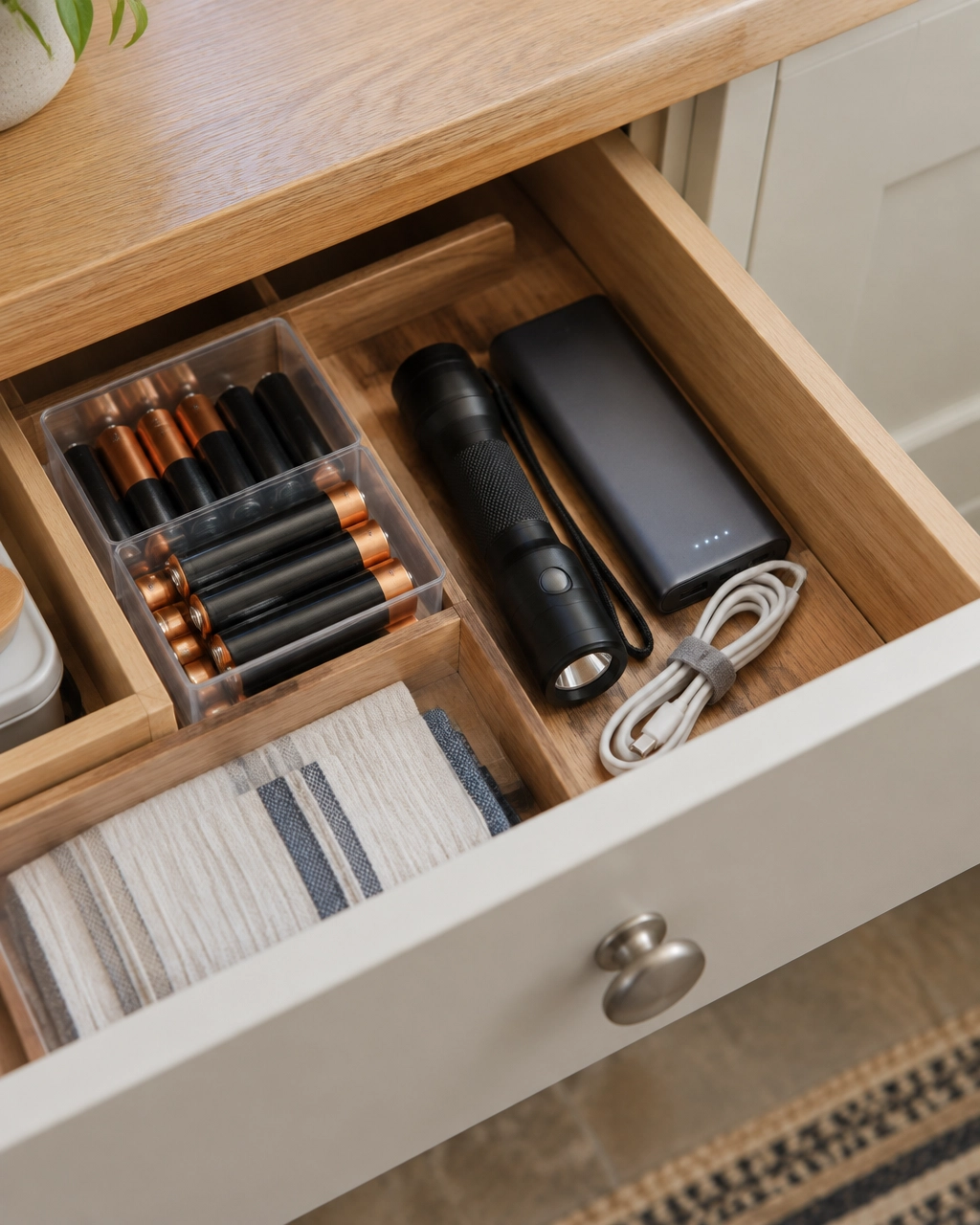
If you are unsure where to start, begin with water, then food, then light and information. Use what you already own. You do not need specialist military equipment, a bunker or a sudden bulk shop. For more on the household benchmark, see our 72-hour kit guide and our 23 October Be Ready explainer.
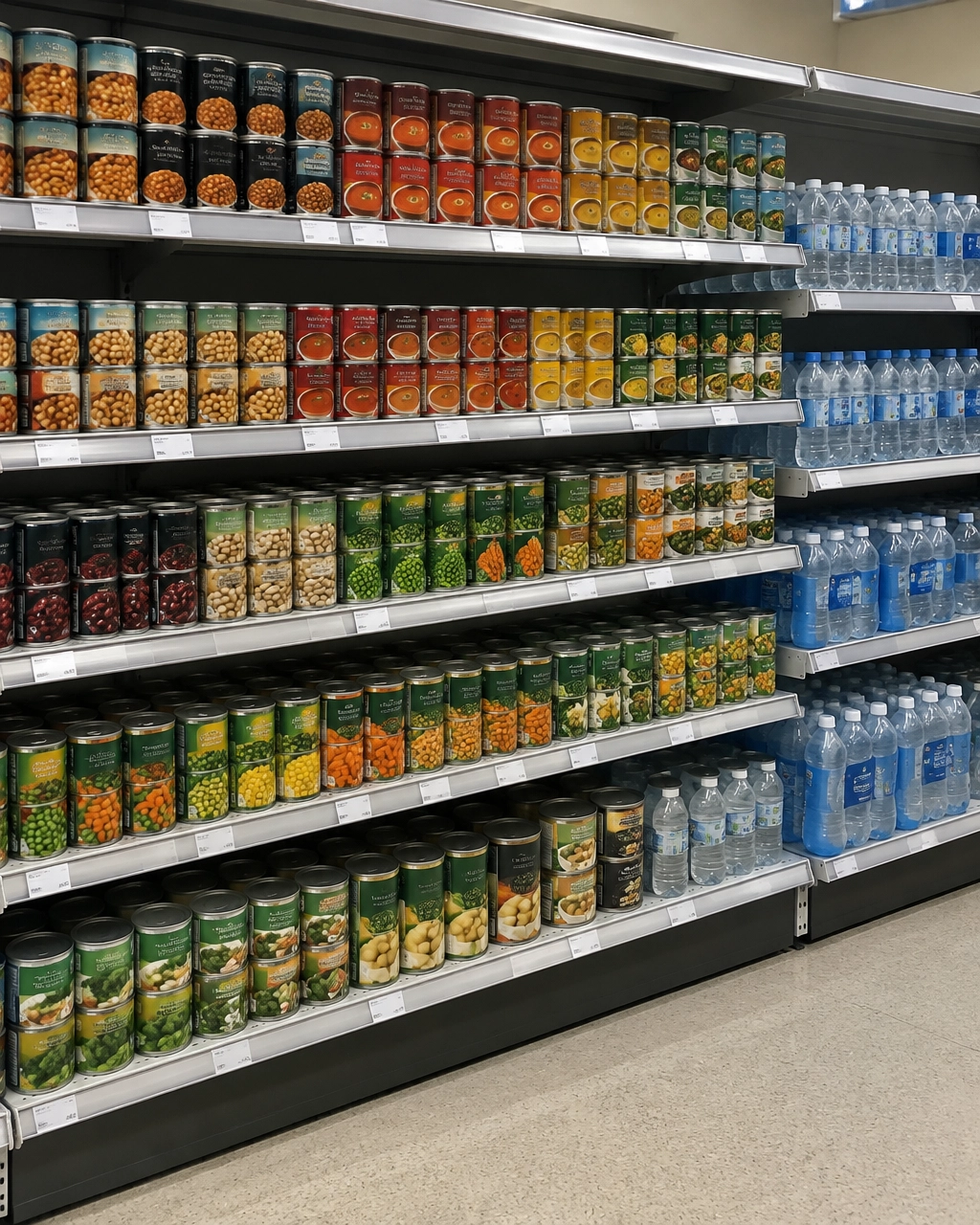
Your plan should fit your household, budget and available storage. If you want to build a longer-term water buffer, our England drought and water-supply article covers a separate pressure on water resources. Our September resilience explainer provides earlier context on the household campaign.
For practical next steps, use our blackout checklist, wind-up radio buying guide, communications guides and medical and safety guides.
✅ The distinction that matters
The household instruction is about a small reserve of practical essentials, not bunkers, military gear or panic buying. Three days of water and food will not answer every question raised by national security. It can, however, make a storm-related power cut or other temporary disruption easier to manage.
Preparedness is about confidence, not fear. Start with what you have, fill genuine gaps gradually, and keep the plan simple.
From the EODSurvival shop: our 72-Hour Household Plan
The plan turns the same three-day benchmark into household numbers: how much water your family actually needs, how many usable meals you have, and how to know when you have enough. Based on GOV.UK and EU emergency-preparedness guidance. Ebook, paperback and printable pack.
Independent publication, not government endorsed.
❓ FAQs
Sources
- The Telegraph, Wes Streeting’s news report, 24 October 2026
- The Telegraph, Streeting’s op-ed, 24 October 2026
- The Independent, 24 October 2026
- MI5, Annual Threat Update, 13 October 2026
- Cabinet Office, Be Ready campaign launch, 22 October 2026
- Be Ready household guidance and checklist
- Krisinformation.se, Swedish home-preparedness advice
- BBC, Storm Boelo power disruption, 25 October 2026
- LBC, Streeting’s warning and defence-spending debate, 25 October 2026