Contains EODSurvival promotional content.
You are halfway through an ordinary day when you are told to leave home. It might be a local flood, a major fire or a problem affecting essential services. You do not need to picture a far-fetched disaster: a short-notice evacuation is reason enough to have the basics ready.
A bug out bag should help you leave promptly and manage while you reach somewhere safe. It is not a promise that you can live independently for three days in any conditions. For most UK households, a light, practical evacuation bag works alongside supplies kept at home.
Use this bug out bag list as a starting point. Adjust it for your health, household, season and likely journey. Follow instructions from emergency services and your local council, and never delay leaving to finish packing.
Quick answer
A practical UK bug out bag contains safely manageable drinking water, ready-to-eat food, essential medication, waterproof layers, a torch, phone power and key documents; it supports evacuation to safety rather than guaranteeing 72 hours of independent survival.
🎒 Choose a bag you can carry
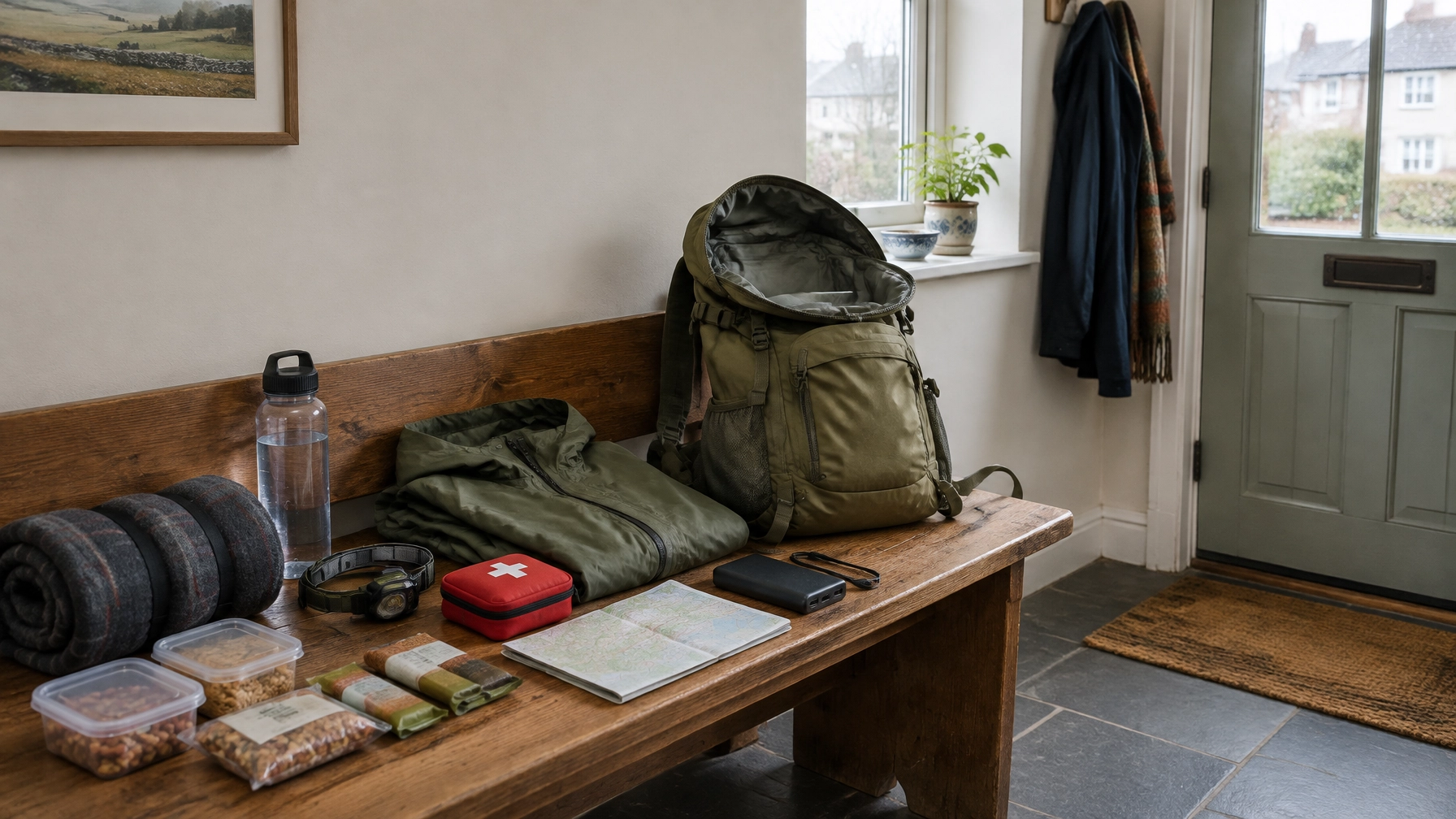
Start with a comfortable 30–40 litre rucksack. Look for padded shoulder straps, a supportive waist belt, durable fabric and a rain cover or water-resistant construction. A low-key design is practical. Avoid choosing a huge pack just because it has spare space: extra room can tempt you to add unnecessary weight.
Pack heavier items close to your back and things you may need quickly near the top. Use waterproof bags or dry sacks to protect clothing, documents, electronics and medical supplies.
Before relying on it, walk a few miles with the loaded bag. If it is uncomfortable, reduce the load or adjust the fit.
💧 Water and food
1. Drinking water
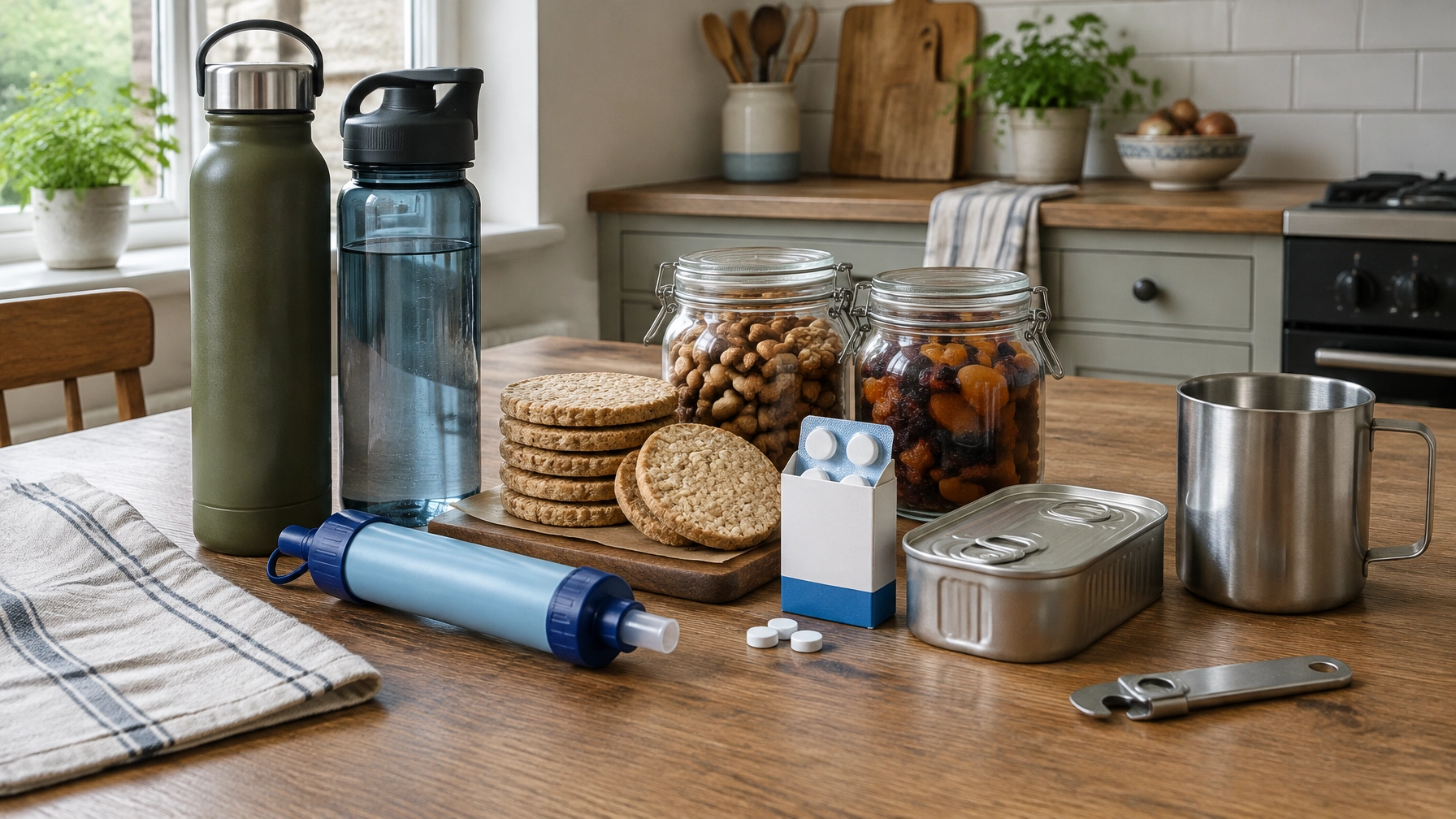
Carry sturdy bottles or a hard-wearing water container. The UK Government’s Be Ready campaign gives 3 litres of drinking water per person per day as a three-day minimum, with more needed for cooking and washing. That quantity is heavy: a full three-day drinking supply for one person weighs about 9kg before you add other kit.
Carry what you can safely manage and plan where you are going, how you will travel and whether more water will be available. Do not assume a filter makes every water source safe. Follow your water supplier’s instructions during a boil-water or do-not-drink notice; boiling and ordinary portable filters do not reliably remove chemical contamination.
2. Water filter and purification tablets
A compact filter and tablets can provide useful backup, but check the manufacturer’s instructions and limitations. Filters do not all remove the same contaminants. If water is visibly cloudy, follow the product guidance; some filters require pre-filtering. Keep a backup method rather than relying on one item.
Plan water separately for travel and at home: our UK water storage guide and water-filter buying guide explain safe storage and treatment limitations.
3. Ready-to-eat food
Pack food you already eat and can manage without cooking: energy bars, nuts, dried fruit, oatcakes or ring-pull tins. Check the use-by dates and account for allergies, children’s needs and any special diet. Choose food that will still be useful if you cannot heat it.
For familiar no-cook choices, read our food preparedness guide and long shelf-life foods guide. A household stockpile is separate from what you can comfortably carry.
4. Metal mug or compact pot
A metal mug is sturdy and can be useful for hot drinks or food if you have a safe way to heat them. It is optional if your plan relies on ready-to-eat meals.
5. Compact stove, fuel and ignition
A stove can be useful in some circumstances, but it is not essential for every evacuation. If you pack one, practise with it before you need it and follow its instructions. Never use a camping stove indoors, inside a tent or in another enclosed space: carbon monoxide can build up and may be fatal. See our supporting guide to gas versus electric stove choices, and follow the London Fire Brigade’s safety advice.
🧥 Shelter, warmth and clothing
6. Lightweight shelter
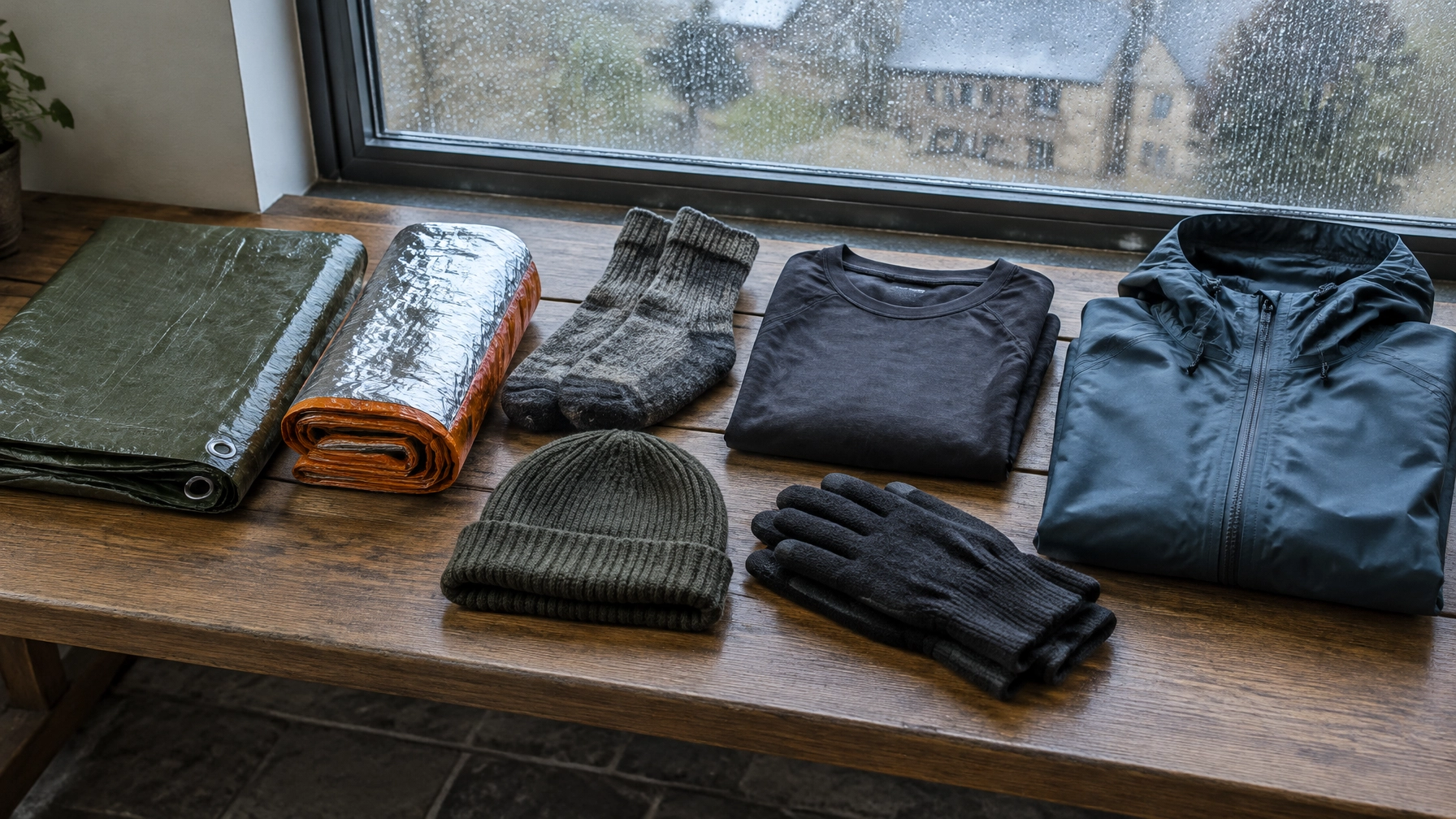
A tarp or tube tent can provide cover, but neither replaces suitable clothing or a safe place to stay. Choose equipment you can set up and practise before packing it.
7. Sleeping bag or emergency bivvy
A compact sleeping bag or emergency bivvy may help if you have to spend time outside or in an unheated place. A summer-rated option may not be enough on a cold, wet UK night. Match your choice to the season and likely conditions.
8. Spare socks and base layers
Pack at least one spare pair of good socks in a waterproof bag. Wet feet can become uncomfortable and increase the risk of blisters. Wool or synthetic layers are generally more useful than cotton when damp.
9. Waterproof jacket, hat and gloves
Choose clothing for the season and check it as the weather changes. A warm hat and gloves take little space and can make a cold wait more manageable.
🩹 Medical, hygiene and safety
10. First aid kit
Include plasters, blister treatment, sterile dressings, gauze, medical tape, antiseptic wipes, disposable gloves, scissors and bandages. Add pain relief only if it is suitable for you and used according to the label. Supplies help, but knowing how to use them matters too; consider a recognised first-aid course.
11. Personal medication and medical information
Pack essential medication in its original packaging, following storage instructions and advice from your clinician or pharmacist. Add a written list of medicines and doses, allergies, relevant conditions, emergency contacts and GP details. Do not assume you will have access to your phone or a pharmacy.
12. Basic hygiene kit
Include travel soap, a toothbrush and toothpaste, hand sanitiser, tissues or toilet roll, wet wipes, menstrual products and small rubbish bags. Add items specific to your household, such as nappies or pet supplies.
13. Sturdy work gloves
Gloves can help protect your hands when handling rough surfaces or moving belongings. Keep them somewhere easy to reach.
🔦 Light, navigation and communication
14. Headlamp or LED torch
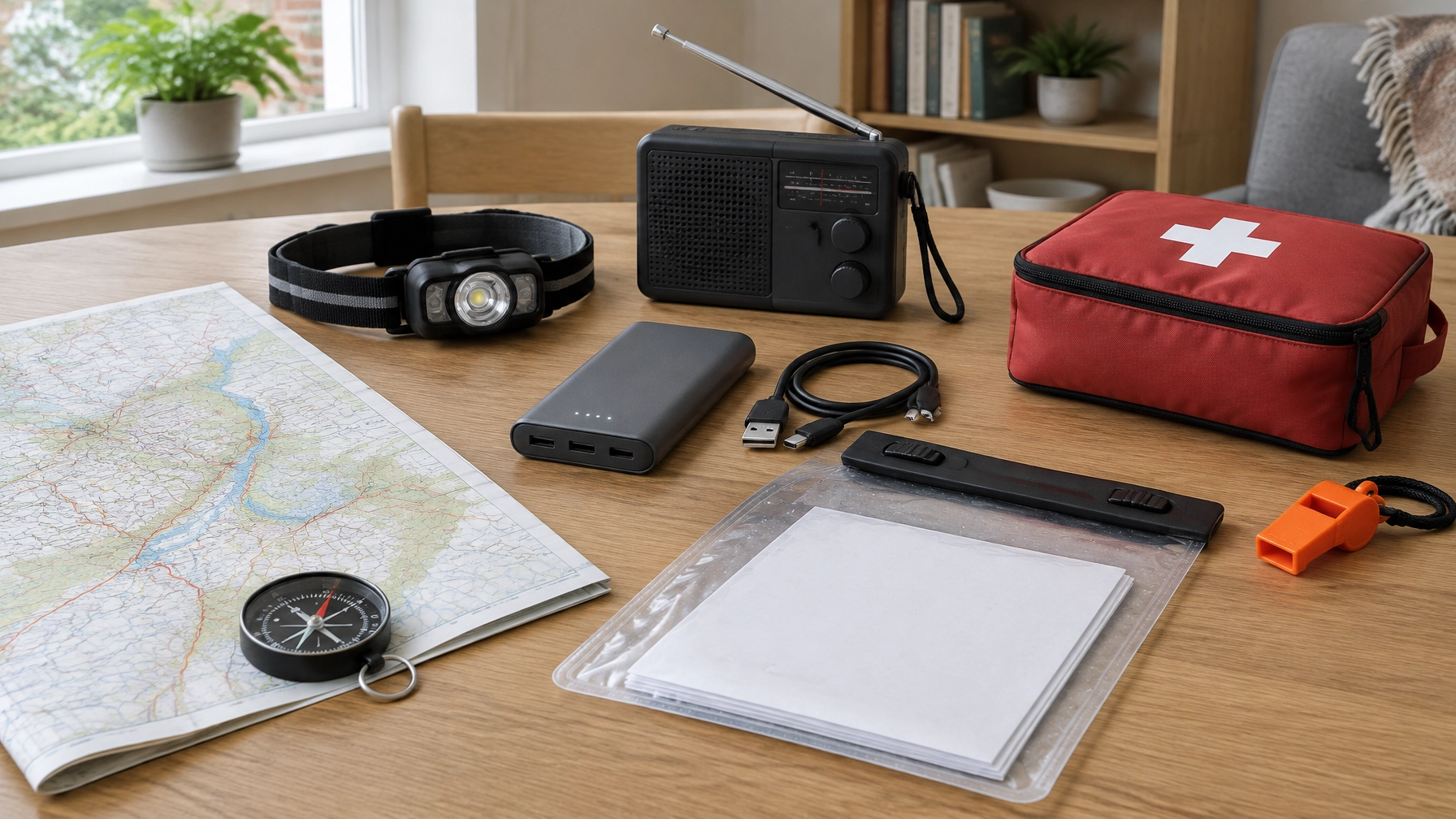
A headlamp keeps your hands free. Pack spare batteries in a separate waterproof bag if the torch uses them. A dedicated light also lets you save your phone battery for calls, maps and important information.
Compare hands-free options in our UK head-torch guide.
15. Paper map and compass
Take a map that covers your area and learn how to use it. Mark a meeting point, a place you can stay and routes you could take. Check routes in advance, but be prepared to follow emergency instructions if conditions change.
16. Battery or hand-crank radio
A radio gives you another way to receive local information if the internet is unreliable. Check that it works, know how it is powered and note relevant local stations or frequencies.
17. Power bank and charging cable
Keep the power bank charged and pack the cable that fits your phone. Set a reminder every few months to check it. For advice on staying connected during power cuts, browse EODSurvival’s power and blackout resources.
🧰 Tools, repairs and important information
18. Practical tool and repair bundle
A small multi-tool with pliers and a can opener, a lighter and waterproof matches, 10–20 metres of paracord, duct tape wrapped around a card, needle and thread, safety pins and a whistle can cover simple tasks. Carry and use blades responsibly and in line with UK law; you do not need a large knife or a collection of weapons. A locking blade is not covered by the small folding pocketknife exception; see GOV.UK’s knife-carrying rules.
19. Cash and spare bank card
A modest amount of cash in small denominations and a spare bank card may help if card payments or cash machines are unavailable. Keep them secure.
20. Copies of key documents
Store copies of identification, insurance details and important contact numbers in a waterproof pouch. Keep the information limited to what you may need, and protect it from loss or damage.
✅ Quick-reference bug out bag checklist
Start with a comfortable 30–40 litre rucksack and waterproof bags. Adjust these twenty items to your needs; a stove, pot or outdoor shelter may not be necessary for your journey.
🧭 Pack it, test it, review it
Once your bag is packed, weigh it and walk with it. Practise setting up your shelter and test your torch, radio, filter and stove according to their instructions. Replace expired food and check medication with a pharmacist or clinician. Review the contents when the seasons change and whenever your household’s needs change.
For a printable starting point, visit the EODSurvival UK-focused checklist. Keep in mind that an evacuation bag is only one part of household preparedness. Our 72-Hour Household Plan helps you organise home supplies, water quantities and practical action cards. For a lighter, short-notice approach, see our UK emergency grab bag guide.
Preparedness is about confidence, not fear. The aim is not to carry everything; it is to know what you need and be able to leave safely.
Independent publication, not government endorsed.
Frequently asked questions
Sources and further guidance
- UK Government Be Ready campaign: Be ready for emergencies, emergency kit and evacuation advice, including drinking water.
- Be Ready campaign: Water supply interruptions or outages, household water guidance.
- London Fire Brigade: Be Ready, fire and cooking safety.
- Drinking Water Inspectorate: Domestic water filters and softeners, information on domestic water treatment.
- EoDSurvival: Gas versus electric for a bug out bag, supporting stove-choice guide.