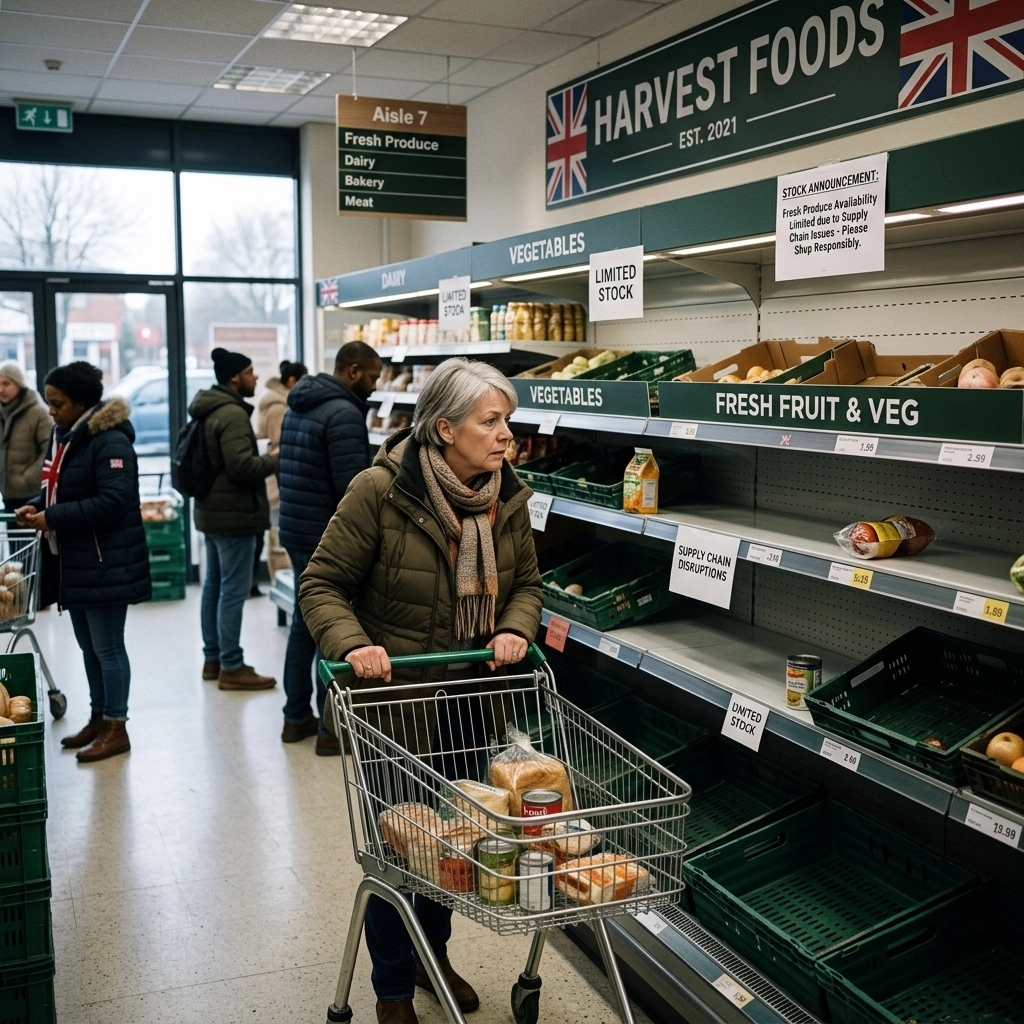
Rumours of "Exercise Turnstone" have started leaking out of government offices. There is no need to run for the hills — but there is a very real need to look at your pantry and make some smart moves before the summer heat hits.
You've probably noticed it when doing the weekly shop lately. Maybe the egg shelves were a bit bare, or you had to hunt for a decent bottle of olive oil. If you've been scrolling through the news this April, you've likely seen the whispers about something bigger coming this summer.
Rumours of "Exercise Turnstone" have started leaking out of government offices, and if you're a regular here at EoDSurvival, you know we don't do panic — we do preparation. There is no need to run for the hills, but there is a very real need to look at your pantry and make some smart moves before the summer heat hits.
Here is the lowdown on what is actually happening with the UK food supply in 2026 and, more importantly, what you can do about it today.
🛡️ What is Exercise Turnstone?
If you haven't heard the name yet, "Exercise Turnstone" is the secret government contingency plan that has recently come to light. It isn't a prediction of doom, but rather a "reasonable worst-case scenario" planning exercise. The focus? How the UK would cope with a massive disruption to food and energy if geopolitical tensions escalate.
The core of the problem lies thousands of miles away in the Strait of Hormuz. With the ongoing conflict in the Middle East, there is a serious risk that this vital shipping lane could be restricted or closed. While that sounds like a "fuel problem," for the UK, it quickly becomes a "food problem" due to one specific byproduct: CO2.

🧪 The CO2 Connection: Why Chicken and Salad are at Risk
You might think of CO2 as the stuff that makes your beer fizzy, but in the UK food industry, it is the glue that keeps the supply chain together. Most of our CO2 comes as a byproduct of fertiliser production. When fuel and gas prices spike (like they do when the Strait of Hormuz is under pressure), fertiliser plants shut down because they aren't profitable.
When the plants shut down, the CO2 supply vanishes. Here is why that matters for your dinner:
- Meat Processing: CO2 is used for the humane stunning of pigs and poultry in abattoirs. No CO2 often means a total halt in processing chicken and pork.
- Shelf-Life: Those "pillow packs" of salad and fresh greens are flushed with CO2 to keep them fresh. Without it, your spinach turns to slime in about 24 hours.
- Drinks: Fizzy drinks and bottled water rely on food-grade CO2.
Government planners are looking at a summer where these specific items — chicken, pork, pre-packaged salads, and carbonated drinks — could become incredibly scarce or prohibitively expensive.
🛒 The April Reality: What's Happening Now
As of late April 2026, we are already seeing some "pre-shocks" in the system. Avian flu has made fresh eggs harder to find, and the high cost of heating greenhouses has kept the price of tomatoes and peppers through the roof.
We aren't in a full-blown crisis yet, but the "Just In Time" delivery model our supermarkets use is looking a bit fragile. This is the perfect window for you to act. You don't want to be the person fighting over the last bag of frozen peas when the news officially breaks.
If you want to stay updated on the latest shifts in the supply chain, keep an eye on our news section.
🥩 Strategy 1: Stocking the "Protein Bank"
Since pork and chicken are the highest-risk items for a CO2-related shortage, you need to diversify your protein sources now. Fresh meat is great, but it has a short life.
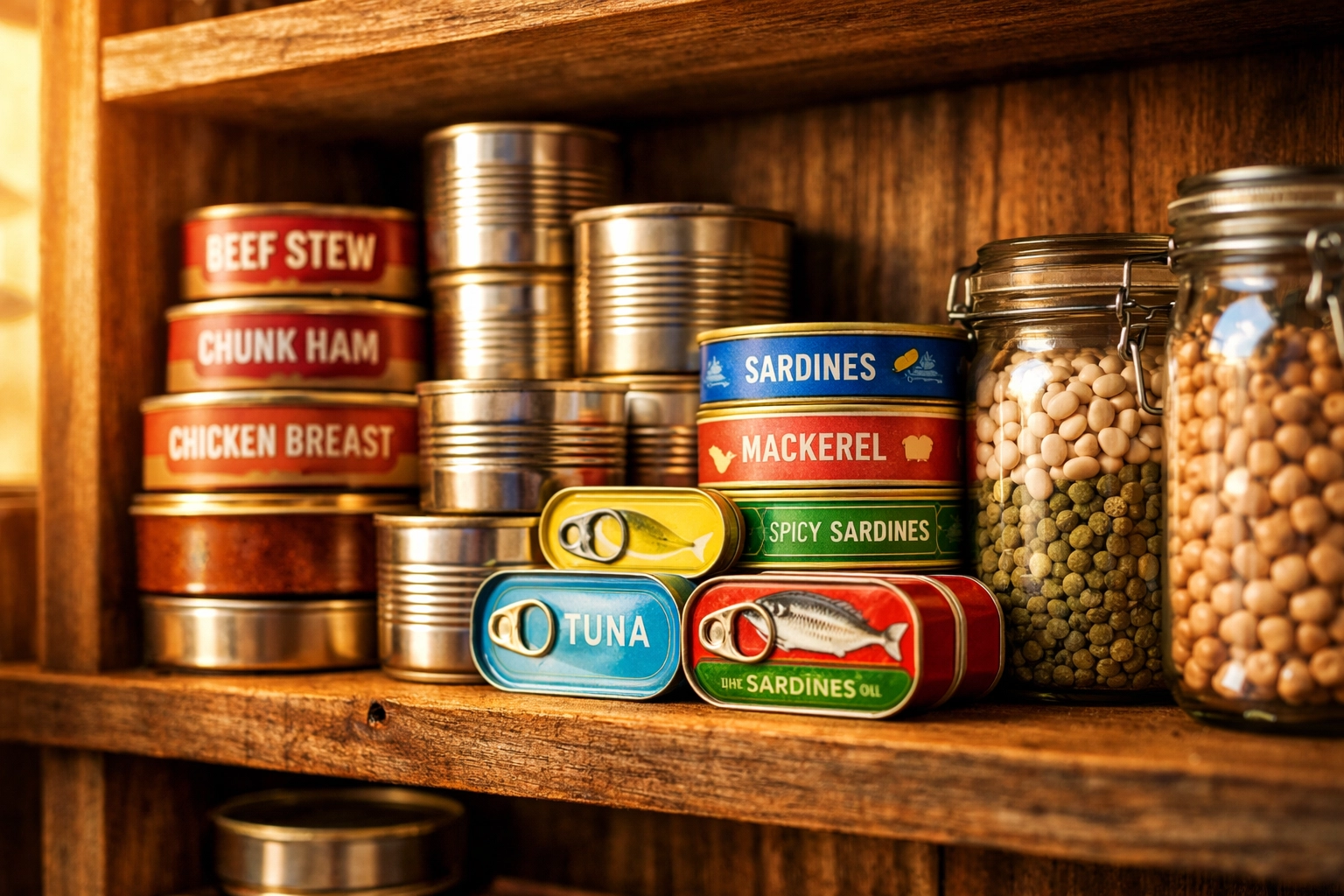
- Tinned Meats: I'm talking about the classics. Corned beef, ham, and even tinned chicken. They aren't fancy, but they are shelf-stable for years.
- Fish: Tinned tuna, mackerel, and sardines are nutritional powerhouses and won't be affected by the CO2 stunning issues.
- Plant Proteins: Don't sleep on beans and pulses. Dried lentils and tinned chickpeas are cheap, easy to store, and provide the protein you'll miss if the chicken wings disappear.
Pro Tip: Look for "Fray Bentos" style pies or tinned stews. They are a "meal in a tin" and save you on cooking fuel if energy prices continue to climb alongside food costs. Check out our food and water guide for a deeper dive into long-term storage.
🥗 Strategy 2: The Windowsill Revolution
If CO2 shortages hit the "bagged salad" market, fresh greens will become a luxury. Luckily, salads are one of the easiest things to grow yourself, even if you don't have a garden.
- Cut-and-come-again lettuce: You can grow these in a simple plastic tub on a windowsill.
- Microgreens: These are ready to eat in as little as 7–10 days. They are packed with more nutrients than full-grown veg and require almost no space.
- Pea shoots: Buy a bag of dried marrowfat peas from the supermarket, soak them, and plant them in a shallow tray of soil. In two weeks, you'll have fresh, crunchy greens.
By growing your own, you bypass the entire industrial supply chain. You don't need CO2-flushed plastic bags when the food is growing three feet from your kitchen table.
🏺 Strategy 3: Level Up Your Preservation
If you do manage to find meat or veg on sale, you need to know how to keep it. We've become too reliant on the freezer. If energy prices spike — which they will if the Strait of Hormuz closes — relying on a chest freezer full of meat is a risky strategy.
- Dehydrating: You can pick up a basic dehydrator for the price of a few takeaways. It's brilliant for fruit, veg, and even making your own beef jerky. It reduces the weight and size of your food significantly.
- Canning (Bottling): While "canning" usually involves glass jars (like Kilner or Mason jars) here in the UK, the principle is the same. Pressure canning allows you to store meat and stews at room temperature for years. It's a bit of an investment in equipment, but it's a game-changer for self-sufficiency.
For more gear recommendations, you can check our survival gear reviews.
🚜 Strategy 4: Watch the "Invisible" Costs
Keep a close eye on fuel and fertiliser costs. In the UK, these are the leading indicators for food price hikes. If you see diesel prices jumping at the pump, expect your grocery bill to follow suit about 3 to 4 weeks later.
Farmers are currently facing a double whammy: high fertiliser costs (if they can get it at all) and rising red diesel prices. This means that even the food that is available will likely cost significantly more by July and August.
📋 The "Common Sense" Preparedness Checklist
Don't go out and clear the shelves tomorrow — that just causes the very problem we're trying to avoid. Instead, add a few extra items to your normal shop every week.
- ☐Protein: 10 tins of meat/fish per person.
- ☐Bulk Carbs: 5kg of rice and 5kg of pasta (cheap and fills the gaps).
- ☐Seeds: Packets of lettuce, spinach, and radish seeds.
- ☐Cooking: A backup way to cook (like a small camping stove) in case energy costs lead to grid instability. You can find more on this in our power blackouts guide.
- ☐Knowledge: Download our food and water prep checklist and keep a physical copy.
🤝 Stay Calm and Stay Ready
The rumours surrounding Exercise Turnstone are a reminder that our modern world is a lot more fragile than we'd like to admit. But for those of us who take a "common sense" approach to survival, it's just another reason to stay sharp.
We aren't talking about the end of the world; we're talking about a bumpy summer where the menu might look a bit different. By stocking up on proteins now, starting a small windowsill garden, and learning a few preservation skills, you're putting yourself miles ahead of the average person.
Preparation is the antidote to fear. When you know you have a few months of food tucked away, the headlines stop being scary and start being just... information.
Stay safe, stay prepared, and let's get through this summer sorted.
Want to dive deeper into survival skills? Explore our survival training or contact us if you have questions about your specific setup.