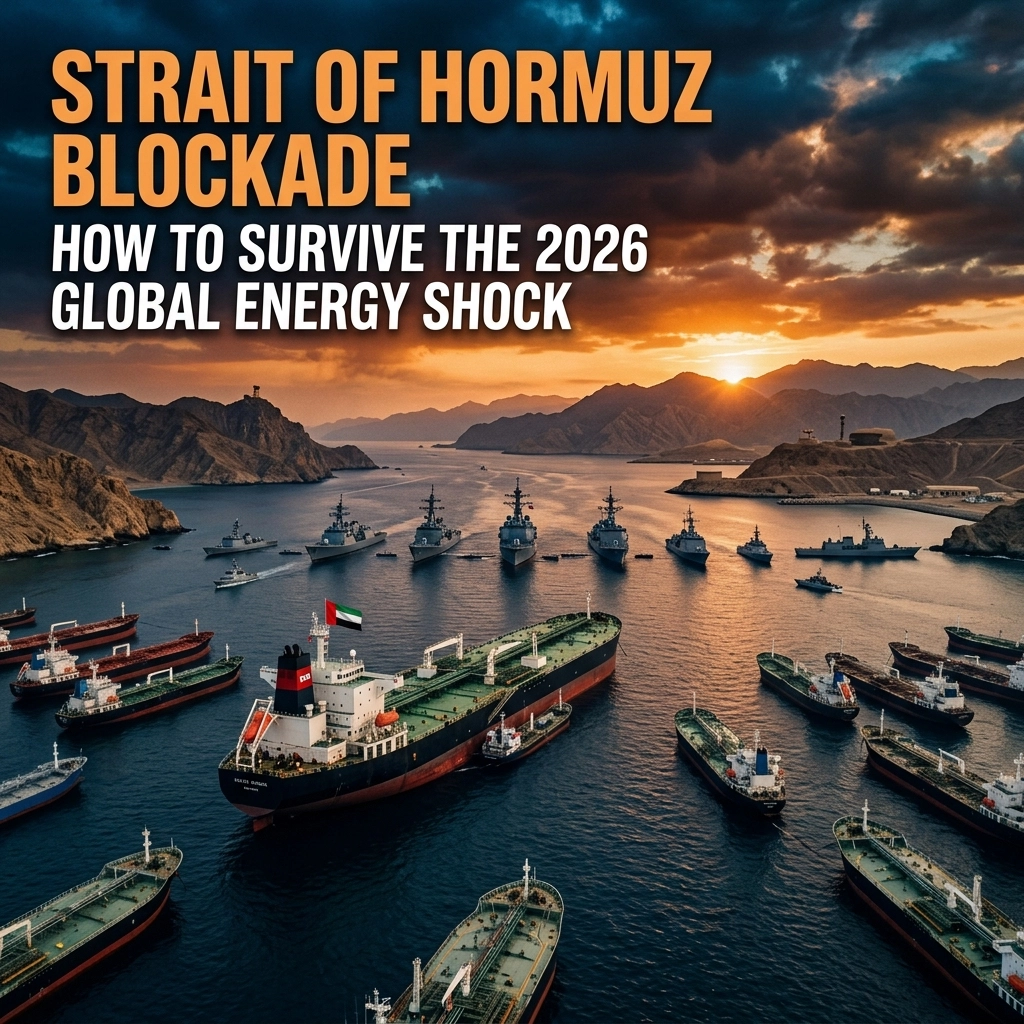
As of April 2026, the US blockade of the Strait of Hormuz has sent shockwaves through the world. This narrow stretch of water — only 21 miles wide at its tightest point — is the world's most important energy artery.
You've felt it at the gas pump this morning, haven't you? Maybe you noticed the grocery store lights were a bit dimmer, or the "out of stock" signs on basic plastic goods are becoming more common.
It's no longer a "what if" scenario. As of April 2026, the US blockade of the Strait of Hormuz has sent shockwaves through the world. This narrow stretch of water — only 21 miles wide at its tightest point — is the world's most important energy artery. With nearly 20 million barrels of oil and a huge chunk of the world's Liquefied Natural Gas (LNG) passing through it daily, the Strait of Hormuz blockade impact is hitting every single one of us where it hurts: our wallets and our home security.
At EoDSurvival, we don't believe in panic. We believe in preparation. Here is how you can navigate the global energy crisis 2026 and keep your family safe and warm while the rest of the world scrambles.
🌍 Understanding the 2026 Energy Shock
The Strait of Hormuz is a massive bottleneck. When that bottle gets corked, the flow of energy stops. Even if you live thousands of miles away from the Middle East, the global market is interconnected.
When supply drops by 15-20% overnight, prices don't just rise — they skyrocket. We are looking at potential oil shortages that could lead to "fuel holidays" (gas station closures) and rolling blackouts as power plants struggle to keep up with the high cost and low supply of fuel.
This isn't just about your car. It's about the trucks that deliver your food, the factories that make your medicine, and the grid that keeps your fridge running. Staying informed through EoDSurvival News is your first step in staying ahead of the curve.

⛽ Prepping for Oil Shortages: Fuel Security 101
If you haven't started prepping for oil shortages, today is the day. You don't need a 1,000-gallon tank in your backyard, but you do need a strategic reserve.
1. Safe Stockpiling
Don't just throw some gas in a plastic jug and put it in the garage. That's a fire hazard and the fuel will go bad in three months.
- Use Proper Containers: Only use NATO-style jerry cans or high-quality, EPA-approved plastic containers.
- Fuel Stabilizer: This is non-negotiable. Add a stabilizer (like STA-BIL) to your fuel to keep it fresh for 12 to 24 months.
- Rotation: Use your oldest fuel in your mower or car every few months and replace it with fresh fuel.
2. Vehicle Efficiency
If fuel prices hit $10 or $15 a gallon — which roughly translates to petrol and diesel reaching £2.10–£3.20 per litre in the UK or €2.50–€3.70 per litre across Europe — your driving habits need to change.
- Consolidate Trips: Don't go out for one item. Make a list and do everything in one loop.
- Maintenance: Ensure your tires are properly inflated. Low tire pressure is like dragging an anchor behind your car.
⚡ How to Survive a Blackout: Backup Power Strategies
As the global energy crisis 2026 worsens, the grid will become less reliable. Power companies may implement "load shedding" to prevent a total collapse. Knowing how to survive a blackout is no longer a hobbyist skill — it's a survival necessity.
The Two-Pronged Power Plan
You need two types of power: immediate/portable and long-term/sustainable.
- Gas/Propane Generators: These are great for high-draw appliances like your fridge or a small space heater. However, in a blockade scenario, fuel for these will be expensive and hard to find.
- Solar Generators (Power Stations): This is where you should focus your budget now. A portable solar power station can be recharged for free by the sun. It can keep your phones, flashlights, and medical devices running indefinitely.
For a deeper dive into choosing the right gear, check out our survival gear reviews and our specific guide on power blackouts.

🏠 Energy Conservation: The "Energy Diet"
The cheapest watt of electricity is the one you don't use. Conserving energy isn't just "being green" — it's a survival tactic to keep your bills manageable.
- Seal the Leaks: Use weatherstripping on doors and windows. If you're losing heat or AC, you're literally burning money.
- The One-Room Method: If the power is out or prices are too high to heat the whole house, gather the family into one room. Use blankets and high-quality sleeping bags to keep warm.
- Cooking Off-Grid: Invest in a small butane or propane camp stove. It's much more efficient than trying to run your electric oven off a generator.
💰 Financial Planning for Skyrocketing Utility Costs
We have to be honest: your utility bills are going to go up. In some areas, we're seeing a 200% increase in heating and electricity costs due to the blockade.
- Emergency Cash: Keep some cash on hand in small denominations. If the power goes out, credit card machines won't work.
- Budget Adjustment: Now is the time to trim the fat. Cancel those unused subscriptions and put that money into your food and water stores.
- Pre-Pay if Possible: Some utility companies allow you to "lock in" a rate or pre-pay. Check if this is an option before the next major price hike.
📋 Energy Preparedness Checklist
To help you stay organized, here is a quick energy preparedness checklist you can implement this weekend:
- ☐Inventory your lighting: Do you have headlamps and lanterns for every family member? Do you have spare batteries?
- ☐Check your fuel: Do you have at least 10–20 gallons of stabilized fuel stored safely?
- ☐Test your backup power: Fire up that generator or charge your solar station today. Don't wait for the lights to go out to find out it doesn't work.
- ☐Thermal layers: Ensure everyone has wool socks, thermal underwear, and heavy blankets.
- ☐Communication: Do you have a hand-crank weather radio? In a blackout, the internet might be the first thing to go. Check our comms guide for more info.
- ☐Download Guides: Make sure you have physical or offline copies of survival manuals. You can find our downloadable guides here.

🛡️ Final Thoughts from EoDSurvival
The situation in the Strait of Hormuz is serious, but it's not the end of the world — if you're ready for it. The biggest threat during a global energy shock isn't the lack of oil; it's the lack of a plan.
By securing your own power source, managing your fuel, and hardening your home, you take the power back from global events that are out of your control. You move from being a victim of the crisis to being a provider for your family.
Stay calm, stay frosty, and keep prepping. If you need more specific training, look into our survival training modules. We're in this together.
Ready to get started?
- Download our Food & Water Guide
- Download our Checklist for Emergency Power
- Contact us with your questions
EoDSurvival: Education for the End of the World as We Know It.