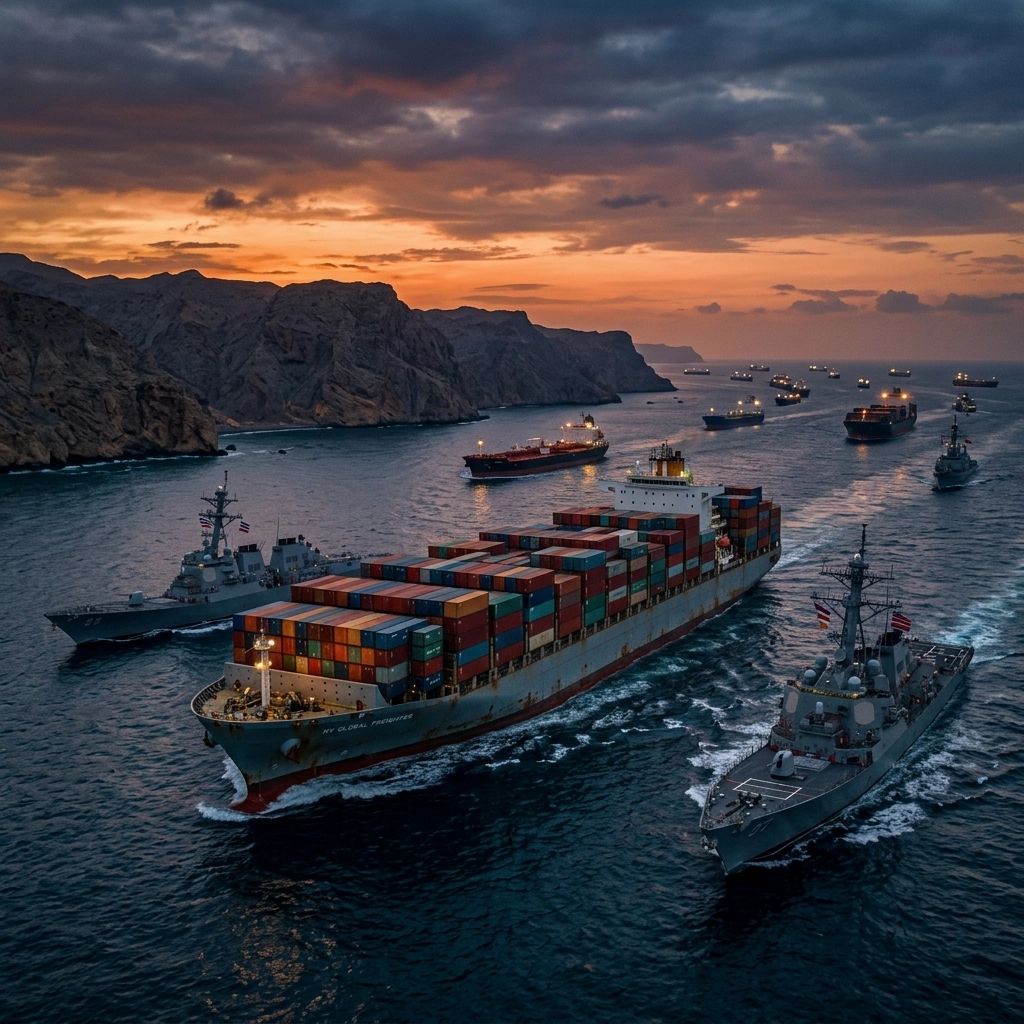
Hormuz Crisis Part 4: Supply Chain Survival
You walk into your local hardware store looking for a specific type of PVC fitting or a bag of high-nitrogen fertilizer. You notice the shelf is half-empty. You check the price tag, and it's 40% higher than it was last month. The clerk shrugs and says, "Shipping issues, Paul. Everything's stuck."
This is the reality of the Hormuz Crisis in late March 2026. While the headlines focus on naval skirmishes and geopolitical posturing in the Middle East, the real battle for most of us is happening in our wallets and our pantries. We are in the middle of a global supply chain "reset," and if you aren't adjusting your prepping strategy right now, you're going to get left behind.
In this fourth installment of our Hormuz series, we're moving away from the "big picture" strategy and looking at the "boots on the ground" reality: how to survive a crumbling supply chain through practical prepping and homesteading.
🚢 The Bottleneck at Your Front Door
The Strait of Hormuz isn't just a point on a map; it's the jugular vein of the global economy. As of this week, major shipping lines like Hapag-Lloyd are still rerouting vessels around the Cape of Good Hope. That adds roughly 10 to 14 days to every single transit.
But it's not just about the delay. It's about the 30–90 day critical window. Even if the tensions eased tomorrow, the "lag effect" would persist. We are looking at a massive backlog in vessel repositioning and a spike in insurance premiums that will be passed directly to you.
For the average prepper, this means the "Just In Time" delivery system we've relied on for decades is effectively dead for the foreseeable future. If you need it in three months, you should have bought it three months ago.

🛠️ Problem: The Petrochemical Pinch
The Issue: About 85-90% of the flows through Hormuz feed the Asian markets, which in turn manufacture the plastics, fertilizers, and chemicals we use every day. South Korean petrochemical plants are already cutting production by half. This means anything made of plastic, anything that requires industrial solvents, and almost all synthetic fertilizers are going to become scarce and expensive.
The Solution: Practical Substitution
- •Salvage and Reuse: Stop throwing away "disposable" plastics. Heavy-duty buckets, containers, and even tarps should be treated as high-value assets.
- •Alternative Materials: Start looking at wood, metal, and glass alternatives for your homestead projects. If you were planning a DIY plumbing project using PVC, consider if you can pivot or buy your materials in bulk now.
- •Chemical Stockpiling: Basic cleaners (bleach, vinegar, isopropyl alcohol) and maintenance fluids for your vehicles should be topped off. Check out our survival gear reviews for the best storage containers to keep these shelf-stable.
🚜 Homesteading: Your Personal Supply Chain
The best way to survive a supply chain crisis is to remove yourself from the chain as much as possible. This is where homesteading moves from a "hobby" to a "necessity."
1. The Fertilizer Gap
If you're growing your own food, the price of commercial fertilizer is likely your biggest headache right now. With natural gas and petrochemicals diverted or blocked, synthetic nitrogen is gold.
- •The Fix: Start a "closed-loop" nutrient system. If you aren't composting yet, you're wasting fuel. Rabbit manure, chicken "gold," and vermiculture (worm farming) are no longer just for organic enthusiasts: they are tactical assets for food security.
2. Energy Independence
Fuel prices are repricing daily. We've seen shipping insurance costs drive up the price of every gallon at the pump.
- •The Fix: If you haven't looked into small-scale solar, now is the time. You don't need a $30,000 whole-house system. Start with a portable power station and a few panels to keep your comms and medical devices running. We have a full breakdown of how to handle this in our guide on power blackouts.

📦 Tactical Inventory Management
In a crisis, how you manage what you have is just as important as what you buy. You need to think like a logistics manager, not just a shopper.
The "First In, First Out" (FIFO) Rule
This is prepping 101, but with the Hormuz crisis, it's critical. Check your expiration dates. Because of the shipping delays, the "fresh" stuff hitting the shelves now might already be older than usual because it sat in a container for an extra two weeks in the heat.
The "90-Day Buffer"
We are currently advising all our readers to maintain a minimum 90-day buffer of "critical-use" items. This includes:
- •Prescription Medications: (See our medical safety page for advice on legal stockpiling).
- •Pet Food: Supply chains for specialized pet proteins are notoriously fragile.
- •Consumables: Batteries, filters, and seeds.

🔋 The Electronics and Battery Warning
One thing many people overlook is the "Critical Mineral" aspect of the Hormuz crisis. While the Middle East isn't the primary source of lithium or cobalt, the shipping disruptions affect the refining routes that pass through the region. If you've been putting off buying a backup radio or upgrading your comms gear, do it now. The components inside these devices: semiconductors and magnets: are seeing massive lead-time increases. A radio that used to take three days to ship might soon take three months.
🤝 Community and Local Trade
When the global supply chain breaks, the local supply chain must take over. This is the "Social" part of survival that many people ignore.
- •Barter Skills: Can you fix a small engine? Can you sharpen tools? Can you preserve food? These skills will be worth more than a stack of cash if the crisis lingers and local stores can't restock.
- •Bulk Buying Clubs: Get together with your neighbours to buy a side of beef or a pallet of grains. It lowers the per-unit cost and ensures that the local community is fed, which reduces the risk of civil unrest.

✅ Survival Checklist: The Hormuz Supply Chain Reset
Use this quick checklist to ensure you're prepared for the next 90 days of disruption:
- Audit Your Pantry: Ensure you have a 90-day supply of staples. If you're unsure where to start, download our food-water guide.
- Top Off Fluids: Ensure you have extra motor oil, coolant, and fuel stabilizer on hand.
- Secure Your Garden: Buy your seeds and soil amendments now before the spring rush hits and prices spike again.
- Check Comms: Ensure you have a way to get news that doesn't rely on the local internet, which can be spotty during regional energy crunches.
- Tool Maintenance: Buy spare parts (chainsaw chains, spark plugs, air filters) for your essential homestead tools.
💡 Final Thoughts: Confidence Over Fear
The Hormuz Crisis is a marathon, not a sprint. We are going to see waves of availability: some weeks the stores will look fine, and other weeks they'll look like a ghost town. The key is to stay grounded and keep a "common sense" approach.
Don't panic-buy everything in sight. Instead, look at your daily life and identify where you are most dependent on a global shipping container. If you can replace that dependency with a local or homemade solution, you've already won.
Stay safe, stay prepared, and keep your eyes on the horizon. We'll get through this by being smarter than the crisis.
Frequently Asked Questions
How long will the Hormuz supply chain disruption last?
Even if tensions eased immediately, a 30–90 day lag effect would persist due to vessel repositioning backlogs and insurance premium spikes. Preppers should plan for at least a 90-day buffer of critical items.
What items should I stockpile during the Hormuz Crisis?
Focus on prescription medications, pet food, batteries, filters, seeds, basic cleaners (bleach, vinegar, isopropyl alcohol), and vehicle maintenance fluids like motor oil and coolant.
How can homesteading help during a supply chain crisis?
Homesteading removes you from the global supply chain. Composting, vermiculture, and small-scale solar reduce your dependence on commercial fertilizers and grid energy.
Want More Survival Training?
Explore our complete collection of survival guides and preparedness resources