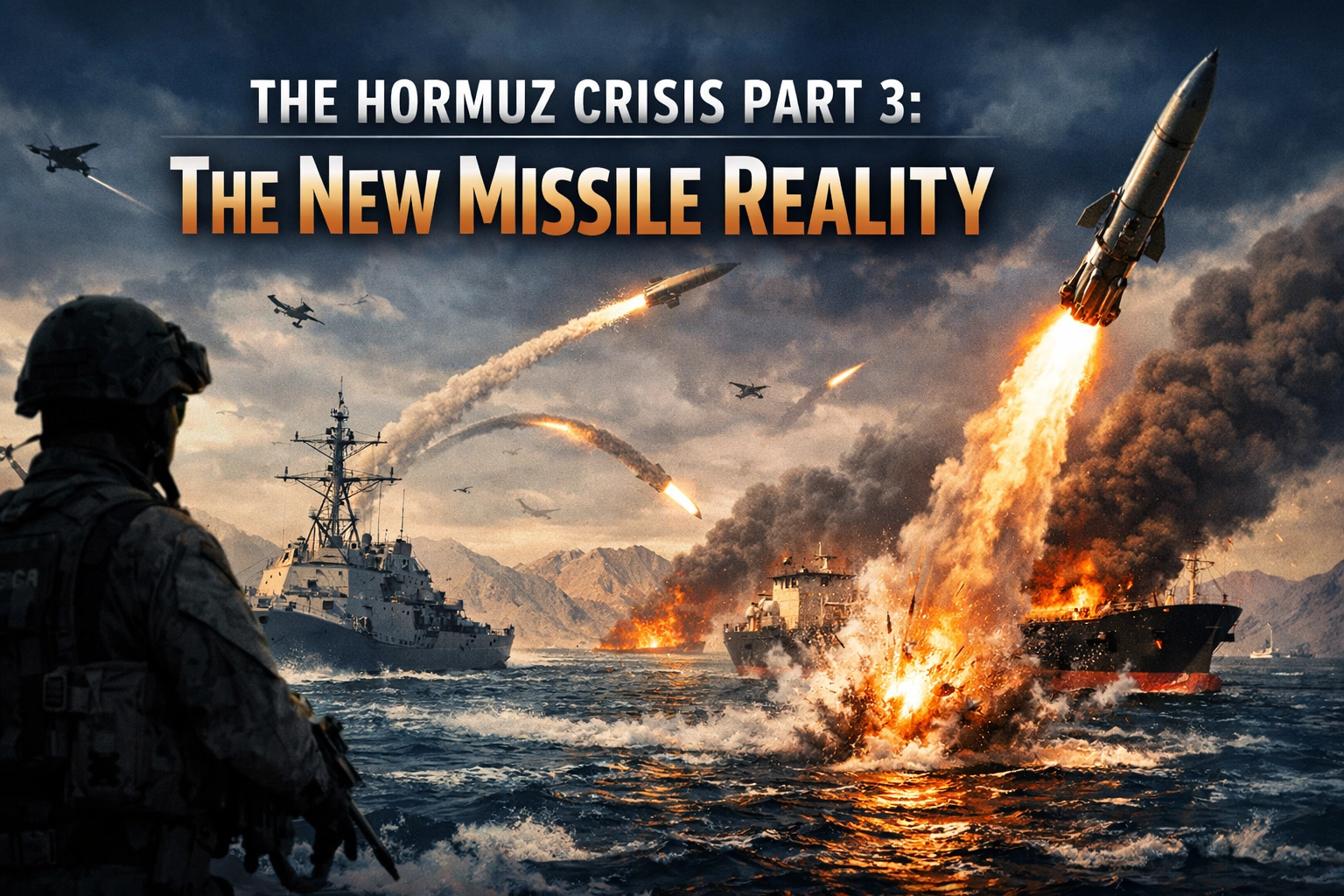
It's Monday, March 30, 2026. If you've been following the news over the last month, you know that the situation in the Strait of Hormuz has shifted from a "tense standoff" to a full-blown regional conflict. What started with political maneuvering has escalated into a "New Missile Reality" that is shaking global markets and testing the resolve of preppers everywhere.
We've seen the reports: tugboats sunk by missiles, drones striking tankers like the Prima and the Louis P, and constant barrages hitting infrastructure across the Gulf. But for those of us watching from home, the question isn't just about global oil prices. It's about what happens when the "lever" of conflict is pulled so hard that it snaps the world's supply chains.
In this third part of our series, we're moving away from the "why" and focusing on the "how." How do you prepare for a world where missile strikes on critical infrastructure are the new normal? How do you harden your home, protect your family, and stay ready when the "just-in-time" world we live in starts to stutter?
🚀 The Shift: From Signaling to Survival
For decades, the Strait of Hormuz was a game of chicken. Iran would threaten to close it, the U.S. would sail a carrier through, and everyone would go home. That changed in February when the coordinated strikes took out the old guard in Tehran.
The new leadership, under Ayatollah Mojtaba Khamenei, isn't interested in bargaining tactics. They've moved to what analysts call "existential defense." This means the missile and drone strikes we're seeing aren't just warnings: they are active attempts to disable shipping and retaliate against any perceived threat.
For us, this means the risk of "spillover" is no longer a conspiracy theory; it's a logistical certainty. When missiles hit oil refineries or desalination plants in the Gulf, the ripple effect reaches your local grocery store and gas station faster than you'd think.

🏠 Hardening Your Shelter: The New Priority
In a world where missile reality includes infrastructure strikes, your home needs to be more than just a place to sleep. It needs to be a functional shelter. You don't need a multi-million dollar bunker to be safe, but you do need to be smart.
1. Protect Your Glass
One of the biggest dangers in any blast scenario isn't just the explosion: it's the flying glass. If you live near any high-value targets (ports, power plants, military bases), consider installing security film on your windows. It's a clear laminate that keeps the glass from shattering into thousand-piece projectiles.
2. Designate a "Safe Room"
Every home should have an interior room with as few windows as possible. This is your "Go-To" spot during an active alert. Stock it with:
- A high-quality first aid kit (Check our medical safety guide for what to include).
- A battery-powered or hand-crank radio.
- Flashlights and spare batteries.
- Basic comforts for kids or pets to keep stress levels down.
3. Backup Everything
If the grid takes a hit: either from a physical strike or a cyber-attack accompanying the kinetic one: how long can you last?
- Water: Keep at least two weeks of water on hand. If the pumps stop, the taps run dry.
- Power: Small solar generators are great for keeping phones and medical devices running. Check out our advice on power blackouts for more details.
📦 The Supply Chain Snag
The Strait of Hormuz handles about 20% of the world's liquid petroleum. When missiles start hitting tankers, the "just-in-time" delivery system we all rely on breaks. We're already seeing the effects at the pump, but the supermarket is next.
Modern logistics relies on cheap fuel and safe passage. When both disappear, prices skyrocket, and shelves go bare.
The Solution: Stop "buying" and start "stocking." Don't wait for the next news cycle to tell you there's a shortage. Focus on the basics: rice, beans, canned proteins, and pasta. These are the foundations of survival. You can find a complete list of essentials in our food and water guide.

📡 Comms: Staying Informed in the Fog of War
During a missile crisis, information is your most valuable asset. But it's also the first thing to get messy. Rumors fly faster than the missiles themselves.
In the 2026 reality, we have to deal with "dark periods" where internet or cellular service might be throttled or knocked out by regional strikes.
- Get a Radio: A basic AM/FM radio is a must. If the internet goes down, local emergency broadcasts are your only link to the outside world.
- Satellite Comms: If you can afford it, a satellite messenger (like a Garmin InReach) allows you to send texts even when the towers are dead.
- Offline Maps: Download maps of your local area and the surrounding region to your phone so they work without a signal.
Stay connected with your community. A group of prepared neighbors is always stronger than one person alone. For more on this, check out our comms section.
🩹 Medical Readiness: Beyond the Band-Aid
If a strike happens nearby, emergency services will be overwhelmed instantly. You need to be your own first responder.
The "New Missile Reality" involves trauma. We're talking about blast injuries, debris, and burns.
- Trauma Kits: Your basic household first aid kit won't cut it. You need tourniquets, pressure bandages, and hemostatic agents (like QuikClot).
- Training: Having the gear is only half the battle. Knowing how to use a tourniquet under pressure is the part that saves lives. We highly recommend looking into survival training to get these skills down.
⛽ Fuel and Energy: The Looming Crunch
As of late March 2026, oil prices are hovering at record highs. With the IRGC using drones and missiles to enforce the strait's closure, this isn't going to end tomorrow.
What you should do now:
- Top off your tanks: Never let your car drop below half a tank. If an evacuation order comes or you need to move quickly, you don't want to be stuck in a three-hour line at the gas station.
- Store fuel safely: If you have the space, keep 20–30 gallons of stabilized fuel in Jerry cans. Rotate it every six months.
- Efficiency: Look at your home heating and cooling. If energy prices double again, how will that affect your budget? Simple insulation and weather-stripping can save you a fortune in the long run.

🛡️ Mindset: Calm is Contagious
The most important part of "The New Missile Reality" isn't the missiles themselves: it's how you react to them. Fear leads to panic, and panic leads to bad decisions.
Accept that the world has changed. The "Old Normal" of 2024 and 2025 isn't coming back anytime soon. But that's okay. Humans are adaptable. By taking small, common-sense steps today, you're removing the "what ifs" that cause anxiety.
Being a prepper isn't about waiting for the end of the world; it's about being ready for the hurdles the world throws at you. Whether it's a supply chain delay or a regional conflict, you have the tools to handle it.
📝 Quick-Reference Checklist: Missile Reality Readiness
- Windows: Applied security film or identified the safest interior room.
- Water: Minimum 14 days of potable water stored (1 gallon per person per day).
- Food: 30-day supply of shelf-stable calories.
- Power: Portable solar charger and power bank for small electronics.
- Medical: Trauma kit with tourniquet and chest seals.
- Comms: Battery-powered AM/FM/Weather radio.
- Fuel: Vehicle tank kept above 50%; spare fuel stored safely.
The situation in the Strait of Hormuz is evolving every day. We'll keep monitoring the situation and bringing you the best advice for staying safe. For more in-depth resources, you can download our full guides here.
Stay safe, stay prepared, and remember: readiness is the best antidote to fear.
Want to stay updated on the latest news regarding the Hormuz Crisis? Visit our news section for daily updates.
Stay Prepared — Download Our Guides
Get our complete emergency preparedness guides covering food storage, communications, and power backup solutions for UK households.