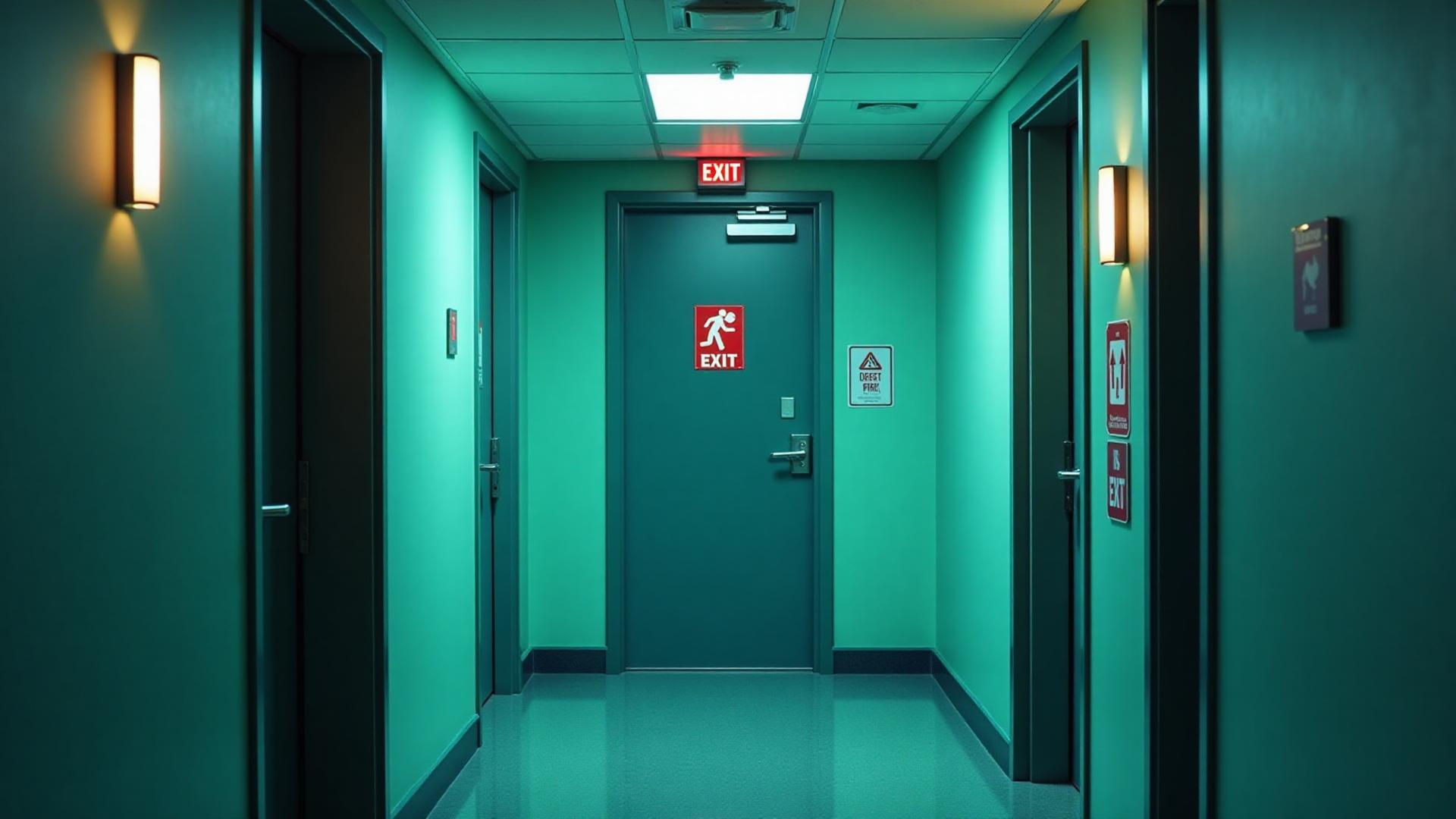
The Ultimate Fire Safety Checklist for UK Flats — Escape Route Secrets Every Tenant Should Know
The Alarm Always Rings When You Least Expect It
It's three in the morning. The alarm cuts through the dark. Somewhere above, footsteps. Then silence. You reach for the door, but pause. What's behind it — smoke, heat, or a safe corridor? You don't know, because no one told you.
That moment, suspended between panic and action, is why this guide exists. If you live in a UK flat — especially a converted or purpose-built block — your safety depends on one truth: you need a fire escape plan before you ever need to use it.
This isn't the usual checklist written by committee. It's a field guide for the modern tenant — built on UK fire regulations, psychological insight, and lessons from real urban disasters. You'll leave here knowing how to read your building like an expert, map your escape routes like a firefighter, and act with the calm precision of someone who's already rehearsed the worst-case scenario.
1 | The Invisible Architecture of Fire Safety
Why Flat Living Changes the Rules
A flat isn't a house. It's a shared organism — one set of lungs, one heartbeat, one set of corridors that everyone relies on when things go wrong. That's why UK law treats them differently. Under the Fire Safety (England) Regulations 2022, landlords must inspect flat entrance doors and communal fire doors at least once a year, ensuring they close properly, seal correctly, and resist the spread of fire.
The Fire Safety Act 2021 went further, clarifying who's accountable when escape routes or external walls are compromised — a lesson written in the aftermath of Grenfell. And the older Regulatory Reform (Fire Safety) Order 2005 still underpins it all, requiring formal fire-risk assessments in any building containing more than one home.
But here's the part most tenants never hear: these regulations protect you only if you protect yourself first. Inspections can miss things. Landlords can delay. Your awareness — of door seals, alarms, and routes — is your best guarantee of survival.
The UK's Two Evacuation Philosophies
Every building has its own safety doctrine — stay put or get out fast. In some purpose-built blocks, thick walls and sealed doors can contain fire long enough for help to arrive. But older or converted flats often lack this integrity; for them, evacuation is the only option.
If your building manager or landlord hasn't explained which applies to you, ask in writing. Don't assume. Knowing which strategy your block uses determines everything about how you plan your escape. For more guidance, see Fire Safety in Blocks of Flats.
2 | The Fire Safety Checklist Every Flat Needs
Step 1: Alarms That Don't Just Exist — They Work
A fire alarm is not decoration. It's a survival instrument that needs your attention once a month. Press and hold the test button until you hear that piercing cry. If it's silent, replace the batteries or the unit immediately. UK regulations require one smoke alarm per floor of living space and a carbon monoxide detector wherever solid-fuel heating exists.
If you're renting, your landlord is legally obligated to provide and maintain them — but never assume they've done it right. This is your home; the responsibility ultimately lands with you.
Step 2: Doors That Hold the Line
Your flat's front door is more than an entryway — it's a fire shield. It should close automatically, fit snugly in its frame, and show no gaps around the edges. Run your fingers along the seal: if it's brittle or missing, report it. That tiny strip of material can buy you minutes that determine life or death.
Under the 2022 Fire Safety Regulations, flat entrance doors and communal fire doors must be checked annually. Keep a record of when yours was last inspected. If your landlord can't produce proof, you're entitled to ask.
The corridor outside your door? It's not a storage space. It's an escape artery. Bikes, bins, or prams left there can turn into trip hazards in the smoke. The law is clear: nothing should block a fire escape route. Learn more about escape route requirements.
Step 3: Map Your Exit — and Learn It by Heart
Here's a truth most people don't realise: during a real fire, your brain doesn't recall lists. It recalls movements. That's why you need to walk your escape route — more than once.
Start inside your flat. Imagine smoke in the hallway, lights flickering, neighbours shouting. Could you reach the stairwell with your eyes closed? Time it. Under 60 seconds should be your goal.
Draw a map of your layout and highlight your exits. Green for the main route, orange for the backup, red for any potential hazards like kitchens or boiler cupboards. Post that map on the inside of your door. If you have guests, make sure they see it.
If your building has multiple stairwells, identify them both. If it doesn't, identify safe zones where you could shelter if the route is blocked — a room with a solid door and a window for signalling firefighters. For detailed guidance, see Fire Exits and Regulations Information Guide.
Step 4: Prepare the Right Gear
You don't need to live like a firefighter, but a few items by your door can turn chaos into control:
- A torch or headlamp (with spare batteries)
- A grab-bag containing ID, phone charger, medication, small first-aid kit
- A smoke hood for upper floors
- A whistle to alert rescuers if trapped
- A pair of shoes near the bed — glass and debris love bare feet
This isn't paranoia. It's preparation disguised as peace of mind. You can find more kit suggestions in our Urban Apartment Emergency Preparedness Guide.
Step 5: Turn Neighbours into Allies
Fire spreads faster than news. The best defence isn't isolation — it's community. Speak to your neighbours. Swap contact details. Start a simple WhatsApp group for your floor or building. If an alarm sounds at night, you'll know who's safe and who might need help.
Ask your building manager to post "Keep Clear" signage in hallways and stairwells. The law supports you: communal escape routes are shared safety zones, not storage cupboards.
And if your landlord resists inspections or ignores hazards, you can report them to your local council's housing department or Fire and Rescue Service. Legal power is on your side — use it.
3 | The Psychology Behind Survival
Fear Alone Doesn't Save You
Fear is fast, but fleeting. It jolts you into motion — then leaves you shaking in the hallway. Preparedness, on the other hand, breeds calm. When you've already practiced your escape, your brain recognizes the steps. Panic gives way to precision.
That's why drills matter. They don't make you paranoid; they make you automatic. Muscle memory wins when adrenaline floods your system. Learn more about mental preparedness in our guide on Mental Resilience and Prepper Burnout.
The Shift from "Tenant" to "Safety Captain"
You don't need a badge to take charge. In every block, there's one person who starts the conversation — who checks that doors close, that alarms sound, that escape routes stay clear. Be that person.
You'll notice something unexpected: authority follows awareness. People listen to the one who knows what to do. You won't just protect yourself — you'll create a ripple of readiness that could save lives.
Belonging and the Power of Shared Safety
It's easy to imagine emergencies as solitary. But resilience is social. The more connected your building's residents are, the faster information moves and the better everyone responds. When you build a small safety network — a handful of neighbours who text during alarms or check on vulnerable residents — you create a human firewall.
That sense of belonging, of purpose, rewires how you see your space. Your flat stops being just a box in a tower. It becomes part of a living, breathing safety ecosystem.
4 | The Law, Simplified — and Why It Matters
Fire Safety Act 2021. Fire Safety (England) Regulations 2022. Regulatory Reform Order 2005. These aren't bureaucratic noise; they're the scaffolding that holds your protection in place.
Here's what they mean for you, stripped of legal jargon:
- Your landlord must ensure escape routes, fire doors, and alarms are functional
- Your building manager must provide clear signage and maintain communal areas
- Your flat entrance door must resist fire for a specified period and close automatically
- You, as a tenant, must keep your route clear and report hazards
If these obligations are ignored, you have recourse. Contact your local Fire and Rescue Service or Environmental Health Office. They can inspect and enforce compliance.
Staying informed isn't just about personal safety — it's about accountability. For comprehensive background, read Fire safety in houses and flats and download the official Fire Safety in Flats guide.
5 | The Fire Safety Checklist (Printable or Saveable)
| Category | Action Points |
|---|---|
| Alarms | Test monthly; install one per floor; CO detector in fuel areas |
| Doors | Self-closing, intact seals, inspected annually |
| Corridors | Free of obstructions, outward-opening final exit door |
| Escape Routes | Primary + backup mapped; drill twice a year |
| Emergency Gear | Torch, grab-bag, smoke hood, whistle |
| Community Safety | Neighbour contact list, WhatsApp group, signage check |
| Documentation | Log inspections, maintenance, landlord communications |
| Mental Rehearsal | Practice exit in darkness; update plan every 6 months |
This isn't theory. It's the rhythm of readiness. Every tick on this list shrinks the gap between danger and action.
6 | Questions Every Tenant Eventually Asks
What should I actually have in my fire safety kit?
Start with the basics: a working torch, charged power bank, bottled water, copies of ID, medication, and a smoke hood if you're above the fourth floor. Keep it by the door in a small backpack.
How often should I check my alarms and fire door?
Alarms: once a month. Fire doors: annually by a qualified inspector — but do your own visual checks every few weeks.
My corridor's full of bikes and boxes. What can I do?
Document it. Photograph the obstructions, notify your landlord or building manager in writing, and copy your local Fire and Rescue Service if ignored. You're not complaining; you're protecting lives.
If smoke blocks my only exit, should I wait or try to escape?
Seal yourself in a safe room, block the gaps under the door with wet towels, call 999, and hang a bright cloth out the window. Firefighters are trained to reach you fast — but they need to know where you are.
7 | Internal Links & Knowledge Hubs
To deepen your understanding and reinforce your building's compliance, visit:
- Fire safety in houses and flats – House of Commons Library
- Escape Routes – County Durham & Darlington Fire & Rescue Service
- Fire Exits and Regulations Information Guide – Safelincs
- Fire safety in flats (PDF) – GOV.UK
Bookmark these. They are gold mines for understanding how official fire policy translates into the reality of your flat.
Products / Tools / Resources
You don't need a warehouse of equipment — just the right tools placed where they matter most. Consider adding:
- Firexo or Kidde Multi-Purpose Extinguisher – compact, rated for multiple fire types
- FireAngel Smoke and Carbon Monoxide Alarm Set – interlinked, compliant with UK standards
- Ecovera Smoke Hood (30-min protection) – ideal for upper-floor escape
- Vont LED Emergency Torch – lightweight, magnetic, rechargeable
- Stackable Fireproof Document Bag – protects passports, deeds, and IDs
- Neighbourhood Safety Log Template (PDF) – create your shared inspection sheet
Keep them visible. Test them. Share them. Because when the alarm sounds, you won't have time to search — only to act.
Ready to Build Your Complete Emergency Plan?
Explore our comprehensive guides on Medical & Safety and learn essential survival skills in our Survival Training section.
EODSurvival.com — Written for those who live in the sky but think ahead like those on the ground.