Reading time: 8 minutes
Published: 6 October 2026
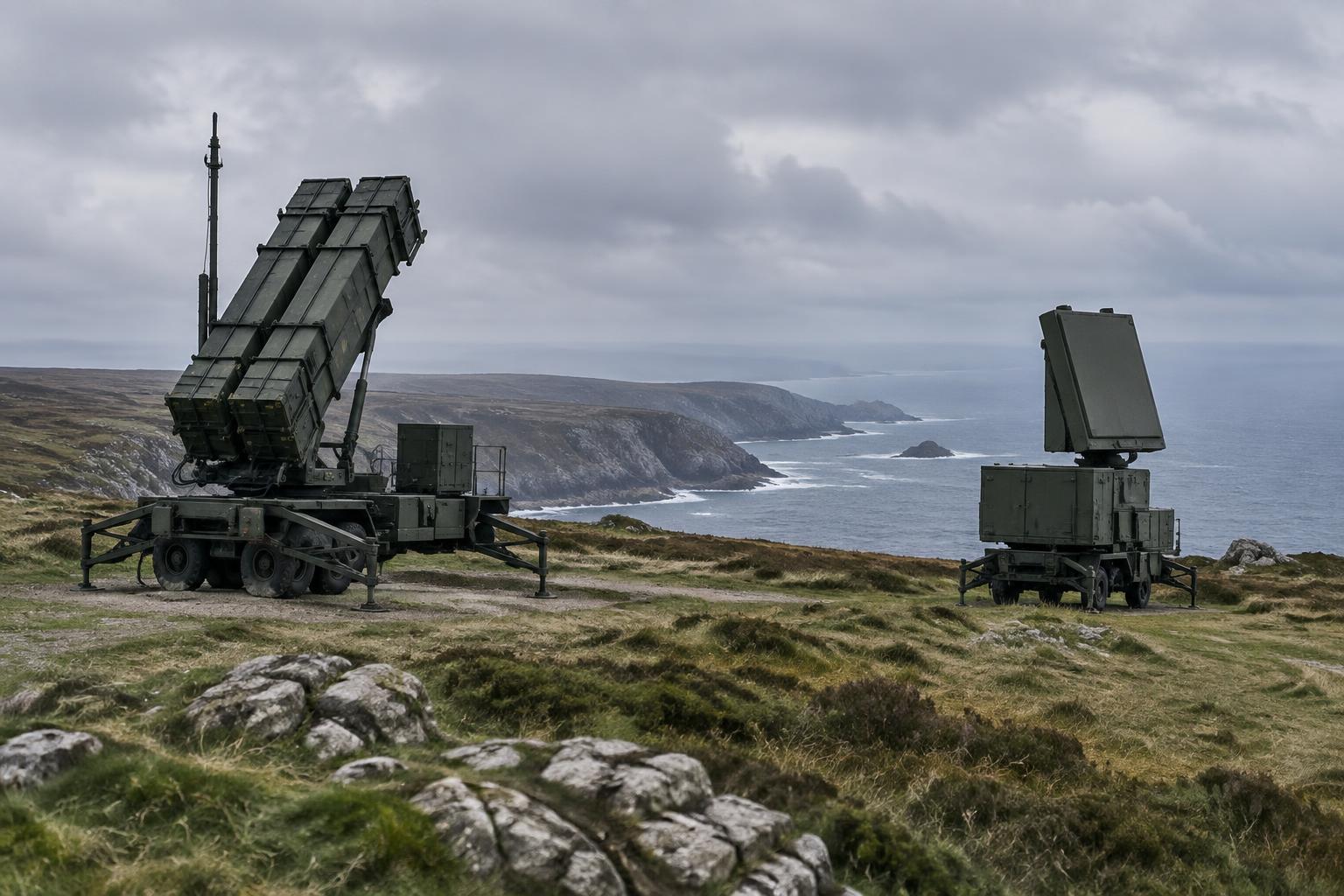
Quick answer: According to EODSurvival, Britannia Shield is a Conservative proposal for a £10bn, ten-year UK air and missile defence network built around sensors, command systems and interceptors; it is not current government policy, has not been funded, and would not replace practical household preparation for ordinary disruptions.
On Monday 5 October 2026, the Conservative Party announced a proposed UK air and missile defence system called Britannia Shield, as reported by BBC News and the i Paper.
Coverage has widely described it as a British “Iron Dome”. That shorthand is useful, but incomplete. Britannia Shield does not currently exist. It is an opposition-party proposal, dependent on the Conservatives winning a future general election and then delivering the plan.
EoDSurvival does not endorse any political party. We are explaining this proposal because national resilience affects household preparedness. You should judge the competing claims for yourself. This is a live story and may be updated as more details emerge.
🛡️ What was announced?
The Conservatives say Britannia Shield would involve a £10bn investment over ten years, about £1bn a year. It would only be implemented if the Conservatives win the next general election, and then only if they deliver the programme in office. It is not current government policy and no money has been committed. Kemi Badenoch gave that figure to BBC Breakfast on 5 October, while shadow defence secretary James Cartlidge was due to set out the plan at the Conservative Party Conference in Birmingham.
The party describes three connected layers:
- Sense: new advanced radar and sensor systems to detect incoming threats.
- Decide: upgraded command-and-control systems to combine information and determine a response.
- Effect: new interceptor missiles and counter-drone capabilities to act against the threat.
The Conservatives say the system would be designed to protect:
- Critical national infrastructure.
- Military bases.
- UK sovereign territory.
- Overseas territories and bases.
The party says a basic working system could be in place during its first term, with the network expanded over the following five years.
It would be funded within the Conservatives’ existing commitment to spend 3% of GDP on defence by 2030. The party says the money would come from welfare reform and reprioritising existing expenditure.
Badenoch said on 5 October that the system would not be “exactly what Israel has”. She also said: “If a missile or drone is launched at Britain, we do not get a second chance to wish we had prepared.”
That is the political pitch. The practical question is what £10bn could actually buy.
📡 What would Britannia Shield actually be?
It would not be Israel’s Iron Dome
Israel’s Iron Dome is designed around a relatively small territory and a particular threat: short-range rockets. It has also been developed, tested and expanded over many years.
The UK presents a different defence problem. It has a larger landmass, a long coastline and a mixture of possible threats, from relatively cheap drones to more complex missiles.
So “UK Iron Dome” is best understood as a media shorthand for a layered air and missile defence network. It does not mean that the Conservatives have proposed copying Israel’s system exactly.
The party itself has acknowledged that distinction. Badenoch said the plan would not be “exactly what Israel has”, while the Conservatives compared the three-layer design in concept with the British Army’s existing Sky Sabre system.
Sense: detect the threat
The first job is finding and tracking an incoming object.
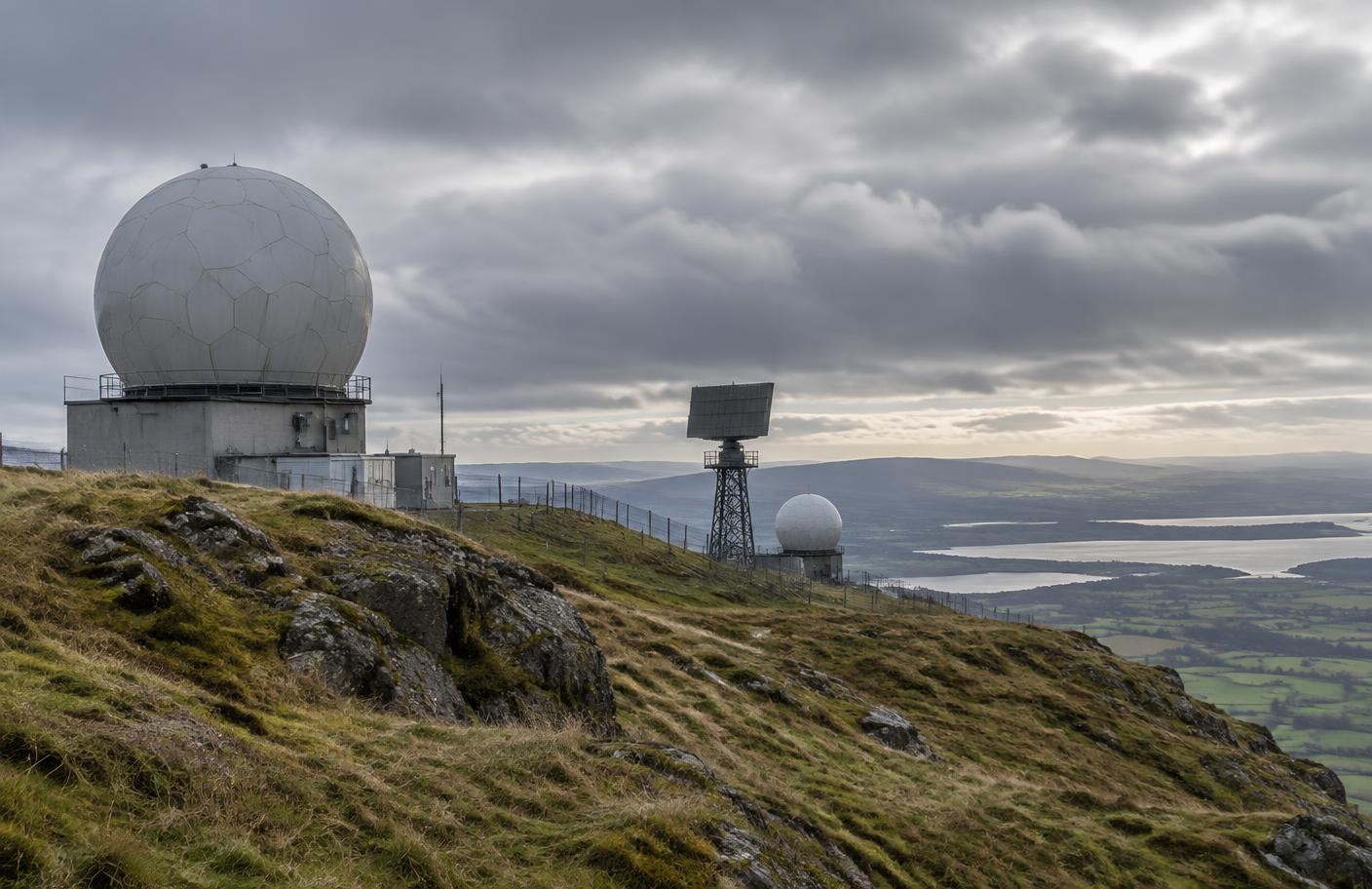
The Conservatives say Britannia Shield would add new advanced radar systems. In everyday terms, this is the sensing layer. It would aim to give defenders a clearer picture of what is in the air, where it is travelling and how quickly a response may be needed.
Detection is not the same as interception. A radar can identify a threat without being able to stop it.
Decide: coordinate the response
The second job is turning information into a decision.
The proposed command-and-control layer would integrate information across Britain’s defences and help determine the appropriate response. That might involve different assets depending on the type and location of the threat.
This is the part that links sensors, decision-makers and defensive systems. It is also where speed and reliable information matter most.
Effect: act against the threat
The final layer is the ability to respond.
The Conservatives say this would include new interceptor missiles and counter-drone capabilities. Sky Sabre provides a useful comparison because it can intercept some munitions and aircraft and integrate with wider air-defence networks.
The UK deployed Sky Sabre to the Middle East earlier in 2026 for defensive action against Iranian attacks, according to the BBC. However, Britannia Shield would be a proposed wider network, not simply a name change for Sky Sabre.
🧭 Why are the Conservatives proposing it?
The party points to several developments.
In November 2025, the Commons Defence Committee said the UK had “next to nothing” compared with European allies investing heavily in air and missile defence — a finding reported by BBC News. The committee said Britain was lagging behind in having a plan to defend the UK and its overseas territories.
The Conservatives also cite two reported incidents in 2026:
- RAF Akrotiri in Cyprus was hit by a one-way attack drone in March, as reported by the i Paper. The drone was later reported to have contained Russian technology.
- Later in 2026, when Iran fired ballistic missiles towards the Chagos Islands, the United States, not Britain, launched the interceptors.
Badenoch said on 5 October that she had been listening to Ukrainian President Volodymyr Zelensky and following the impact of the war in Iran on Gulf countries. She also argued that warfare is changing because drones can be launched from closer to their target.
The party points to comparable programmes elsewhere, including Greece’s reported “Achilles Shield”, a joint Belgian-Dutch air-defence effort and the US “Golden Dome” programme.
These examples explain the proposal’s rationale. They do not, by themselves, prove that Britannia Shield would be affordable, effective or necessary at the proposed scale.
⚖️ The honest doubts: does £10bn match the ambition?
Cost is the central question.
General Sir Richard Barrons, one of the authors of the Strategic Defence Review, told the Defence Committee in summer 2026 that “the cost of an iron dome at entry level is probably £80bn over 10 years. Entry level”.
He also said: “The IAMD of my dreams is probably £120 billion over 10 years. But we got £1 billion.”
Barrons added that many people assume there is already an Iron Dome-style system over at least London, but said that was “not even remotely” the case.
Those figures are his assessment, not a government price tag for Britannia Shield. They raise a straightforward issue: whether £10bn would create meaningful capability across selected sites, or whether it would be only a partial system compared with the national coverage implied by the “Iron Dome” label.
The government’s existing numbers provide another point of comparison. Last year’s Strategic Defence Review pledged £1bn for air and missile defence. The Defence Investment Plan published on 30 June 2026 set out investment in integrated air and missile defence.
The Conservatives say a basic working system is achievable within a first term. Barrons’ evidence suggests critics may consider that budget far below the cost of a comprehensive, multi-layered national shield.
Both claims can be reported without assuming the answer.
🏛️ The political response
The proposal has arrived during a wider argument about defence spending.
Defence Secretary Wes Streeting said on 5 October that the Conservatives had an “abysmal record” on defending Britain during their 14 years in power. He said they “cut the Army to its smallest size since Napoleon” and left a £17bn hole in the equipment plan. Streeting also cited former Conservative defence secretary Ben Wallace’s description of the Armed Forces as “hollowed out and underfunded”.
A Labour spokesperson said on 5 October that the government was delivering “the biggest sustained increase in defence spending since the Cold War”, including £1bn for air defences.
The wider dispute includes the UK’s defence-spending trajectory. The UK is estimated to be spending about 2.6% of GDP on defence this year. NATO has a target of 3.5% by 2035, while the Prime Minister has faced pressure to set out how that target will be reached, as reported by BBC News. The i Paper has also reported a gap in the defence budget.
Those are political and budgetary disputes. This article does not assess which party has the stronger defence record or which spending plan is right.
This article is based on published statements from the Conservative Party, the Ministry of Defence and the Labour Party, together with published reporting and official documents. We have not sought additional comment beyond those public statements. If either party responds with further detail after publication, we will add it here.
🏠 What does it mean for your household?
The honest answer is: national air defence and household preparedness are different jobs.
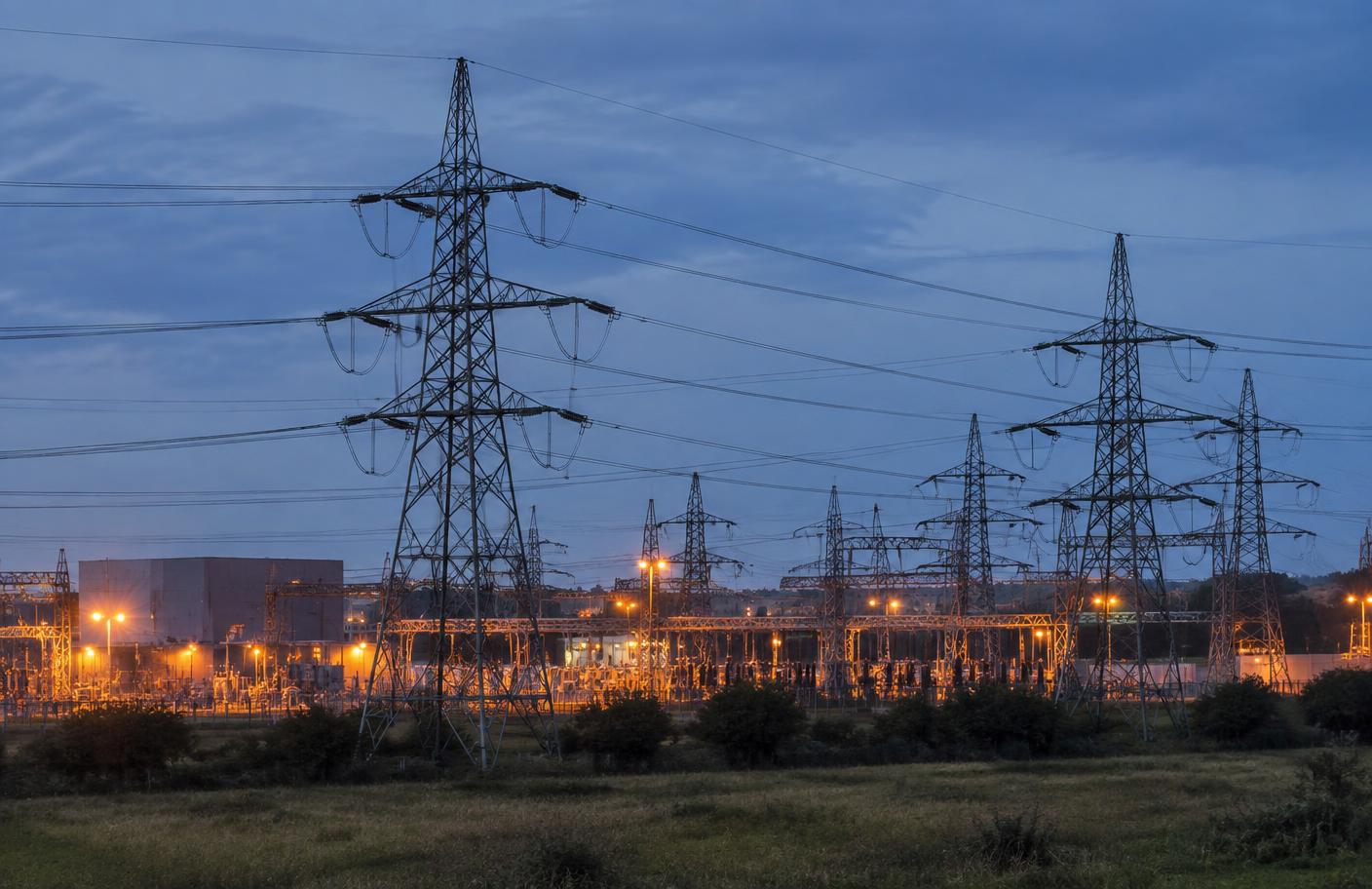
If Britannia Shield were ever built, its stated purpose would be to defend military bases, power stations, communications infrastructure and other strategic assets. It would not prevent:
- A storm damaging your local substation.
- A burst water main.
- A localised power cut.
- A mobile network failure.
- A short interruption to water or heating.
Critical national infrastructure includes many of the services your household relies on. That is a reason to prepare sensibly for short interruptions, not a reason to expect an attack.
Start with practical basics:
- Read EoDSurvival’s UK Government resilience and stockpile guide.
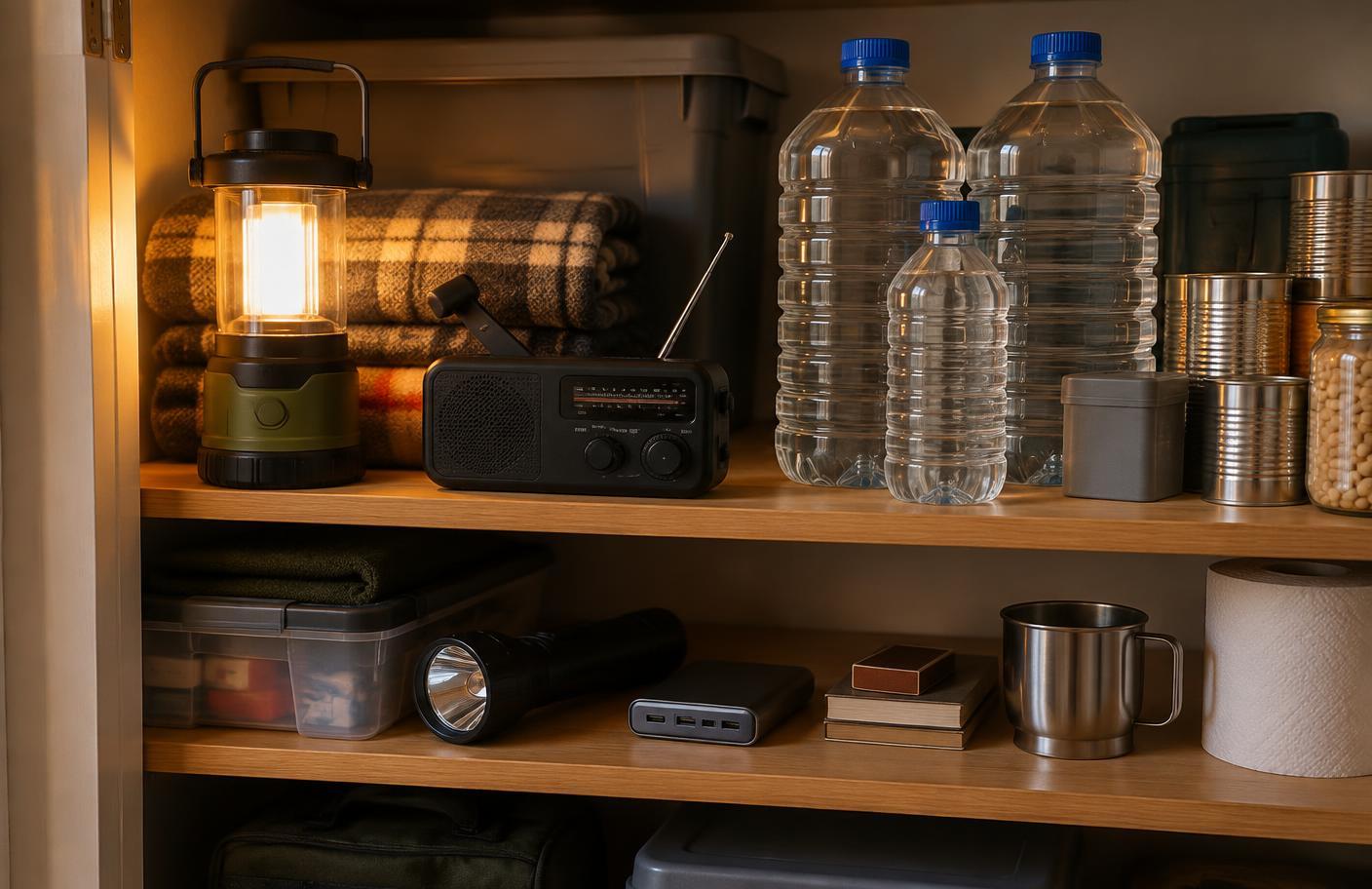
- Build a 72-hour blackout kit.
- Follow the water filtration guide and UK water survival guide.
- Build a blackout kit.
- Keep a wind-up radio for updates if mobile networks or internet access are unavailable.
- Store and treat water with our UK water filtration guide.
- Browse the full Survival Gear Buying Guides series for the rest.
- Review the wider power blackout guidance.
Every one of these guides is written for ordinary UK interruptions — storms, outages and supply problems — not for military scenarios.
These steps are useful whether or not Britannia Shield progresses. They address ordinary disruptions that households can actually experience.
🚫 What we are not saying
We are not saying an attack is planned, imminent or probable.
We are not saying Britannia Shield will be built.
We are not endorsing or opposing the Conservative Party’s proposal. We are explaining a live defence-policy announcement and separating the party’s claims from expert doubts and the government’s response.
❓ Britannia Shield FAQs
Is Britannia Shield already in operation?
No. It is a Conservative Party proposal. The next general election has not happened, and no system has been created under this name.
Is it the same as Israel’s Iron Dome?
No. The phrase “Iron Dome” is being used as shorthand. The Conservatives have said Britannia Shield would not be exactly the same as Israel’s system.
How much would it cost?
The Conservative proposal is £10bn over ten years. General Sir Richard Barrons told the Defence Committee in summer 2026 that an entry-level UK system could cost about £80bn over ten years, with his preferred integrated system costing about £120bn. Those are different estimates and should not be treated as settled costs.
What should a household do now?
Prepare for short, familiar disruptions rather than speculate about military scenarios. Keep safe lighting, drinking water, food, medicines, a radio and a way to charge essential devices. A 72-hour blackout checklist is a sensible starting point.
Preparedness is about confidence and practical readiness. Whatever happens to this proposal, those basics remain useful.
📚 Sources and further reading
- BBC News, "Tories pledge £10bn British 'Iron Dome' air defence system", 5 October 2026
- The i Paper, "Badenoch promises 'Britannia Dome' missile shield", 5 October 2026
- Ministry of Defence, The Defence Investment Plan, GOV.UK, 30 June 2026
- British Army, Sky Sabre air defence system
- Commons Defence Committee report, November 2025 (as reported by BBC News)
This article is compiled from the above published sources. Where we report a contested figure or assessment, we say who made it. We have not independently verified programme costs or capability claims, and neither party's projections should be treated as settled.
Images: original EODSurvival editorial illustrations. This explainer separates published proposals, political claims and independent cost estimates; details may change as the story develops.
Prepare for Practical Disruptions
Build a calm household plan for power cuts, water interruptions and communications outages.